The Architectural Association of Kenya (AAK) has warned that most buildings in the country are unsafe because they are constructed by non-professionals.
Coast Branch Chairperson, Dancan Odhiambo, revealed that 87 per cent of buildings lack the requisite professional standards and are therefore deemed unsafe.
Speaking to a local TV station on Friday, January 16, 2026, Odhiambo recounted how unscrupulous developers collude with county officials.
He attributed this to weak enforcement mechanisms and moral decay, which allow corrupt practices to erode safety standards in the building and construction sector.
“Research by the National Building Inspectorate conducted last year revealed that 87 per cent of the buildings you see are not designed by professionals and are therefore unsafe. This shows a significant portion of buildings are at risk,” he said.
Odhiambo noted that the figures represent a decline compared to a sample size from 2024.
He further stated that the problem stems from a rogue regime involving architects, engineers, planners, and the wider building ecosystem, which predisposes professionals to unethical practices.
“We have a corruption problem in this country, right from the highest offices, including the presidency, to the planner at the ground level. We are ranked number 121 out of 180 countries, with number one being the least corrupt,” he stated.
“In Kenya now, for a developer to get a permit, they most probably bribe their way through. Most developers know where the bottleneck is, at the county, so they don’t start with an architect. They know they can easily get one later. They start with the county, which is the wrong route. There, they are given an estimate of the project,” he added.
“In most cases, the county official takes advantage and tells the developer, ‘Come, give us this amount,’ and recommends their own unregulated individuals or professionals who do the drawings, mostly unregulated.”
Odhiambo advised that the engineers’ body must show unwavering commitment to professionalism and ensure safety in construction through better standards and practices.
“We are determined to bridge the gap by continuing to emulate best practices in the world,” he affirmed.
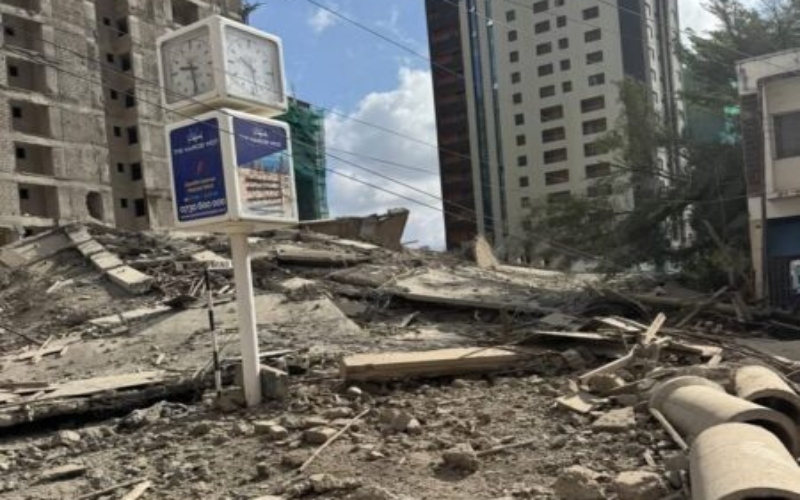
His revelation comes as the nation reels from the South C building collapse that left scores dead and many counting losses.
The collapse comes amid growing public concern over the safety of buildings under construction in Nairobi, particularly in areas experiencing rapid urban development.