Posted on Wednesday, January 21, 2026
|
by Ben Solis
|
1 Comments
|
Tensions between Washington and Pretoria reached a new crescendo this week as President Donald Trump threatened to impose tariffs on South Africa for welcoming Iranian naval vessels for joint military exercises. Though South Africa ultimately backed down and asked Tehran to withdraw its warships, the episode was yet another escalation of the increasingly frosty relationship between it and the United States.
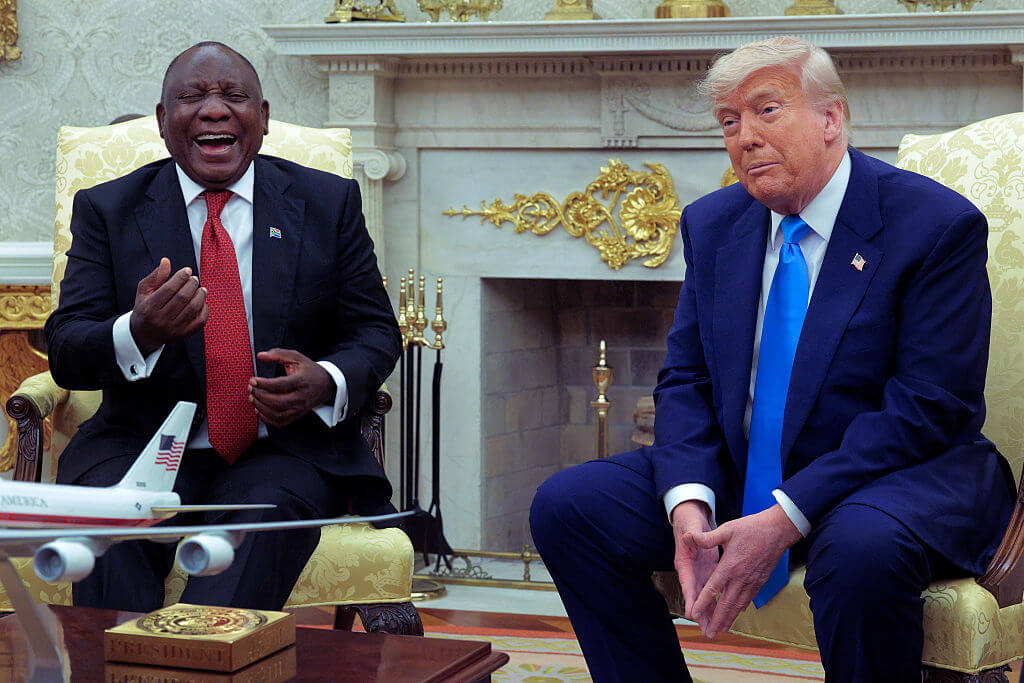
Things started off tense last year when Trump hosted South African President Cyril Ramaphosa in the Oval Office. In a breathtaking moment, Trump directly confronted Ramaphosa over the mass killing and persecution of white farmers. When Ramaphosa denied the violence, Trump forced the South African delegation to watch a five-minute video of South African politicians openly, explicitly calling for the killing of white farmers.
South Africa has also irked American leaders by its participation in the so-called BRICS alliance, an informal bloc of major emerging economies – originally Brazil, Russia, India, China, South Africa – that coordinates on economic and geopolitical issues to increase their collective influence and reduce reliance on Western-led institutions. South Africa under Ramaphosa has grown close with China in particular, with Beijing investing $13.2 billion in South Africa in 2024.
It was as part of this alliance that South Africa agreed to host Iranian, Russian, and Chinese warships for joint exercises. In response, on January 12, Trump stated in a Truth Social post that “any Country doing business with the Islamic Republic of Iran will pay a Tariff of 25% on any and all business being done with the United States of America,” adding that “this Order is final and conclusive.”
South Africa subsequently moved to limit Iran’s participation to avoid being slapped with the tariff.
The moment represents a temporary ratcheting down of tensions between the United States and South Africa, but underlying problems may make long-term reconciliation more difficult as Trump takes a tough approach toward corrupt and oppressive regimes.
Though democratically elected, Ramaphosa’s African National Congress (ANC) party, which has controlled the country since the end of Apartheid in 1994, has overseen persistently high levels of violent crime, periodic unrest, severe strain on policing and the courts, and deep economic problems tied to corruption and mismanagement. In the 2024 Corruption Perceptions Index, South Africa ranked 82nd out of 181 countries.
The ANC has specifically pursued policies such as aggressive land-reform legislation (including proposals for expropriation without compensation) and race-based economic regulations, which disproportionately harm white South Africans. Last year, Trump announced a refugee program for white Afrikaners who were the victims of this injustice.
The ANC has also targeted Israel, with South Africa launching a case at the International Court of Justice alleging that the Jewish State is committing genocide in the Gaza Strip. Only ten days after the October 7, 2023, attacks, South Africa’s foreign minister also expressed support for Hamas in a phone call with representatives of the terrorist organization.
Additionally, a bill introduced in the South African Parliament would penalize individuals and entities that support or promote what it terms Israeli “apartheid” policies. This legislation, pushed by a fringe Islamist party, endangers thousands of South African Christians who stood in solidarity with Jewish communities after Hamas’s attacks.
All of this represents a complete betrayal of the principles that Nelson Mandela fought for in ending Apartheid, a fact that Trump has correctly identified and called out. By prioritizing the retention and extension of its power, the ANC has failed to provide a clear vision for a just, peaceful, and economically secure South Africa.
When South Africa ended legalized racial segregation just over three decades ago, it produced new hope that the protracted strife between white and black South Africans might end, closing a bleak chapter in world history. But instead, a system of reverse discrimination has taken root, with the ANC embracing the structures of oppression they once fought against.
Alex Boraine and Frederik van Zyl Slabbert, two white South African politicians whose Christian faith led them to help pave the way for the fall of Apartheid, explained to me in interviews before their deaths how they believed the ANC had betrayed Mandela’s legacy – comments that ring especially true now. As they explained, the ANC with its broad mandate appointed loyalists “from top officials to janitors in distant offices.” As a result, the country became a de facto one-party state, ruled by what Dr. Boraine called “a culture of impunity.”
Trump’s willingness to use American economic power to confront Pretoria marks a sharp break from the timid diplomacy that has allowed the ANC to drift toward corruption, authoritarianism, and open hostility to the West. By drawing clear lines on Iran, Israel, and racial persecution at home, Trump is signaling that access to U.S. markets is a privilege, not an entitlement.
Whether Ramaphosa’s government truly reforms or merely retreats tactically remains to be seen. But for the first time in years, South Africa’s ruling party is facing real consequences for its choices – and real pressure to abandon a path that is rapidly impoverishing and destabilizing the nation.
Ben Solis is the pen name of an international affairs journalist, historian, and researcher.