Namibia has approved a National Upstream Petroleum Local Content Policy as major offshore discoveries move closer to development and the government seeks to increase domestic participation in the oil industry.
The policy will target local procurement, employment, skills and technology transfer, with Namibian companies expected to compete for contracts across the petroleum value chain.
The move comes as TotalEnergies prepares a final investment decision on the Venus project, which is designed to produce about 150,000 barrels of oil per day at peak.
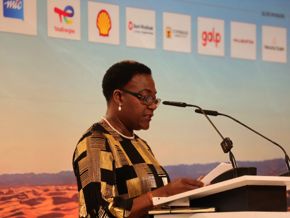
Namibia has approved a National Upstream Petroleum Local Content Policy as the country prepares for major offshore oil discoveries to move into development and large-scale procurement. Special Advisor and Head of the Upstream Petroleum Unit Kornelia Shilunga announced the policy on August 19, following the Namibia Oil and Gas Conference held from August 12-14, where the government outlined measures to increase the participation of Namibian businesses and workers in the emerging petroleum industry.
The framework is designed to expand opportunities for Namibian companies through local procurement, employment, skills development, technology transfer and access to contracts across the petroleum value chain. Shilunga said the government wants local businesses to develop the capabilities needed to compete for these opportunities rather than simply rely on protected access to contracts.
The timing is significant as TotalEnergies’ Venus project in the Orange Basin approaches the development stage, when major procurement decisions will determine which companies secure contracts for engineering, construction, fabrication, marine services, logistics and other activities. TotalEnergies has said the project is technically ready for sanction, although its final investment decision remains linked to the completion of fiscal discussions with the Namibian government.
Venus is expected to produce about 150,000 barrels per day at peak, with first oil targeted for late 2029 or early 2030. Its initial development is expected to target about 750 million barrels of oil equivalent of recoverable resources.
The government is also reviewing Namibia’s petroleum legal and fiscal framework as it negotiates with investors on major offshore discoveries. At the same time, it wants the emerging petroleum industry to support broader industrial development rather than generate only government revenue and crude production.
At the Namibia Oil and Gas Conference, officials identified potential opportunities in refining, petrochemicals, gas-to-power, logistics, fabrication, marine services, storage and engineering. The program also included sessions on local-content participation, technical upskilling, financing and supplier opportunities, including pitching sessions for Namibian businesses seeking contracts.
Infrastructure will be another factor in determining how much of this activity can be retained domestically. Shilunga identified Walvis Bay and Lüderitz as potential logistics and service hubs for offshore petroleum operations, but ports, supply bases, roads and airports will need to expand alongside the industry to support the expected increase in activity.
The local-content push could also extend beyond Venus. TotalEnergies has received government approval to become operator of the Mopane discovery after agreeing to acquire a 40% interest from Galp, potentially adding another major development to Namibia’s offshore petroleum pipeline.
By Cynthia Ebot Takang