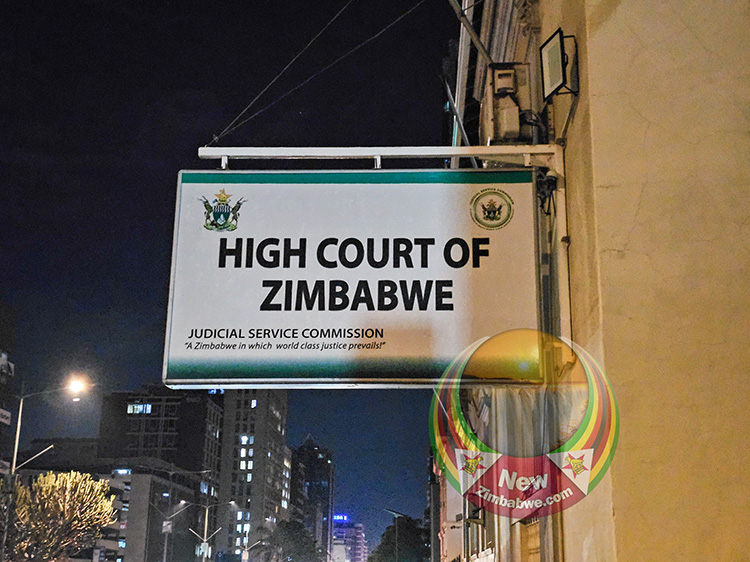
A long-running corporate dispute between Chinese investor Li Song and Italian businessman Francesco Marconati has taken another turn after the High Court struck out the latter’s opposition to her application challenging her removal as a director of two companies, leaving the case unopposed.
The two businesspeople, who were both based in Zimbabwe, are not new to the country’s courts and have been embroiled in a series of legal disputes linked to their business interests.
In the latest case, High Court judge Justice Joseph Chilimbe ruled that an affidavit filed by Marconati was invalid because the commissioner of oaths who administered it failed to state his legal capacity on the document.

The ruling means Li Song’s application will now proceed on an unopposed basis.
Li Song and Marconati were previously co-directors of Eagle Italian Shoes (Pvt) Ltd and Eagle Italian Leather (Pvt) Ltd until their relationship broke down in October 2021.
Following the fallout, Li Song was removed as a director of the two companies and lost her status as a signatory to their bank accounts.
Kutaura Bond Taderera and Alessandro Marconati were subsequently appointed directors.
Li Song approached the Commercial Division of the High Court seeking to overturn the resolutions removing her and appointing the two new directors.

She also wants Marconati removed as a director, citing his alleged conviction for theft of trust property and breach of fiduciary duties.
Marconati, the two companies, Taderera and Alessandro Marconati opposed the application, with Marconati filing the affidavit on which their opposition was based.
Li Song’s lawyer, S Hoko, however, challenged the affidavit, arguing that it had not been properly commissioned because the document did not disclose the capacity in which Jayeshkumar Desai acted as commissioner of oaths.
Justice Chilimbe agreed.
“The authorities are clear. A commissioner of oaths must evidence, on the face of the affidavit he or she commissions, the requisite details of his or her office or appointment,” the judge said.
“The commissioner to Mr Marconati’s affidavit failed that duty.”
The court relied on previous Supreme Court and High Court decisions requiring commissioners of oaths to clearly identify themselves and state the office or legal capacity under which they administer oaths.
Mudhau, representing the respondents, argued that Desai’s commissioner of oaths stamp was sufficient and that Li Song should have produced evidence challenging his authority.
But the judge rejected that position, finding that the affidavit itself had to establish the commissioner’s authority.
“An affidavit must thus speak for itself, including confirmation of the authority of the administer of the oath,” Chilimbe said.
The judge consequently upheld Li Song’s preliminary objection, struck out the respondents’ notice of opposition and ordered the matter to proceed as an unopposed application.
The first to fifth respondents were also ordered to pay Li Song’s legal costs.
The court did not determine another challenge concerning the delegation of authority by Taderera to Marconati to represent the two companies, saying it was unnecessary after the affidavit was found invalid.
Chilimbe, however, said the prospects of that arrangement surviving a challenge “appear slim.”
The judge also warned litigants against using technical objections merely to frustrate or delay cases.
“Courts will frown on those litigants who, out of desperation, and or deviousness, resort to baseless preliminary objections as a ploy to frustrate opponents, delay proceedings or distract the court,” Chilimbe said.