Ethiopia, Norway Advance USD 100 Million Forest and Climate Finance Partnership
Ethiopia and Norway are deepening their long-standing forest and climate partnership, with financing commitments exceeding USD 100 million and carbon credit transactions nearing completion, signaling a shift toward market-based climate finance.
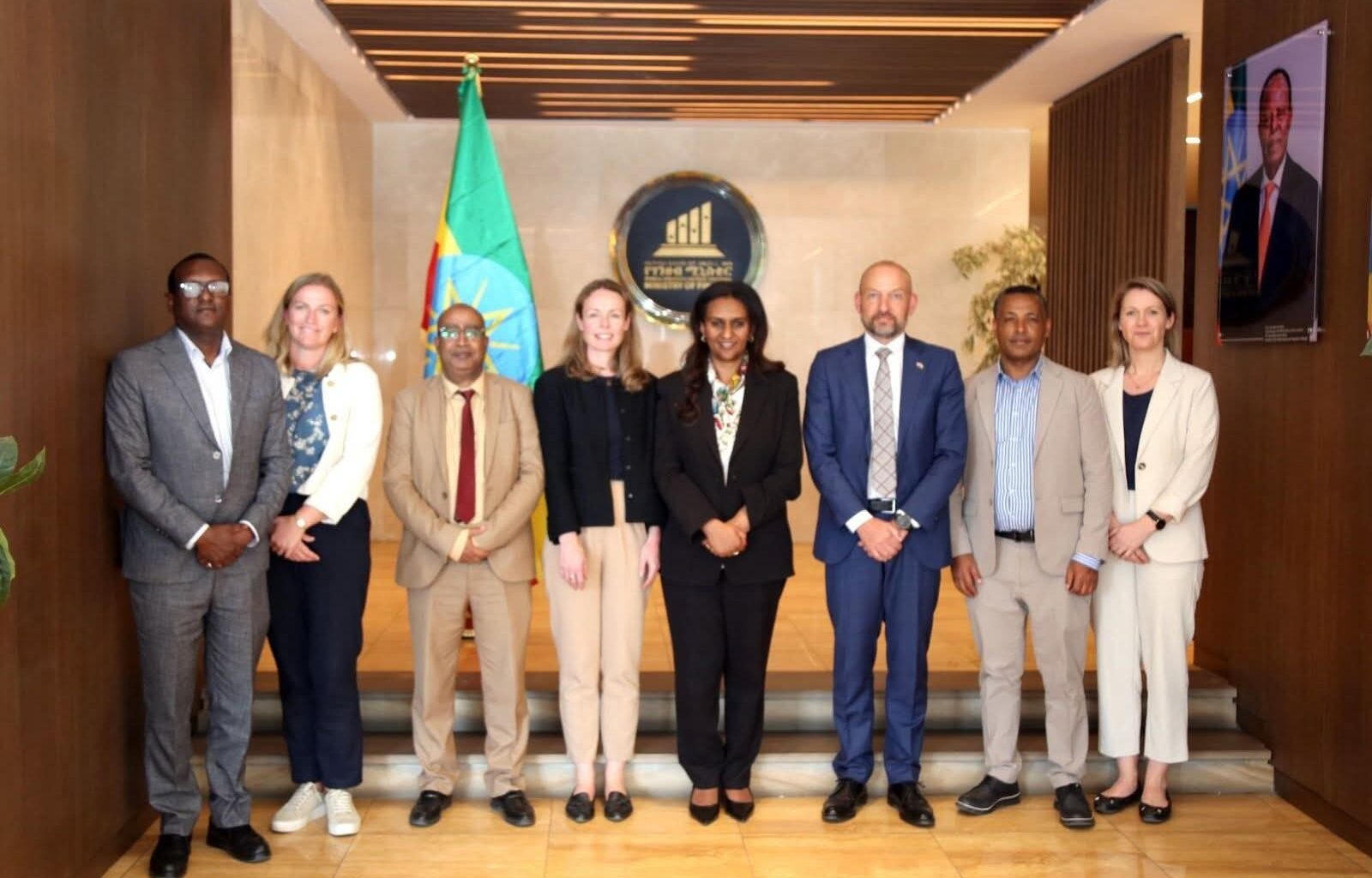
The Ministry of Finance said it convened the Joint Consultation Group under the Ethiopia–Norway Partnership on Forest and Climate Change to review progress under the 2024 agreement and discuss the future of the REDD+ Investment Program beyond June 2026.
The meeting was co-chaired by State Minister of Finance Semereta Sewasew and Norwegian Ambassador to Ethiopia Stian Christensen.
At the center of the discussions was forest and climate finance, including results-based payments and carbon market transactions that could unlock new revenue streams for Ethiopia.
State Minister Semereta said carbon credit transactions under the partnership are close to finalization, marking a major milestone in Ethiopia’s transition toward market-linked climate finance.
Norway has been a core financier of Ethiopia’s REDD+ program since 2013, providing long-term funding as well as technical and institutional support.
According to the Ministry of Finance, Norwegian assistance has strengthened Ethiopia’s Measurement, Reporting, and Verification systems, carbon accounting frameworks, and environmental safeguards key requirements for accessing results-based climate finance.
Looking ahead, Norway’s International Climate and Forest Initiative (NICFI) confirmed that the upcoming REDD+ Investment Program III, covering the 2026–2030 period, will adopt a blended financing model.
The next phase will be backed by USD 60 million from Norway, USD 40 million from Ethiopia’s Green Legacy Initiative Special Fund, and additional resources carried forward from earlier phases.
The combined financing is expected to support participatory forest management, land restoration, institutional coordination, and efforts to attract private sector investment into Ethiopia’s forest and carbon markets.
State Minister Semereta said climate change is already imposing significant economic costs on Ethiopia through droughts, floods, and land degradation, making forest finance an essential tool for protecting livelihoods, food security, and long-term economic stability.
She added that involving local communities in forest management is critical to ensuring that climate finance delivers both environmental and economic returns.
Ambassador Christensen said Norway remains committed to results-based payments, which link funding directly to verified reductions in deforestation and forest degradation.
He noted that this approach strengthens accountability while ensuring sustainability.
The meeting also highlighted Ethiopia’s Green Legacy Initiative, which officials say has improved institutional coordination across federal and regional levels and contributed to Ethiopia being selected to host COP32 in 2027.
With carbon transactions approaching completion and new financing secured for the next phase, officials said the Ethiopia–Norway partnership is positioning the country to become a regional leader in results-oriented forest and climate finance.