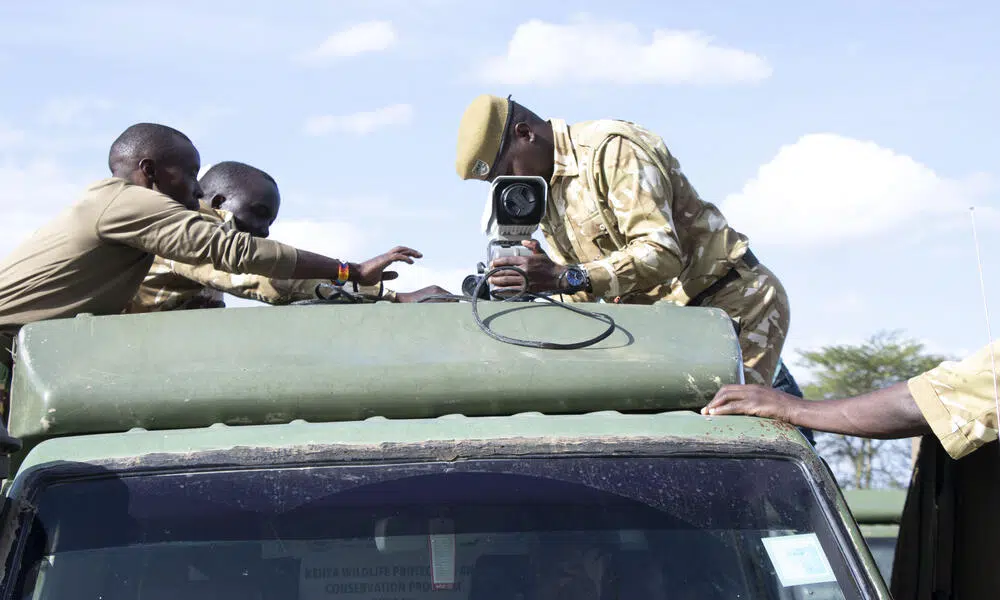
A few years ago, various protected areas in Kenya implemented technology against poaching that allowed them to achieve a significant milestone in terms of animal conservation.
Thanks to the integration of thermal cameras with artificial intelligence in ranger patrols, no rhinoceros fell victim to illegal hunting in the country in 2020.
This successful strategy managed to completely stop poaching using technology in key reserves like Ol Pejeta and Solio Game.
The African country achieved this milestone after years of implementing advanced technological solutions against poaching.
Thus, the population of rhinoceroses has been slowly growing over the last decade, reversing decades of decline that threatened to extinguish these mammals.
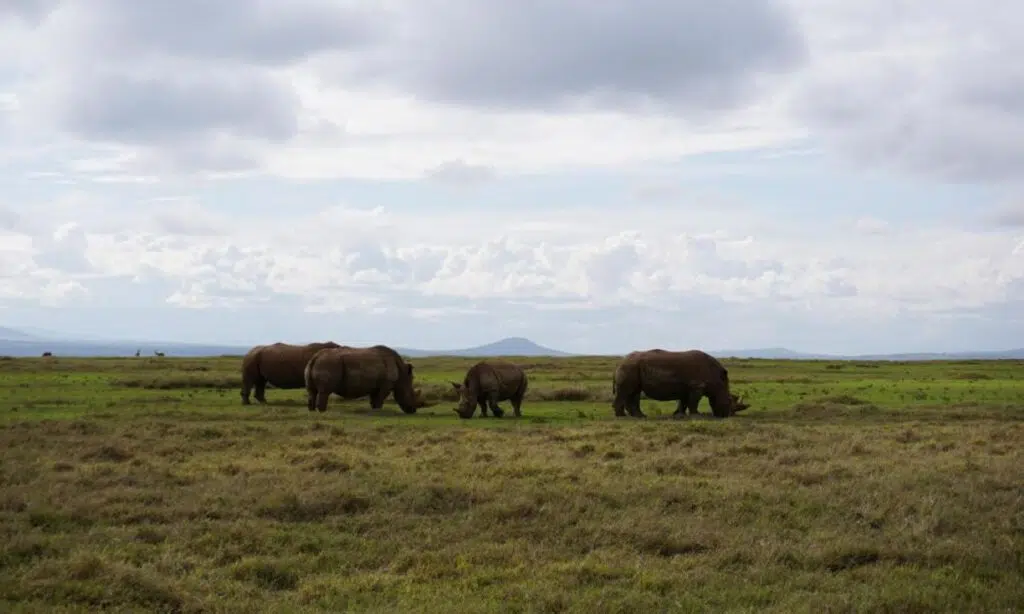 Rhinoceroses are no longer victims of poaching in Kenya because technology has transformed conservation in the African country (WWF)
The key to smart cameras that detect nighttime threats
The FLIR system includes high-powered thermal cameras equipped with night vision and artificial intelligence.
These devices detect movements of people, wildlife, or vehicles during the night and send automatic alerts to the system operator.
The cameras were first installed in 2019 in Ol Pejeta, along the perimeters with a high risk of intrusion. In 2023, Solio received the same protection system.
Both reserves host the largest populations of black rhinoceroses, a critically endangered species, in East Africa.
Ol Pejeta has not recorded any wild animals poached since 2017, while Solio also reported no incidents since the end of 2023.
Kifaru Rising: expansion of anti-poaching technology
The Kifaru Rising project began in 2019 as a collaboration between WWF and Teledyne FLIR. The initiative expanded anti-poaching technology to a total of 11 high-risk Kenyan reserves.
These sites host more than 80% of Kenya’s rhinoceroses, as well as elephants and other threatened species. The 11 sites use cameras and FLIR equipment in some capacity.
By the end of 2024, WWF worked with conservation partners to install thermal cameras mounted on night patrol vehicles.
The rangers gained greater mobility and visibility while monitoring the park in the dark.
Before the thermal cameras, rangers only tracked poachers with canine units and flashlights. The vast area they had to patrol made these methods notably less effective.
The benefits of anti-poaching technology, beyond rhinoceros conservation
The thermal technology detected other illegal activities such as thefts, property damage, and conflicts between humans and wildlife.
Communities became more willing to collaborate after witnessing the benefits of the system.
In the Lake Nakuru National Park, the cameras captured the theft of a donkey. Although the suspect escaped, the rangers and community leaders worked together to try to identify him.
Before the incident, community relations were precarious and they were distrustful of the FLIR system.
Since then, they have recognized the importance of the cameras and the benefits of working with rangers.
Community members shared information that supports anti-poaching initiatives, reinforcing the importance of building trusting relationships with those living in contact with wildlife.
The path to 2000 black rhinoceroses
Kenya, home to the third-largest population of rhinoceroses in Africa, has more than doubled the black rhinoceros population since the 1980s. The country has reversed the historical decline of this species.
The COVID-19 pandemic interrupted all international travel at the beginning of 2020.
However, the Ol Pejeta staff completed the installation of the FLIR system through hundreds of hours of remote video calls with WWF and FLIR engineers.
The continuous use and expansion of this technology in other priority areas will keep Kenya on track to eradicate poaching. The country’s goal is to reach 2000 black rhinoceroses by the year 2037.