Published on
January 5, 2026
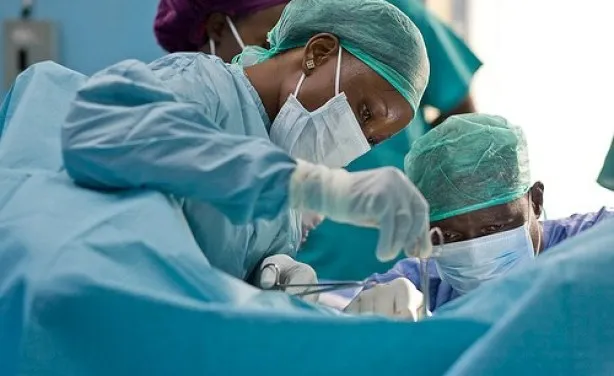
Nigeria’s spending on medical tourism has experienced a dramatic decline, signaling a significant shift in the country’s approach to healthcare. According to the latest data from the Central Bank of Nigeria (CBN), medical tourism expenditures have dropped by an overwhelming 96.2% from the first half of 2024 to the same period in 2025. This drastic reduction has sparked considerable attention, especially since Nigeria has long been a country where many people sought medical care overseas. The sharp decrease, from $2.38 million in early 2024 to just $0.09 million in the first half of 2025, marks one of the steepest declines in medical tourism spending in recent history.
Understanding the Figures: A Year-on-Year Comparison
The figures from 2024 show that the spending on medical tourism began the year unusually high, peaking at $2.30 million in January. However, it plummeted after that, with expenditure dropping to zero in February, barely reaching $0.01 million in March, and again dropping to negligible amounts in the following months. In contrast, the figures from January to June in 2025 demonstrate a persistent trend of low spending, with each month reporting figures under $0.06 million. No month in 2025 exceeded this modest amount, highlighting that the drop in spending is not temporary but reflects a more profound, long-term change.
Factors Behind the Decline in Medical Tourism
While foreign exchange constraints and tougher economic conditions have played a role in this decline, healthcare experts have pointed to a deeper shift occurring in Nigeria’s medical landscape. Increasing investments in local healthcare infrastructure, specialist training, and cutting-edge medical technology have made it possible for Nigerians to access world-class treatment without leaving the country. This shift is viewed not as a result of economic pressure alone, but as a fundamental transformation in the local healthcare capacity that reduces the reliance on overseas medical care.
In recent years, hospitals and clinics across Nigeria have made significant strides in offering services that were once only available abroad. Private and public sector investments have expanded the country’s ability to provide complex medical treatments locally, including open-heart surgeries, fertility treatments, and cancer care. This progress has contributed to the drastic drop in medical tourism spending, as patients increasingly turn to local healthcare facilities that are equipped to handle complex cases.
Examples of Nigeria’s Growing Medical Capacity
Several prominent healthcare institutions in Nigeria have become symbols of the country’s growing medical capabilities. For example, Duchess International Hospital in Lagos has emerged as a leader in advanced medical procedures. Since its inception, the hospital has performed complex procedures such as open-heart surgeries, which were previously only accessible abroad. In its first two years, the hospital successfully carried out 26 open-heart surgeries, offering advanced care at a fraction of the cost found in international hospitals.
Another key example is the Nordica Fertility Centre, which has revolutionized the treatment of fibroids with its introduction of High-Intensity Focused Ultrasound (HIFU) technology. As the first HIFU centre in West Africa, Nordica has not only served Nigerian patients but has attracted individuals from neighboring countries who previously would have sought treatment in Europe, Asia, or the United States.
Furthermore, The Prostate Centre (TPC) has played a significant role in strengthening Nigeria’s healthcare system, particularly in cancer and urology. TPC has introduced AI-powered HIFU therapy for prostate cancer and robotic surgeries, offering non-invasive treatments that rival those available at international centers. By providing same-day, incision-free procedures with minimal recovery time, TPC has further cemented Nigeria’s position as a leader in healthcare innovation.
Local Expertise and the Role of Training
Nigerian healthcare professionals, such as Prof. Kingsley Ekwueme, a UK-based consultant urological and robotic surgeon, have been instrumental in these advancements. Prof. Ekwueme has consistently emphasized that Nigeria’s healthcare sector is no longer limited by expertise but by scale and awareness. With ongoing training for local surgeons and the expansion of access to advanced medical technologies, Nigerian patients now have access to top-tier care without needing to travel abroad. This change in perception is reflected in the reduced need for medical tourism, with more patients choosing to remain within the country for their medical needs.
Policy Changes Supporting the Shift
The dramatic decline in medical tourism spending has also been influenced by policy changes that have made it harder for Nigerians to access foreign currency for non-essential purposes, including overseas medical travel. The Nigerian Foreign Exchange Code, introduced by CBN Governor Olayemi Cardoso in January 2025, further tightened transparency and accountability in the foreign exchange market. This reform made discretionary access to foreign exchange for purposes like medical tourism more challenging, ultimately discouraging Nigerians from seeking medical treatment abroad.
Cardoso has emphasized that the practices that allowed privileged access to foreign currency in the past have contributed to inflation and weakened the naira, making it critical to prevent such practices from recurring. These policy reforms, combined with improvements in local healthcare, have further reduced the financial incentives for Nigerians to travel overseas for medical care.
The Rise of Confidence in Local Healthcare
What may have once been seen as a weakness in Nigeria’s healthcare system—its reliance on medical tourism—is now viewed as an opportunity for growth. Patient testimonials from hospitals performing complex surgeries, robotic cancer treatments, and other advanced procedures within Nigeria now reflect outcomes that were once only attainable in foreign medical centers. These positive outcomes, often at significantly lower costs, have contributed to growing confidence in local healthcare services.
The Future of Medical Tourism in Nigeria
The sharp drop in medical tourism spending signals a turning point for Nigeria’s healthcare industry. As the country continues to enhance its healthcare infrastructure through public-private partnerships, specialist training, and technology adoption, the reliance on foreign healthcare is expected to continue its decline. For the first time in decades, the data suggests that Nigeria is no longer merely slowing medical tourism due to economic challenges, but is outgrowing the need for it altogether.
With the significant investments in healthcare infrastructure and the development of local medical expertise, Nigeria’s shift from a medical tourism-reliant nation to one capable of providing world-class care within its borders is now becoming more evident. As this trend progresses, Nigeria may set a new standard for healthcare accessibility and quality in Africa and beyond.
