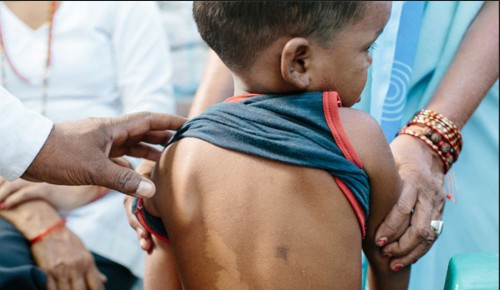
Although leprosy is curable, it remains a neglected tropical disease, affecting more than 120 countries, with an estimated 200,000 new cases reported each year globally, according to the World Health Organisation (WHO).
Kenya was declared to have eliminated leprosy as a public health problem in 1989, with fewer than one person in 10,000 living with the disease at the time. But elimination does not mean the disease has vanished entirely.
Many people mistakenly assume “elimination” signifies complete disappearance. In WHO terms, elimination refers to reducing the number of cases in a population to less than one per 10,000.
New cases continue to surface across the country, highlighting the ongoing challenge of controlling leprosy.
Kenya has reported fluctuating numbers in recent years: 159 cases in 2019, 77 in 2023, and 97 in 2024. These figures show that while overall prevalence remains below the elimination threshold, local transmission persists in some regions.
According to the Ministry of Health, several factors contribute to leprosy’s continued presence. One major issue is delayed diagnosis and treatment. Individuals in remote or marginalised communities may not seek medical care promptly, allowing the disease to advance and increasing the risk of spreading it to others.
“In many cases, patients present with advanced disease,” the ministry notes, underscoring gaps in early detection and access to healthcare.
Another challenge is “hidden cases.” People living in isolated or underserved areas may not be reflected in official statistics, allowing infections to persist unnoticed for years. This makes it difficult to halt transmission completely, even when national data suggest elimination.
Leprosy’s long incubation period further complicates control efforts. Symptoms can take anywhere from five to 20 years to appear, meaning individuals may unknowingly carry and transmit the bacteria for decades before being diagnosed.
Residual transmission—where the bacteria spread at low levels within households or close communities—also contributes to the persistence of new cases despite low overall prevalence.
More than three decades after elimination was declared, leprosy quietly persists. Across Kenya, new cases continue to emerge, revealing a hidden battle most citizens are unaware of. In 2024 alone, 97 new cases were reported.
Leprosy, caused by the bacterium Mycobacterium leprae, primarily attacks the skin, nerves, and sometimes the eyes.
Untreated, it can lead to permanent disabilities. Early signs include pale or reddish skin patches that may feel numb, sometimes accompanied by hair loss in affected areas.
As the disease progresses, nerve damage can cause numbness, weakness, or deformities in the hands and feet. Eye involvement may lead to dryness or vision problems.
The disease is curable with multidrug therapy (MDT), combining antibiotics such as rifampicin, dapsone, and clofazimine.
Treatment lasts six months for mild cases and up to twelve months for more severe infections.
Early diagnosis is crucial, as nerve damage that has already occurred may be permanent. With timely treatment, leprosy can be controlled, disabilities prevented, and transmission reduced.
WHO notes that leprosy is not highly contagious and that most people have natural immunity. However, untreated cases can be severe, primarily due to nerve damage. This can lead to numbness, weakness, and loss of sensation in the hands, feet, or face.
Untreated nerve damage may result in permanent deformities such as clawed fingers, foot drop, or facial changes.
Eye involvement can cause dryness, ulcers, and in severe cases, blindness. Because numb areas are easily injured without detection, secondary infections and ulcers are common complications.
“Case detection and treatment with MDT alone have proven insufficient to interrupt transmission,” WHO warns.
The organisation recommends contact screening—covering household, neighbourhood, and social contacts—alongside a single dose of rifampicin as post-exposure prophylaxis (SDR-PEP).
According to the Ministry of Health, “Early diagnosis and timely treatment prevent disability and reduce transmission.”
The ministry also emphasises that “Ending stigma and promoting awareness remain critical to eliminating leprosy.”
Globally, leprosy remains rare but persistent. Most cases occur in India, Brazil, and Indonesia, while several African and Asian countries report between 1,000 and 10,000 new cases annually.
Women account for roughly 40 per cent of new cases, and about 5 per cent are children under 15, indicating that transmission continues in some communities.