Together with its humanitarian partners, the EU is providing emergency assistance to help address the most urgent needs on the ground.
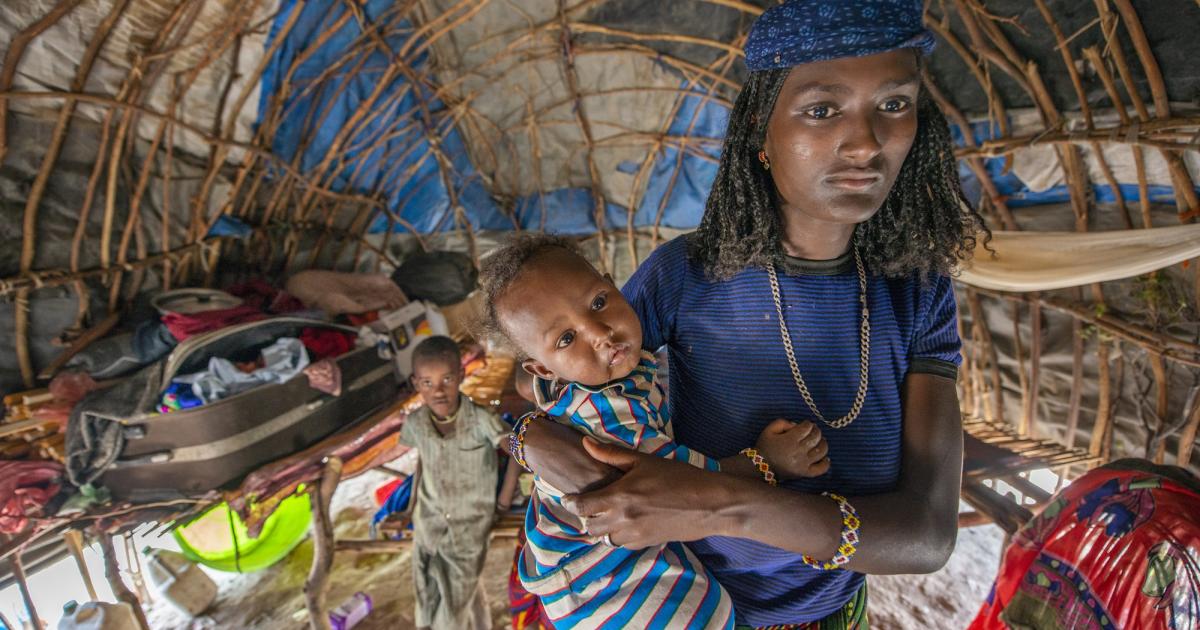
Forced to flee their homes in fear for their lives, they now face the harsh reality of life in displacement. Here are the lives of Ethiopia’s displaced in pictures. Meet Amina and Madabi Mohamed. We walk you through the camps in Amibara and Fentale, and the Kurmuk transit centre, in the centre and north west of Ethiopia.
Surviving natural disasters
Ethiopia’s Afar region is known as one of the hottest places on earth. Once temperatures rise above 40 degrees, the most burning need becomes water and shade.
Earthquakes and volcanic risks have displaced tens of thousands in Ethiopia, leaving many in temporary shelters with poor access to clean water, food, and health services.
More than 18,000 people live here in Amibara camp in Ethiopia. They have been displaced by a series of earthquakes that left behind destruction of roads and buildings.
Malnutrition, disease outbreaks, and funding shortages are compounding the humanitarian crisis in Ethiopia. The EU together with its humanitarian partners are scaling up emergency assistance to help the most vulnerable.
Support at displacement camps
30-year-old Amina resides in Ethiopia’s Oromia region. She was born there, grew up there, and wishes to stay in those lands she has always called home.
But due to the constant threat of earthquakes she had to leave her home with her 4 children. Now she lives in the camp for internally displaced persons.
While life in the camps comes with many challenges, Amina is too afraid to return home.
‘Here, we at least have water. If we would go back, we wouldn’t even have that,’ says Amina.
With EU funding, the humanitarian organisation World Vision is providing a regular water trucking service, water tanks, and latrines, but also education to children and safe spaces for women.
Ethiopia is widely considered the birthplace of coffee. Here at the IDP camp in Ethiopia’s Afar region, we take a moment to share a freshly brewed cup with the camp’s residents who have been displaced by a series of earthquakes in the area.
Almost 100,000 people from Sudan have crossed the border into Ethiopia, fleeing the unimaginable violence resulting from the conflict that erupted 2 years ago.