Subscribe
As Africa accelerates its search for sustainable growth, industrialization, and global relevance, a powerful shift is taking place far beyond the continent’s borders — one that could reshape Africa’s economic future.
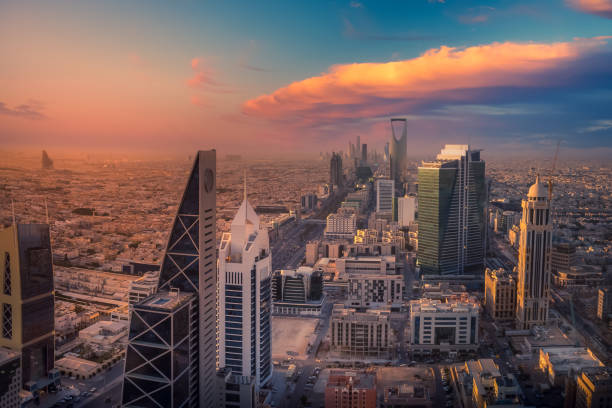
Saudi Arabia has officially surpassed $400 billion in total investment volume, marking one of the largest capital mobilization efforts in the Global South. But beyond the headline figure, what matters most for Africa is this: the Kingdom is positioning itself as one of Africa’s most strategic long-term partners.
Speaking at a government press conference in Riyadh, Saudi Minister of Investment Khalid Al‑Falih confirmed that foreign capital inflows into the Kingdom have reached record levels, driven by its ambitious Vision 2030 transformation plan. The reforms have turned Saudi Arabia into a global investment magnet — and increasingly, a launchpad for Africa‑Gulf economic integration.
Africa at the Center of Saudi Arabia’s Global Strategy
Over the past decade, Saudi Arabia has quietly become one of Africa’s most influential economic players. From energy and mining to agriculture, logistics, infrastructure, tourism, fintech, and real estate, Saudi capital is flowing into African markets at scale.
More than 700 multinational corporations now operate regional headquarters in the Kingdom — many of them using Saudi Arabia as a strategic base to expand into African economies. At the same time, African governments and entrepreneurs are deepening partnerships with Saudi institutions, funds, and industrial groups.
This emerging axis reflects a broader reality:
Africa is no longer seen as a peripheral market, but as a core growth frontier.
Investment That Goes Beyond Money
Saudi Arabia’s investment model increasingly emphasizes jobs, skills, technology transfer, and industrial ecosystems rather than short-term extraction.
According to Al‑Falih:
Over 800,000 new jobs have been created.
Private sector wages have risen by 45%.
Women’s workforce participation has doubled.
More than 62,000 foreign firms are now licensed in the Kingdom — up from just 6,000 in 2016.
For Africa, this matters because Saudi Arabia is actively exporting this same development logic into African markets:
building ports, logistics hubs, renewable energy systems, mining supply chains, digital infrastructure, and manufacturing platforms.
From Aid to Strategic Partnership
This marks a fundamental shift in Africa–Middle East relations.
Where earlier models focused on aid or isolated projects, the new Saudi‑Africa relationship is based on:
Saudi Arabia is not simply investing in Africa.
It is increasingly investing with Africa.
Africa’s Moment in the Global Rebalancing
As global supply chains diversify away from traditional Western and Asian centers, Africa stands at the heart of a historic rebalancing. The continent holds:
60% of the world’s uncultivated arable land
30% of global mineral reserves
The youngest population on earth
Fastest urbanization rate worldwide
Saudi Arabia’s $400 billion investment surge sends a clear signal:
Africa is no longer waiting for opportunity — opportunity is now moving toward Africa.
In a world where economic power is shifting south, the Africa–Gulf corridor may become one of the most influential growth engines of the 21st century.
Not as charity.
Not as dependency.
But as partnership between rising regions shaping the future together.
Related