An ambitious plan to create a colossal underwater tunnel connecting Africa to Europe has been given a fresh boost.
The £7.4bn project, which could see the railway tunnel built under the Strait of Gibraltar crossing between Spain and Morocco, has been found to be ‘technically viable’ by scientists in a recent feasibility study.
The study, conducted by German tunnel experts Herrenknecht and commissioned by the Spanish government in October 2025, found that drilling a railway tunnel using current technology is possible.
However, the project presents a number of technical challenges, with researchers further analysing the practicalities of building critical sections under the Camarinal Threshold, an area characterised by complex geological conditions.
A blueprint is now set to be developed by Spanish consultancy firm Ineco by 2027, with hopes for government approval expected to be secured as early as that year.
The tunnel will be around 26 miles long, with almost 17 miles of the route submerged underwater, according to the Express.
Though a final depth hasn’t yet been set, it’s predicted to lie about 420m below sea level, dwarfing the likes of the Channel Tunnel, which has a maximum depth of 74m under sea level.
If plans for the project go ahead, the tunnel will become one of the longest in the world, and will mark a groundbreaking new system in which goods can be moved between Africa and Europe cheaper and faster.
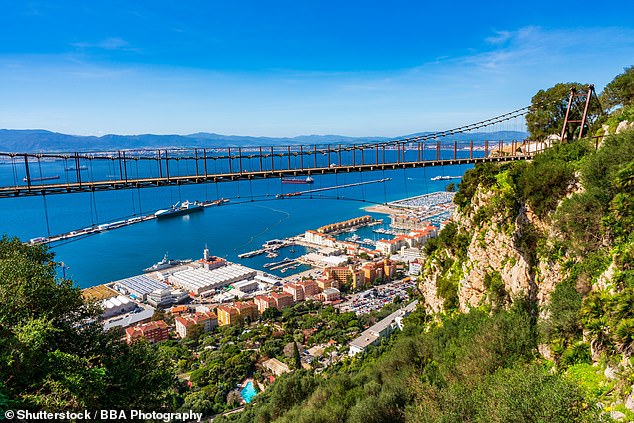
A £7.4bn plan to build an underwater railway tunnel connecting Africa to Europe could be one step closer to reality after scientists found the project to be ‘technically viable’ in a study
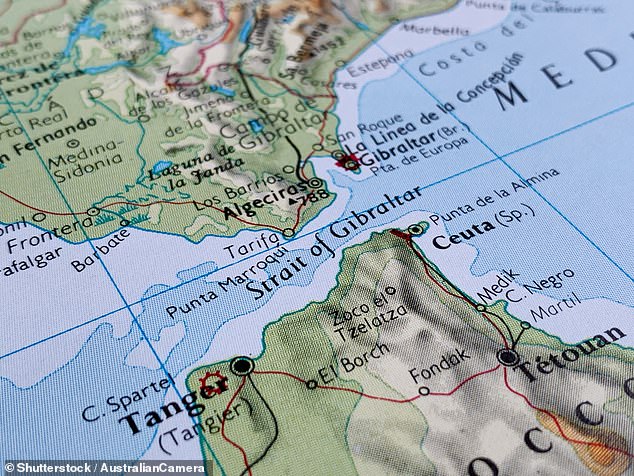
The tunnel will be around 26 miles long and will run through the Strait of Gibraltar, connecting southern Spain to northern Morocco
It would also significantly reduce the travel time from Madrid to Casablanca from the currently 12-hour journey by car and ferry to just five and a half hours on the train.
Inspired by the Channel Tunnel, which connects Britain to northern France, the proposed undersea link would be excavated beneath the nine-mile strait connecting southern Spain and the Moroccan coast.
The project consists of two separate railway tunnels, each accommodating trains travelling in one direction.
Departing Madrid, the train’s first stop would by the Spanish city of Algeciras, located at the southern tip of the Iberian Peninsula, before moving toward the Strait of Gibraltar.
It would then head into a tunnel that runs between Punta Paloma in Cádiz, Spain, and Cape Malabata, near Tangier in Morocco, straight for its penultimate stop in Tangier before reaching its final destination in Casablanca.
Once completed, the rail journey is expected to take around 30 minutes, with the capacity to transport passengers on high-speed AVE trains and freight.
It was originally hoped the proposed railway would be completed by 2030, to coincide with the upcoming FIFA World Cup, which will be co-hosted by Spain, Portugal and Morocco.
However, experts have since shut down those initial plans, stating that the timeline is ‘unrealistic’ given the complexity and early stages of the project.
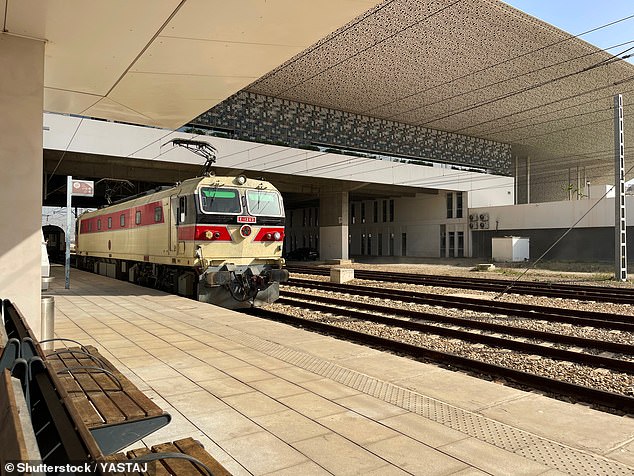
The train will depart Madrid, running between Punta Paloma in Cádiz, Spain, and Cape Malabata, near Tangier in Morocco, before heading to its penultimate stop in Tangier and its final destination in Casablanca (pictured)
Instead, if given the green light, fieldwork for the tunnel is expected to begin in 2030, with the main construction scheduled between 2035 and 2040.
However, these dates are subject to change.
It comes as Ferrovie dello Stato Italiane, also known as FS Group, announced it hopes to run trains through the Channel Tunnel to the UK by 2029, and compete with Eurostar and Virgin.
The move comes after the Italian state-owned rail company secured support from Certares, an American private equity firm.