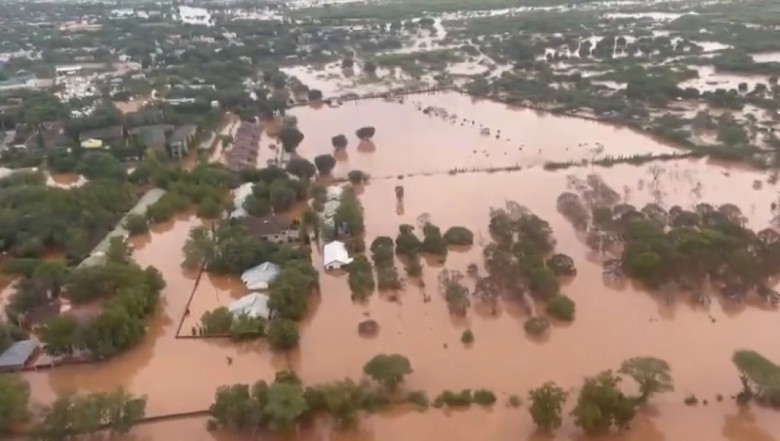
Much of the Greater Horn of Africa is expected to see heavier-than-normal rainfall and warmer temperatures during the March–May (MAM) 2026 season, the IGAD Climate Prediction and Applications Centre (ICPAC) has warned.
The forecast was released during the 72nd Greater Horn of Africa Climate Outlook Forum (GHACOF 72), held in Nairobi on January 26-27, which brought together policymakers, scientists and development partners from across the region.
According to Dr Abdi Fidar, Director of ICPAC, “GHACOF remains a critical regional platform for building consensus on climate risks and translating seasonal forecasts into early action that protects lives, livelihoods, and development across the Greater Horn of Africa.”
 Dr. Abdi Fidah. Director of IGAD Climate Prediction and Application Centre (ICPAC) speaking during the 72nd Greater Horn of Africa Climate Outlook Forum (GHACOF 72), held in Nairobi on January 26-27. (Photo: IGAD)
According to ICPAC, central and eastern Kenya, Uganda, Rwanda, Burundi, Tanzania, Ethiopia, South Sudan, northern Somalia, and Djibouti have a 45 per cent chance of experiencing above-average rainfall during the period. Coastal Kenya is likely to be drier than normal, while parts of South Sudan, Somalia, Tanzania, Uganda and Ethiopia are expected to see near-normal rainfall.
“Normal to early onset of rains is expected over most parts of the region, while delayed onset is forecast over localised areas of Ethiopia, South Sudan, and Somalia,” said ICPAC.
Despite the seasonal outlook, dry spells may still occur in areas forecast to receive near-normal or above-normal rainfall, and wet spells may occur in areas forecast to receive near-normal or below-normal rainfall.
Temperatures are also set to rise in the period, with warmer-than-average conditions projected in Sudan, Djibouti, Tanzania and parts of Ethiopia, Somalia, and Kenya. Similarly, cooler-than-average conditions are expected in parts of central and northern Ethiopia.
According to ICPAC, governments, humanitarian agencies and development partners should use the regional outlook alongside national and local forecasts to prepare for any eventuality.
“ICPAC urges member states and humanitarian partners to actively use the ICPAC regional seasonal outlook alongside the national and sub-national forecasts issued by National Meteorological and Hydrological Services (NMHSs),” it said.
“Closely monitor updated seasonal forecasts, as well as sub-seasonal and short-range forecasts, to inform timely planning and decision-making.”
While urging governments to scale up preparedness and anticipatory actions to minimise potential flood and drought impacts, ICPAC announced that regular updates will be provided throughout the season, while National Meteorological and Hydrological Services will issue detailed, country-specific advisories.
Mr Edward Muriuki, Director of the Kenya Meteorological Department (KMD) also emphasised on the importance of early warning services, stating: “Early warning services are critical in mitigating climate risks, providing timely information that enables governments, communities, and institutions to prepare for and respond effectively to climate-related hazards.”