Home » Latest Travel News » Mexico Joins Argentina, Brazil, and Colombia in Driving South Africa’s Record-Breaking More Than Ten Million Visitors in 2025
Published on
January 29, 2026
By: Paramita Sarkar
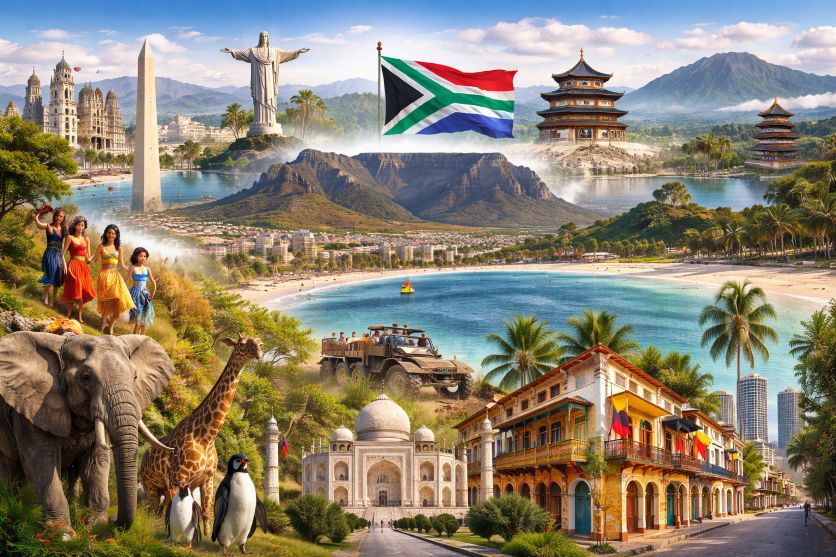
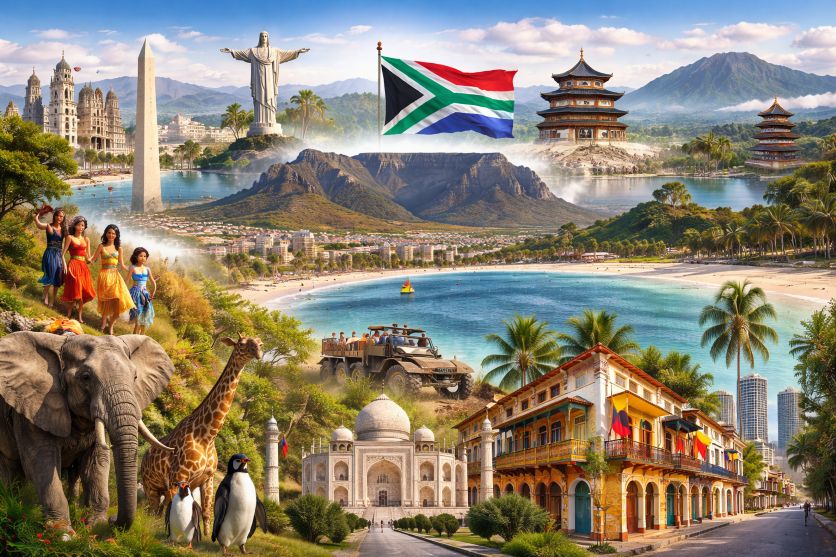
South Africa has achieved a historic milestone in its tourism sector, welcoming 10.48 million international visitors between January and December 2025, surpassing pre-pandemic levels for the first time. This record-breaking number reflects a significant increase in arrivals, particularly from Argentina, Brazil, Colombia, and Mexico, which have been identified as key contributors to this growth.
Key Growth Statistics
In 2025, South Africa’s tourism sector not only achieved record-breaking arrivals but also contributed significantly to job creation. The sector now supports 1.8 million jobs, both direct and indirect, with the latest data indicating that one new job is created for every 13 international arrivals. Furthermore, the Meetings, Incentives, Conferences, and Exhibitions (MICE) sector saw 51 successful bids in 2025, contributing approximately R894.5 million to the economy.
The growth in international visitors is largely attributed to the government’s Tourism Growth Partnership Plan, which has focused on initiatives to increase ease of access and strengthen air connectivity.
Strategic Drivers of Growth
Several strategic initiatives have been credited with driving the tourism growth, including the introduction of the Electronic Travel Authorisation (ETA) system, which was rolled out after a successful pilot during the G20 Summit. This new system, which applies to key markets like India, China, Mexico, and Indonesia, aims to simplify the visa process and is expected to add between 80,000 and 100,000 new jobs to the economy.
Additionally, expanded air connectivity played a crucial role. New and restored flight routes, including Qantas’ Perth–Johannesburg service, Air France’s daily seasonal flights to Cape Town, and South African Airways’ new Cape Town–Mauritius route, have unlocked demand and facilitated the surge in visitors. FlySafair has also expanded its domestic links, further boosting air travel access.
Regional Highlights and Infrastructure Growth
The KwaZulu-Natal region, particularly Durban, experienced significant growth, welcoming 1.2 million visitors during the 2025 festive season alone. This turnaround is attributed to both improved infrastructure and international interest in the region. Durban’s success was amplified by the R2.5 billion Club Med development project, which is expected to further strengthen the region’s tourism appeal.
Advertisement
Advertisement
In terms of infrastructure, the South African government launched eight bankable projects worth approximately R1 billion at the 2025 Tourism Infrastructure Investment Summit, signaling a strong commitment to bolstering the country’s tourism capacity.
Cultural tourism also saw growth, with attractions such as the Kgodumodumo Dinosaur Interpretive Centre in the Free State drawing in over 80,000 visitors. This R120 million project, in collaboration with the EU, has become a key component of the region’s tourism strategy.
Advertisement
Advertisement
Ensuring Safety and Innovation
With the record-high visitor numbers, South Africa’s government took proactive measures to ensure the safety of tourists. The deployment of 1,500 tourism monitors during peak seasons and the launch of a private-sector crime call centre integrated with the Secura App helped ensure rapid emergency response for travelers.
On the tech front, the government launched Siyanda, an AI-powered travel assistant, designed to help North American travelers navigate South Africa’s diverse tourist destinations.
Additionally, South Africa was awarded “Best Destination: Africa 2025” by Travel Weekly Reader’s Choice Awards, a testament to the impact of strategic tourism policies that have shaped the country’s success.
Addressing the “Sharing Economy” and Setting 2026 Goals
In line with the growing popularity of short-term rental platforms like Airbnb and Booking.com, South Africa is moving to regulate the sharing economy through a new Short-Term Rental Code of Good Practice. This code aims to balance the economic benefits of platforms with the needs of traditional hospitality sectors and local communities.
The South African government has also outlined ambitious goals for the 2026 tourism season. The government is shifting focus to include underserved regions like Free State, Northern Cape, Eastern Cape, North West, and Limpopo, with the aim of diverting at least 20% of international arrivals to these areas by the end of 2026.
2026 Provincial Growth Targets
South Africa is set to build on the 2025 successes by targeting provincial diversification in 2026. For example, KwaZulu-Natal will continue to be developed as a premier destination with Club Med’s further expansion, while the Free State is being positioned as a hub for heritage and science tourism.
The ETA system, which has now transitioned into a broader launch for key markets like India and China, will play a critical role in meeting South Africa’s tourism goals. The ETA simplifies the visa process through an AI-driven, biometric-linked digital system, replacing the outdated paper-based process. With the introduction of real-time performance dashboards, the Department of Tourism will monitor metrics like average length of stay and MICE bids to track progress and ensure South Africa remains a competitive global tourism destination.
Conclusion
South Africa’s tourism sector is poised for continued success, driven by government initiatives like the Tourism Growth Partnership Plan and the Electronic Travel Authorisation (ETA) system. With a record-breaking 10.48 million international arrivals in 2025, the country is positioned to become an even more prominent global travel destination in 2026. By diversifying tourism across all provinces and regulating the sharing economy, South Africa is setting the stage for sustainable growth that benefits both the economy and local communities.
