In Kenya, nearly 50 percent of children living in low-income urban areas are malnourished. This is being driven by rapid urbanization, rising food costs, and the erosion of traditional food-sharing systems. As cities like Nairobi expand, community leaders and researchers are working to reimagine urban food systems—not just to feed people, but to restore dignity, health, and social connection.
“Growing up as a young kid, there was no guarantee that we could get 3 meals in a day. I used to depend on the school meal. It was a challenge that many people are facing,” Greg Kimani, the CEO of City Shamba, says in the Food 2050 film, which premieres January 2026 in partnership with Media RED, the Rockefeller Foundation, and Food Tank. “If my neighbor cannot have food, we are not food secure.”
This belief reflects a broader cultural value rooted in Ubuntu, an Indigenous African philosophy of interconnectedness.
“When I was growing up, sharing food was a common thing that we did. It’s about the value of Ubuntu, [meaning] ‘I am because we are.’ It’s the spirit of helping one another. It’s the spirit of sharing,” says Dr. Elizabeth Kimani-Murage, a Research Scientist at the African Population and Health Research Center (APHRC).
“But the world is urbanizing, and we are losing that culture of Ubuntu,” says Dr. Kimani-Murage.
Nairobi’s population is projected to triple by 2050 to more than 10 million people. Historically, the city relied on rural communities for food, but those areas have increasingly urbanized themselves, reducing agricultural production. Dr. Kimani-Murage, who has conducted research on nutrition and food security among the urban poor for more than two decades, has seen firsthand how these shifts have deepened inequality. Today, she promotes agroecological urban farming across socioeconomic divides to “ensure that people can produce safe food for themselves and feed themselves with dignity.”
In Nairobi, affordability—not availability—is often the core problem, according to Dr. Kimani-Murage. Because many residents cannot afford market prices, the food supply can exceed demand. “A lot of the food finds itself in the dump site, and people go to scavenge on that food,” either feeding it to their families or selling it to others, says Dr. Kimani-Murage.
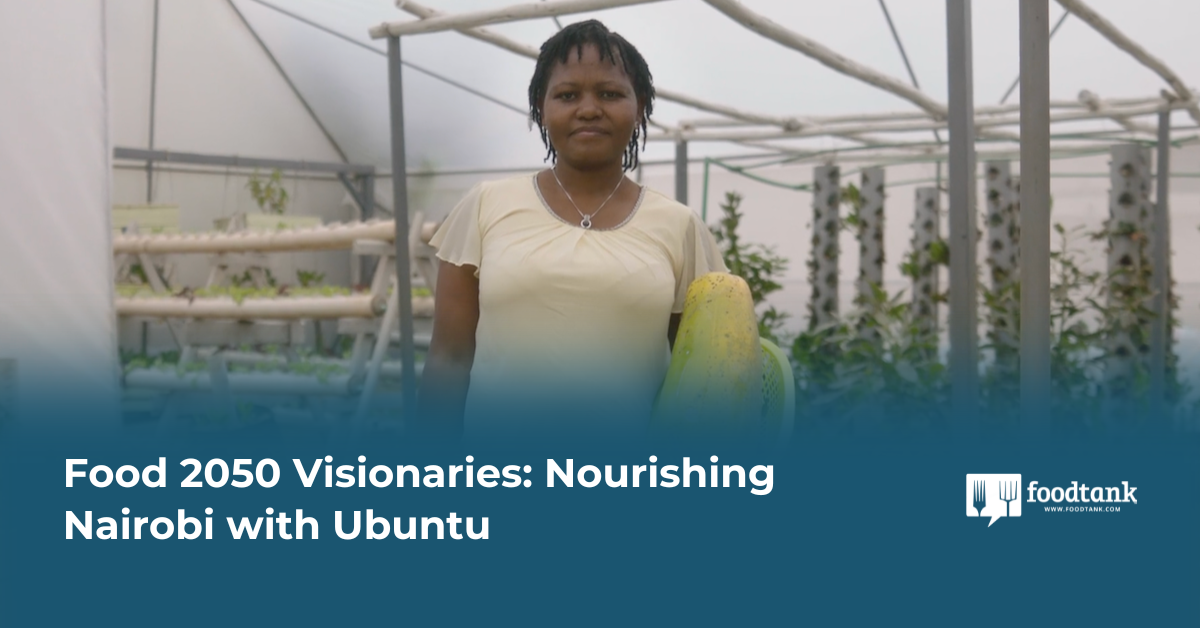
City Shamba was founded to challenge the assumption that dense urban areas cannot produce food. The organization trains residents in vertical farming techniques to maximize productivity in limited spaces. It provides seedlings and soil, which are often difficult to access. Kimani’s team also prioritizes nutrient-rich Indigenous vegetables, helping households improve nutrition while reducing costs.
According to David Osogo, a Research Officer at APHRC, City Shamba shows that urban areas themselves can be part of the solution to food insecurity and malnutrition.
“Urban farming almost gives you instant results,” says Osogo. “We have seen communities in the informal settlement feed off their tiny kitchen gardens…school children eating lunch and eating hot meals that are directly from vegetables from the farms…chicken from the poultry farms within the schools.”
These community-led efforts are supported by Dr. Kimani-Murage’s vision, “A Place of Cool Waters”—the translation of the Indigenous name for Nairobi—which was named a Rockefeller Foundation Top Food System Visionary in 2020 and featured in the Food 2050 film. It provides grants to grassroots organizations including City Shamba that are rethinking food production and access in urban spaces. This work is also advancing what Dr. Kimani-Murage describes as a “right to food movement” in Kenya.
“It is important that people can take charge of what they’re eating,” says Dr. Kimani-Murage. “We really want to promote the spirit of Ubuntu, encouraging people to share any excess food…so that food is not just seen as a commodity, it is seen as a common good and a human right.”
Since the Food 2050 filming, the initiative has expanded to cities throughout Kenya and gained international attention: In 2023, King Charles III visited City Shamba’s facilities. But Dr. Kimani-Murage’s long-term vision has expanded beyond food—she sees climate action as critical to food systems transformation.
“We have embraced climate action as a key driver of this work,” says Dr. Kimani-Murage. “Food security and nutrition are very heavily impacted by climate change. By encouraging climate action, you are also promoting food security and optimal nutrition.”