African Union, U.S. launch infrastructure and investment working group
Initiative targets trade, logistics, digital projects under Agenda 2063
Group seeks to mobilize U.S. private capital for African infrastructure
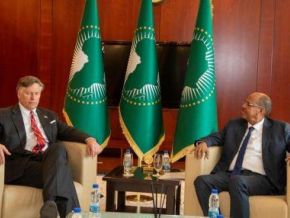
The African Union Commission (AUC) and the United States have launched a Strategic Infrastructure and Investment Working Group (SIWG), following talks between AUC Chairperson Mahmoud Ali Youssouf and U.S. Assistant Secretary of State Christopher Landau.
The initiative, launched on Jan. 28, 2026, aims to mobilize investment in high-quality infrastructure to support trade, spur private-sector engagement and advance the African Union’s Agenda 2063 priorities.
The SIWG will bring together senior officials and technical experts from the AUC and the U.S. government to identify investment opportunities and encourage U.S. private-sector participation in AU-backed infrastructure projects. It will focus on trade and logistics networks, as well as digital transformation across the continent.
The U.S. State Department said the investments would draw on AU expertise alongside American capital and new financing instruments, with the goal of strengthening supply chains for critical minerals and raw materials, as well as developing transport corridors, energy networks and regulatory harmonisation.
The African Development Bank says Africa’s industrial development has been held back by gaps in infrastructure, power generation, water and transport. The bank estimates the continent needs $130 billion to $170 billion a year for infrastructure development, leaving an annual financing gap of $68 billion to $108 billion.
Africa currently invests about 4% of GDP in infrastructure, compared with 14% in China. Closing the gap could lift annual GDP growth by around two percentage points, the AfDB adds.
Infrastructure development is central to Agenda 2063, notably through the Programme for Infrastructure Development in Africa (PIDA), which provides a framework for member states to build integrated transport, energy, digital and transboundary water networks to boost trade, stimulate growth and create jobs.
Lydie Mobio