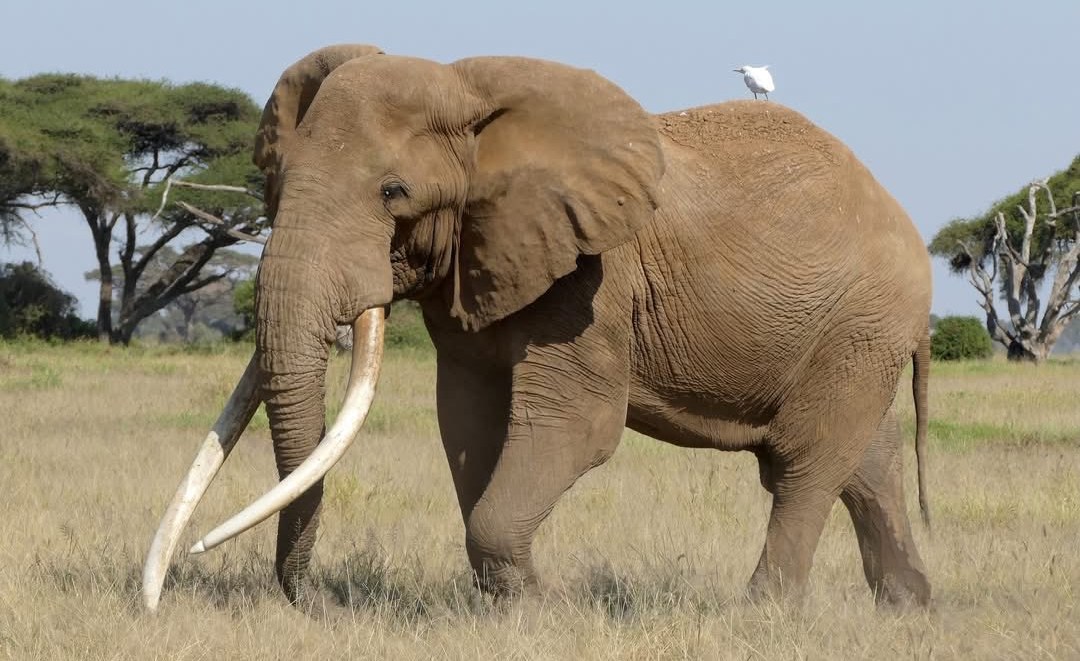
Kenyans are mourning the death of a beloved “super tusker” elephant whose 54 years in the wild came to symbolise the country’s increasingly successful efforts to protect the mammals from ivory poachers.
“Craig, the legendary super tusker famed for its immense, ground-sweeping tusks and calm, dignified presence, passed on at the age of 54,” the Kenya Wildlife service said in a statement Saturday.
The bull elephant lived in Amboseli National Park in southern Kenya – a favorite for safari tourism.
The Amboseli Trust for Elephants said Craig had died of natural causes and that it was grateful to everyone who worked to help the animal “live out his life naturally”.
Keep up with the latest headlines on WhatsApp | LinkedIn
Local broadcaster NTV aired a segment on the death of Craig, describing the elephant as a rare creature and “one of the last remaining elephants identified as super tuskers in Africa”.
The term describes a bull elephant with tusks that weigh over 45 kilograms each – so long that they scrape the ground as the elephant walks, according to the Tsavo Trust, a non-profit conservation group in Kenya.
Females that grow long tusks are called iconic cows, the group says.
Top of the class: clever Kenyan elephants learn to use rail underpasses
Powerful bloodline
Craig the elephant was a major attraction in Amboseli National Park. The Kenya Wildlife Service described him as an “icon” of successful conservation and a “living monument to Africa’s natural heritage”.
In 2021, he was adopted by beer maker East African Breweries through its popular Tusker brand, reflecting his prominence but also underscoring collaboration between conservation groups and others in Kenya.
Craig “fathered a number of calves, ensuring that his powerful bloodline and gentle character live on across generations,” the wildlife service said.
Kenya‘s national parks and reserves are home to a variety of wildlife species and attract millions of visitors each year, making the country a tourism hotspot.
The elephant population has grown from 36,280 in 2021 to 42,072 in 2025, the latest official figures show.
‘It’s about stopping harmful tourism’: the fight against Maasai Mara luxury hotel
In the Mwea National Reserve, a protected area east of the Kenyan capital of Nairobi, the elephant population grew spectacularly, overwhelming the ecosystem and requiring the relocation of about 100 elephants in 2024.
In June this year, Zimbabwe announced it would cull 50 elephants in an effort to manage soaring numbers in a southeastern game reserve, with meat from the operation to be distributed to nearby communities.

Sign up for free AllAfrica Newsletters
Get the latest in African news delivered straight to your inbox
Success!
Almost finished…
We need to confirm your email address.
To complete the process, please follow the instructions in the email we just sent you.
Error!
There was a problem processing your submission. Please try again later.
(with newswires)
