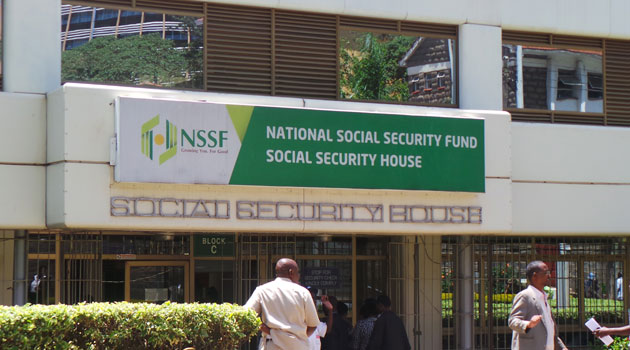
The National Social Security Fund (NSSF) has proposed the construction of two high-rise towers (a 60-storey and 35-storey building) at the junction of Uhuru Highway and Kenyatta Avenue in Nairobi, aimed at offering a mix of residential, business and leisure amenities to meet the growing demand in the city.
According to the environmental impact assessment (EIA) report for the project, the towers will feature office spaces, a business hotel, serviced apartments, retail outlets and an observation deck on the 56th floor, while providing parking for over 1,100 vehicles.
NSSF says the proposed project is necessary as it will provide direct and indirect job opportunities to a significant number of the population during construction and occupational phases, thus reducing unemployment and providing livelihood to several.
It also states that the development will ensure optimal use of previously undeveloped land in Nairobi’s central business district.
“The proposed site has been undeveloped for some time, and the project shall utilise the parcels of land, raising their utility. The proposed use conforms to the area’s land use and is not unique in the general NCBD,” reads the notice.
The project is also expected to contribute to housing supply and commercial development. The Fund states that housing is a basic good and a major contributor to productivity.
“Supply of standard and affordable housing has always lagged behind demand, and the proposed project will help reduce this deficit. The commercial premises will also enhance the provision of more commercial entities to the public,” the EIA notes.
The report further highlights that the use of locally available construction materials such as cement, concrete, ceramic tiles, timber, sand, ballast and electrical cables is expected to stimulate local industries.
“This will contribute towards growth of the economy by increasing cash circulation and providing a ready market for suppliers such as quarrying companies and hardware shops,” reads the report.
The EIA also emphasises that the towers will support informal sector businesses and generate revenue.
“Those doing commercial activities in the neighborhood shall have their market widened by the occupants and workers. The proposed project shall generate tax revenue for the government directly and indirectly, and it will also lead to increased NSSF revenue generation and return on investment for contributors,” it states.
Tourism is expected to benefit as well, thanks to amenities including the hotel and commercial complexes.
While the project offers significant benefits, the assessment has also identified potential negative impacts and has proposed mitigation measures. The report notes that vegetation loss will be addressed through landscaping programs, while air pollution will be controlled by covering trucks, sprinkling water on dry soils, using clean fuels and providing dust masks to personnel.
Greenhouse gas emissions will be mitigated through rooftop solar PV systems, energy efficiency measures, and annual energy audits. Fire risks will be managed through alarms, smoke sensors, extinguishers, and “No Smoking” zones in areas with flammable materials.
During construction, NSSF said traffic disruption in the CBD will be minimized by proper scheduling of material deliveries, employing formal flagmen and installing clear signage. Noise pollution will be managed with sound barriers, portable shields for equipment, proper maintenance and protective gear for workers.
Occupational safety and health measures will include mandatory protective gear, restricting unattended site access, proper handling of hazardous materials, first aid kits, warning signs and staff training. The sewerage system will also be built to approved standards, and substandard or hazardous materials will be avoided during construction and maintenance.
The Fund added that water management strategies will include motion-sensing taps, urinals and toilets, as well as rainwater harvesting for cleaning, toilet flushing and irrigation. Waste will be segregated at source and handled by a NEMA-licensed contractor, while sanitation and hygiene capacity will be built among construction workers.
Additionally, security will be maintained with guards, CCTV cameras and adequate lighting throughout the project cycle. Climate change mitigation measures will focus on resilient infrastructure, energy efficiency and biodiversity conservation, including reforestation and sustainable land management practices.