The Federal Government has flagged off a series of water infrastructure, irrigation, flood control and human capital development projects across Kano and Jigawa States, reaffirming its commitment to food security, climate resilience and sustainable livelihood.
The Minister of Water Resources and Sanitation, Engr. Prof. Joseph Terlumun Utsev, led the inauguration of key projects under the Hadejia Jama’are River Basin Development Authority (HJRBDA), including the Bela Dam Project and a pilot Kaukau Drip Irrigation scheme in Bichi Local Government Area of Kano State.
Speaking at the foundation-laying ceremony for the Bela Dam in Bela Community, the Minister described the project as a major milestone in sustainable water management and agricultural development.
He explained that the multipurpose dam, with a storage capacity of 775,000 cubic metres, is designed to mitigate perennial flooding while supporting irrigation, domestic water supply, fisheries, livestock production and other agricultural activities.
According to him, the dam will significantly improve livelihoods, boost food production, expand economic opportunities for the host community and strengthen climate resilience. He urged residents to support and protect the project to ensure long-term benefits.
“As a nation, we can transform our water resources into powerful drivers of prosperity, food sufficiency and national development,” Utsev said.
During the same visit, the Minister launched a pilot drip irrigation scheme at Kaukau and performed a symbolic planting of crops alongside the Managing Director of HJRBDA, Rabiu Suleiman Bichi, and technical directors from the Ministry, underscoring the Federal Government’s commitment to practical, results-driven agricultural interventions.
Earlier in Kano State, Prof. Utsev commissioned a modern Conference and Training Centre at the Hadejia Jama’are River Basin Development Authority, describing it as a strategic facility for equipping youths and women with technical and practical skills for climate-smart and innovative agriculture.
He said the centre was conceived as a hub for grooming a new generation of agripreneurs who would drive productivity, adopt modern technologies and contribute meaningfully to national development through job creation and self-reliance.
“By empowering our youth and women with practical agricultural skills, we are strengthening the agricultural sector, creating jobs and promoting inclusive economic growth,” the Minister stated.
Graduating trainees at the centre received hands-on training in drip irrigation, hydroponics, greenhouse technology and the “Every Home a Garden” initiative.
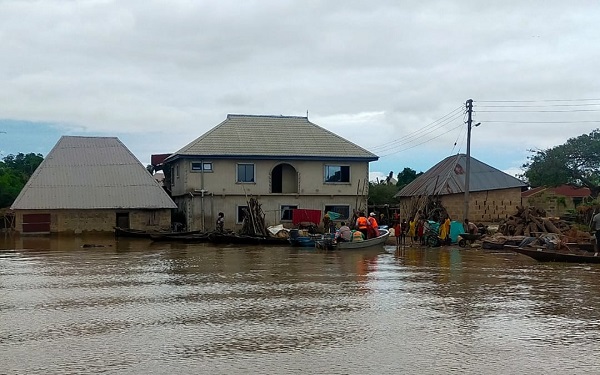
The Minister later proceeded to Jigawa State, where he flagged off the Jahun Drainage and Erosion Control Project in Jahun Local Government Area.
He said the intervention marked a decisive response to decades of erosion and flooding that had destroyed farmlands, disrupted livelihoods and threatened lives and property.
He explained that beyond flood control, the project would enable the harnessing of water for productive agricultural use, supporting year-round farming and stable food production.
He called on the benefiting community to take ownership of the project and safeguard it for future generations.
Representing the Executive Governor of Jigawa State, the Deputy Governor, Engr. Aminu Usman Gumel, commended the Federal Government for the intervention, noting that it would curb perennial flooding, improve living conditions and boost the local economy. He added that the project includes a youth training component in drip irrigation.
The Managing Director of HJRBDA, Rabiu Suleiman Bichi, expressed gratitude to President Bola Ahmed Tinubu and the Minister for their support, describing the projects as part of a holistic approach to modern irrigation, flood management and agricultural development.
The project inauguration across both states were attended by senior officials of the Ministry, traditional rulers, community leaders, youths, women and farmers, with highlights including the graduation of youths trained in drip irrigation on rehabilitated lands.