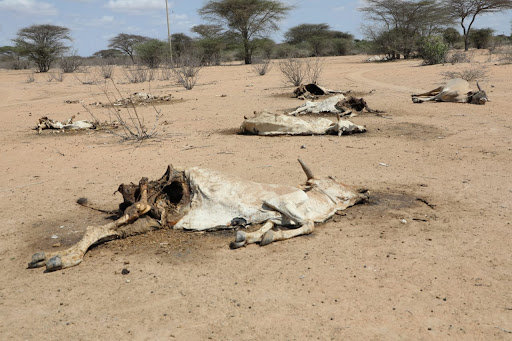
 Studies report that this is the most severe drought since 1981/FILE.
Livestock Principal
SecretaryJonathan Mueke has outlined measures the government is putting in place to combat drought currently affecting various parts of the country.
Speaking during an interview on Citizen TV, Mueke stated
that the government had formed a multi-agency committee, led by the deputy
president, to address the drought alert.
“In terms of budget, we are expecting for the next three or
five months to spend about Sh6 billion or so on different drought
interventions,” the PS said.
Mueke mentioned cash transfers, emergency hay to farmers,
livestock insurance and off-take programmes as part of the viable strategies for
mitigating the drought.
“The total budget is about Sh6 billion. The
government is providing Sh4 billion, and then Sh2 billion is coming from the
private sector actors, development partners and really just from friends,” Mueke said.
The PS also commended the progress in vaccinating over nine million animals, indicating that the programme has helped protect livestock from diseases
as farmers moved in search of pasture due to the drought.
According to recent reports, Kenya is experiencing the most
severe drought since 1981, with the ASAL (Arid and Semi-Arid Lands) counties
in the country being hit the hardest.
Mueke said that there was enough food in the country,
attributing it to the subsidised fertiliser programme.
Additionally, he encouraged livestock farmers to sell their animals in order to receive high prices this season.
This report comes days after records showed a spike in
malnutrition cases in Mandera, the county most affected by the dry spell.
The
intensity of the drought diminished livestock production in the county, a vital
source of livelihood for the Mandera community.
Milk, a key source of nutrition for young children, became
significantly scarce, worsening the nutrition challenge in the affected
households.
“As we speak, about 67,000 households have been impacted.
The drought has severely affected nutritional status, with malnutrition cases
rising due to lack of milk and loss of livelihoods,” Mustafa Adan, the Mandera County Kenya
Red Cross Coordinator, said.
As the prolonged lack of rainfall hits the country, the
livelihoods and sustenance of many households within the affected areas remain
precarious.