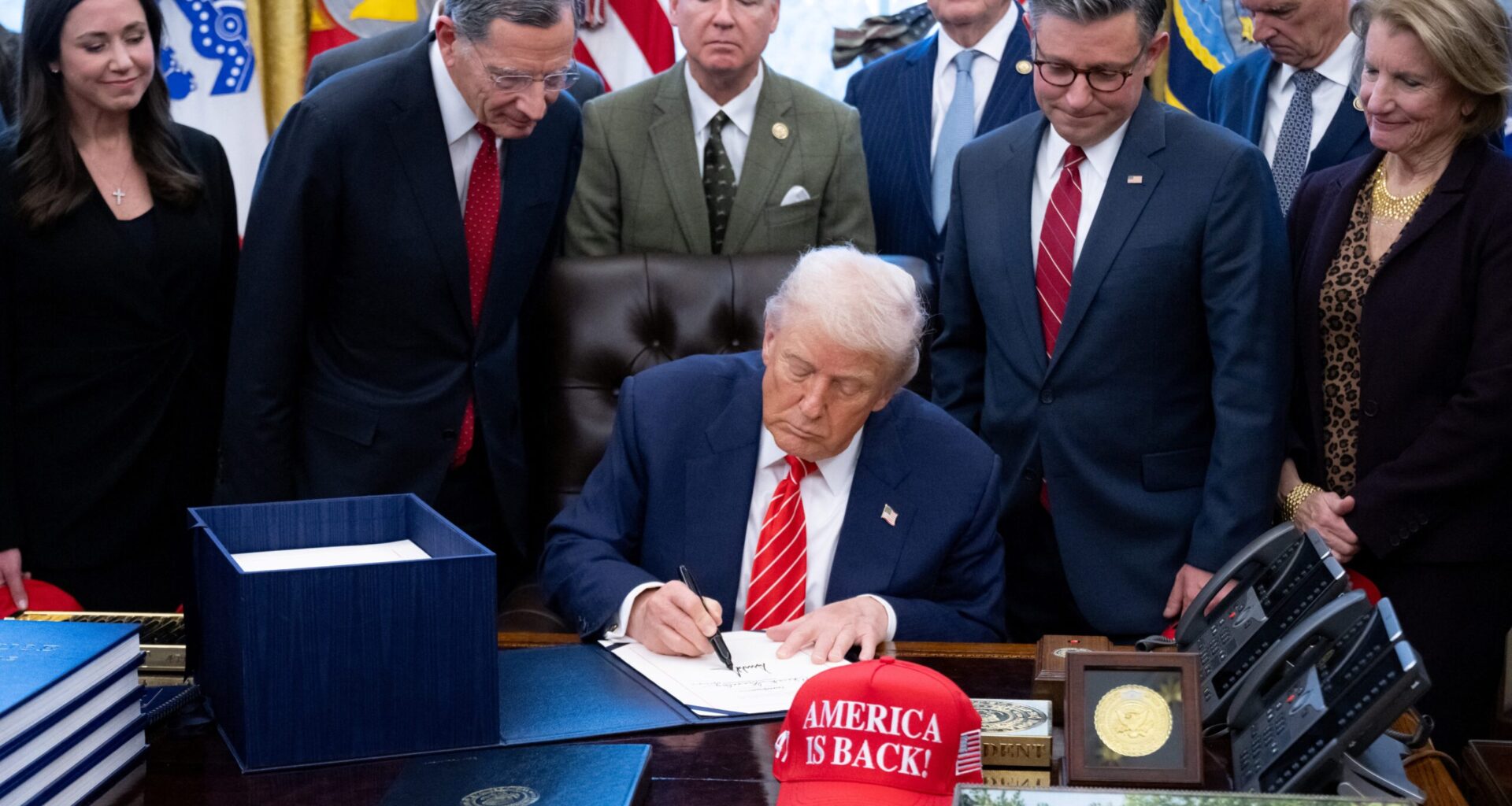
United States President Donald Trump has signed into law a short‑term extension of the African Growth and Opportunity Act (AGOA), ending months of uncertainty over the future of the key US‑Africa trade framework.
The extension, signed on Tuesday, runs until December 31, 2026, and applies retroactively from September 30, 2025, when the agreement expired, according to the Office of the United States Trade Representative.
While the move restores temporary market access for African exporters, the one‑year extension has been widely viewed as limited relief for economies and industries that depend heavily on preferential access to the US market.
Reduced Scope After Congressional Negotiations
The US House of Representatives had initially approved legislation to extend AGOA for three years. However, the Senate later amended the bill, reducing the extension period to one year, according to Reuters.
US trade officials said the renewed framework would also be modified to reflect Washington’s tariff policies, aligned with President Trump’s “America First” agenda.
“AGOA for the 21st century must demand more from our trading partners and yield more market access for US businesses, farmers, and ranchers,” the US trade office said in a statement.
A Critical Trade Lifeline for Africa
Introduced in 2000 under former US President Bill Clinton, AGOA allows eligible African countries to export around 1,800 products duty‑free to the United States. These include crude oil, vehicles and automotive components, textiles, clothing, and agricultural products.
The agreement underpins a significant share of US‑Africa trade, which was valued at more than $100 billion in 2024, according to US trade data.
At the time of its expiration in September 2025, 34 African countries were eligible under the programme. Businesses across the continent warned that a prolonged lapse would threaten tens of thousands of jobs, particularly in manufacturing and apparel sectors.
Africa Faces Continued Uncertainty
Although the extension prevents an immediate disruption to trade flows, analysts say the short timeframe offers little certainty for long‑term investment planning, especially for export‑oriented industries.
African governments and private sector groups have repeatedly called for a longer‑term renewal, arguing that policy predictability is essential to sustain industrial growth, employment, and deeper integration into global value chains.
With the current extension set to expire at the end of 2026, attention is now shifting to whether Washington will commit to a multi‑year framework that provides Africa with durable access to its largest export market.
AGOA extension, African Growth and Opportunity Act, US Africa trade, Donald Trump AGOA, Africa trade deal, US tariffs Africa, African exports US, AGOA renewal 2026, Africa US relations, trade uncertainty Africa, African manufacturing jobs, apparel exports Africa, duty free access US, AGOA expiration, Africa trade policy, US Congress AGOA, Senate AGOA decision, House AGOA bill, America First trade policy, African economies AGOA, export industries Africa, US market access Africa, African private sector trade, US Africa economic relations, AGOA short term extension, African trade agreement, US trade representative AGOA, Africa investment uncertainty, industrialisation Africa, African exporters US, AGOA policy future, Africa supply chains, global trade Africa, African employment trade, Africa business news, trade governance Africa, African growth strategy, US Africa commerce, African trade lifeline, AGOA impact Africa, Africa economic integration, US Africa economic ties, African markets access, trade law AGOA, Africa development trade, African industrial policy, AGOA reform debate, Africa US trade framework, African export growth, Africa trade stability, AGOA continuation, Africa global trade, US Africa partnership, African policy risk, trade preferences Africa, AGOA uncertainty, African economies outlook, Africa investment climate, US Africa trade future
Related