“Tanzania Could Take 10 Years (2025–2035) to Build a Competitive Manufacturing Economy”
Introduction: A Critical Decade for Tanzania’s Industrial Future
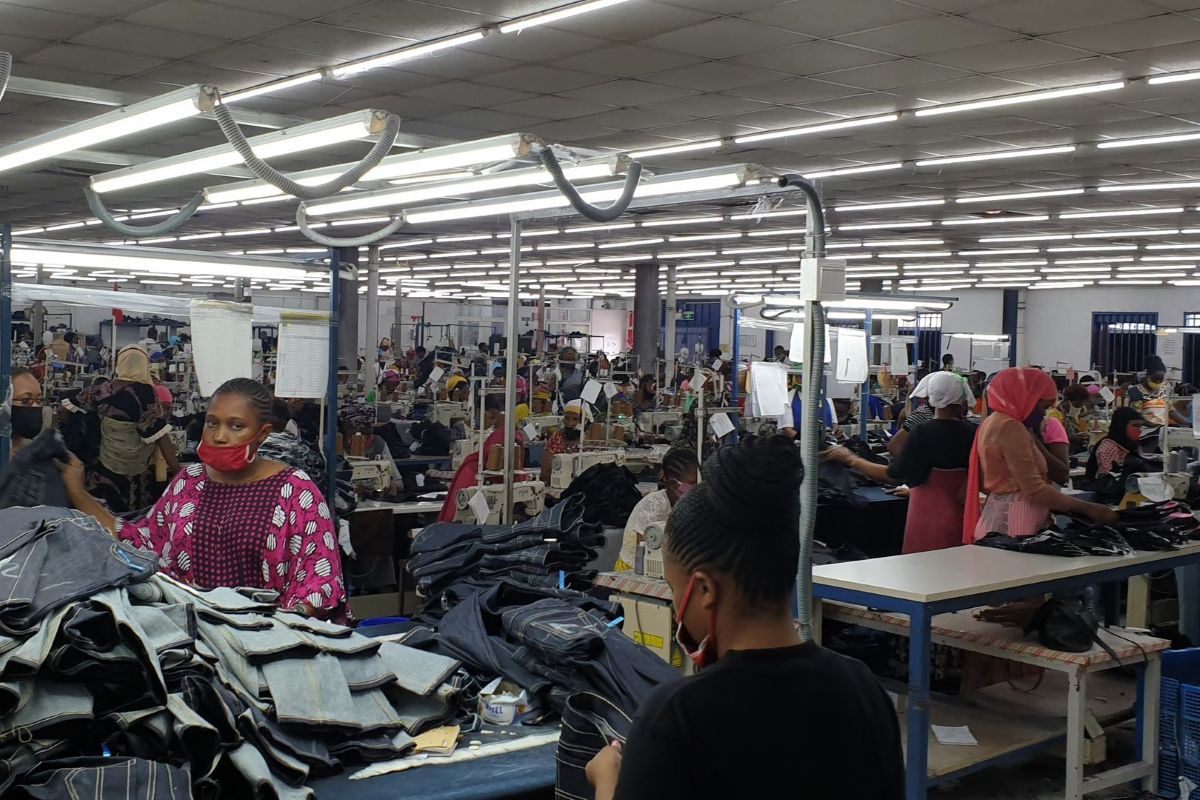
Tanzania stands at a decisive moment in its economic transformation. Despite recording steady GDP growth of around 5–6 percent over the past decade, the structure of the economy remains largely unchanged, with manufacturing contributing only about 8–9 percent of GDP for more than 30 years. This stagnation highlights a deep structural imbalance: while growth has been consistent, it has not been sufficiently industrial or employment-intensive to shift the country toward middle-income industrial status. The coming decade, from 2025 to 2035, therefore represents a critical window in which Tanzania could realistically reposition manufacturing as a central engine of growth, productivity, and job creation.
The urgency of this transformation is rooted in Tanzania’s labor structure. Agriculture still employs roughly 65 percent of the workforce but contributes only about 26 percent of GDP, with relatively low productivity growth. By contrast, manufacturing employs less than 7 percent of workers and generates just over 8 percent of national output. This mismatch signals not only underemployment in rural areas but also the economy’s limited capacity to absorb labor into higher-productivity sectors. Without a strong expansion of manufacturing and related industries, millions of young Tanzanians entering the labor market each year risk being trapped in low-income, informal, or vulnerable work. A 10-year industrial push is therefore not just an economic strategy, but a social and demographic necessity.
8-9%
Manufacturing Share of GDP (Stagnant for 30+ Years)
65%
Workforce in Agriculture (26% GDP Contribution)
306,000
Manufacturing Jobs (2024)
2025-2035
Critical Transformation Decade
Between 2025 and 2035, Tanzania has the opportunity to move from industrial stagnation to structured industrial takeoff. National targets outlined for this period envision manufacturing increasing its share of GDP from around 8 percent to approximately 25 percent, while manufacturing employment expands from just over 300,000 formal jobs today to as many as 2.5 million jobs by 2035. At the same time, the share of formal employment in the overall workforce is expected to rise significantly, and the contribution of manufactured exports to total exports could more than double. These targets are ambitious, but they provide a measurable framework for assessing whether Tanzania is truly on a path toward a competitive manufacturing economy.
However, achieving this transformation within a decade will require more than growth alone; it will demand structural change driven by deliberate industrial policy. The current manufacturing landscape is constrained by several persistent challenges: a difficult business environment that keeps most firms informal, high logistics and energy costs that undermine competitiveness, a severe skills mismatch in the labor force, limited access to long-term industrial finance, and weak coordination across government institutions responsible for industrial development. As a result, manufacturing firms struggle to scale, integrate into regional and global value chains, or upgrade into higher value-added production. Addressing these constraints systematically over the next 10 years will determine whether Tanzania’s industrial ambitions remain aspirational or become reality.
International experience shows that a decade can be transformative when industrialization is guided by coherent strategy and disciplined implementation. Lessons drawn from China’s evolving industrial policies, South Korea’s coordinated state-led industrialization, and Vietnam’s trade-driven manufacturing expansion demonstrate that structural change is possible within a generation when governments align policy, finance, skills, infrastructure, and private sector incentives around clearly defined priority sectors. For Tanzania, this means concentrating resources on a limited number of strategic manufacturing industries—such as agro-processing, textiles and garments, construction materials, light manufacturing, and selected pharmaceuticals—while building domestic productive capacity before relying heavily on exports. The 2025–2035 period can thus serve as Tanzania’s “decade of industrial consolidation,” where focus, sequencing, and institutional coordination matter more than policy volume.
Ultimately, the proposition that Tanzania could take 10 years to build a competitive manufacturing economy is both realistic and demanding. Realistic, because the country possesses key foundations: a large and growing domestic market, access to regional markets through the East African Community and AfCFTA, abundant natural resources, and a youthful labor force. Demanding, because the shift requires sustained political commitment, institutional reform, and performance-based industrial support that extends beyond electoral cycles. The decade to 2035 is therefore not simply a timeline — it is a test of whether Tanzania can translate long-standing industrial visions into coordinated action, measurable progress, and durable structural transformation.