Key Insights
Nigeria is now home to one of the world’s largest oil refineries.
After years of importing transportation fuels, the country is on the road to being self-sufficient.
Built in an era of slowing fossil-fuel consumption, the refinery remains a gamble.
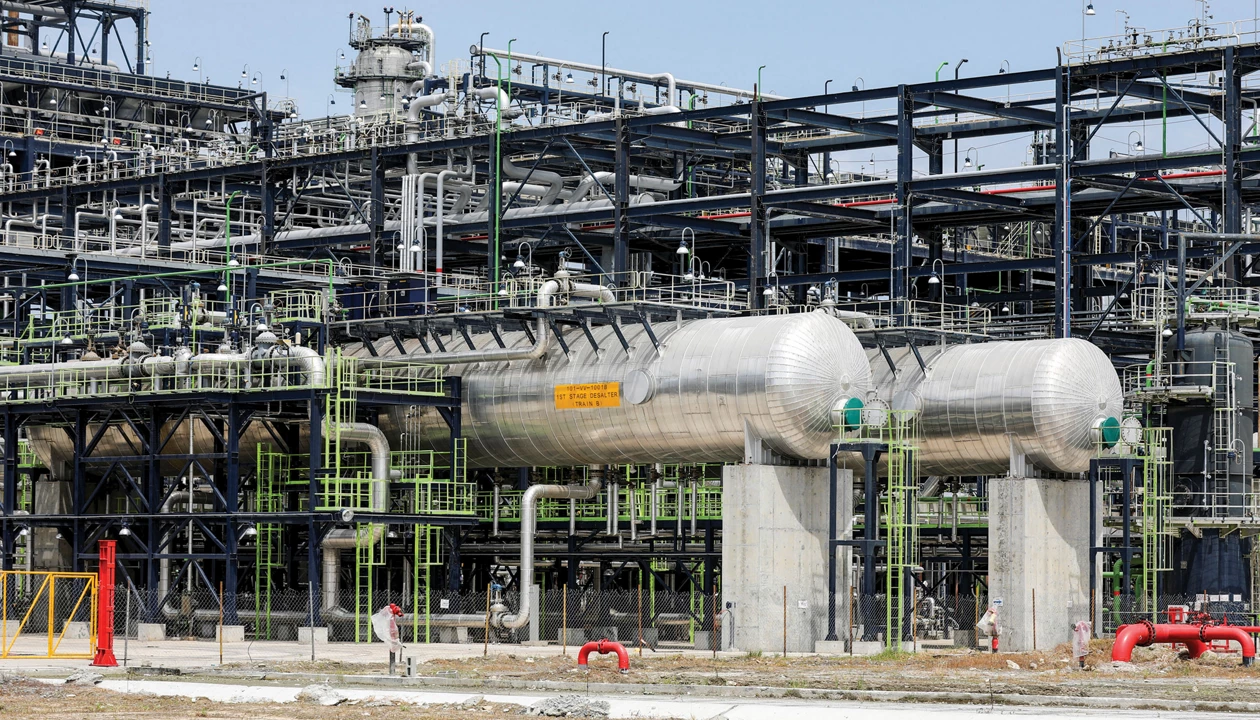
On the outskirts of Nigeria’s former capital, Lagos, the colossal $20 billion Dangote Petroleum Refinery promises a crude awakening. It is already the largest refinery globally to use a lone “single train” distillation system. And in October, Aliko Dangote, head of Dangote Industries and Africa’s richest man, announced a plan to double its capacity to 1.4 million barrels per day, aiming to make it the largest refinery in the world by any standard.
“This expansion reflects our confidence in Nigeria’s future, our belief in Africa’s potential, and our commitment to building energy independence for our continent and the world,” Aliko Dangote said at an October briefing.
Nigeria has three state-owned refineries, but none of them are operational, even though the government spent $18 billion on their maintenance over the past 2 decades. As such, the country, which is Africa’s largest oil producer, has long exported crude oil only to import refined products at a premium, starving its economy and polluting its politics. Meanwhile, Nigeria faces economic turmoil, with inflation and interest rates both exceeding 15%.
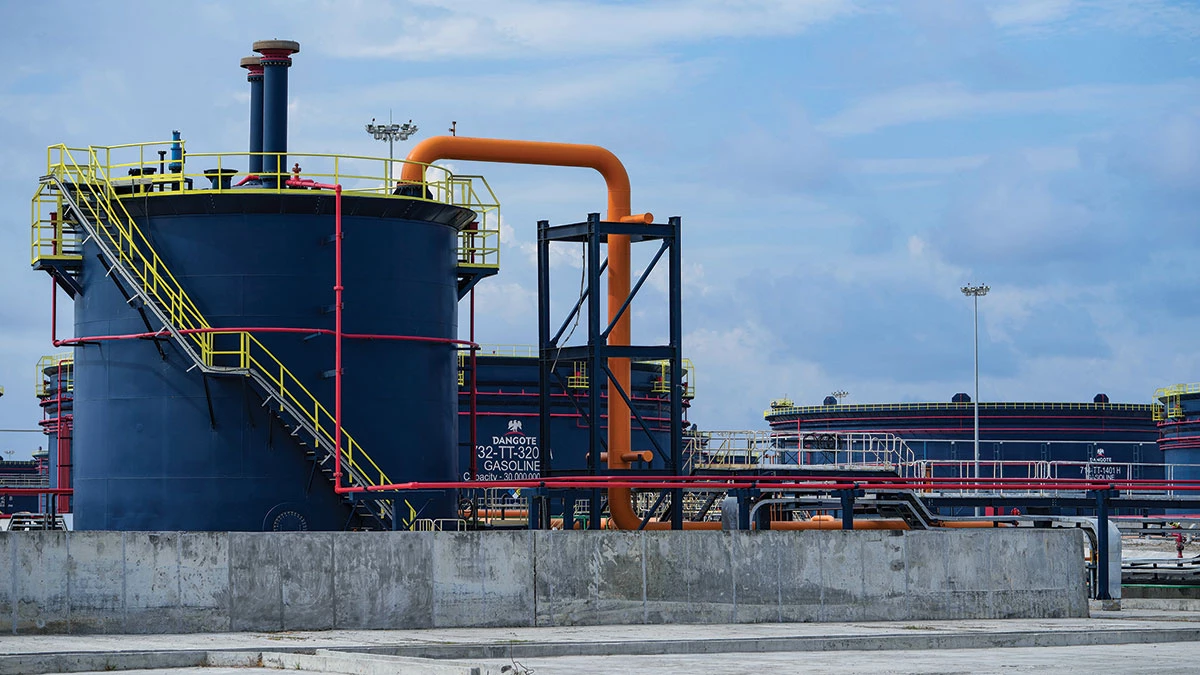
A large dark-blue tank has several brightly colored pipes emerging from its top and snaking out of the picture.
The Dangote Industries refinery, shown here in 2024, processes oil from Nigeria and other countries.
Credit:
AP Photo/Sunday Alamba
The new refinery overturns the tradition of state-owned complexes in remote areas of the country. It plans to supply the entirety of Nigeria’s fuel needs with 60% of its current capacity and export the remaining 40%. It is transforming Nigeria’s economy by moving the nation beyond the role of a raw material producer—but not without risk or harm. Social and environmental problems are already brewing near the refinery, while its future could be threatened by plans to fight climate change.
The Dangote refinery at a glance
Commissioned in May 2023; first gasoline production in September 2024Cost of construction: $20 billionEmployees: Over 30,000 people (including contractors), 3,000 of whom are NigeriansRefining capacity: 650,000 barrels per day
Chemical output: Polypropylene, 830,000 metric tons (t) per year; sulfur, 77,000 t per year; carbon black feedstock, 585,000 t per yearChemical expansion plans: 2.4 million t per year of polypropylene by 2028, including by converting propane to propylene through catalytic dehydrogenation; plans to produce base oils, such as lubricants, and linear alkylbenzene surfactants
A chemical transformation
The refinery opened in September 2024 and by August 2025 had reached an output of 610,000 barrels per day, according to local reports. Its operators had already planned an expansion to 700,000 barrels per day by the end of 2025. And now, Dangote is aiming to overtake Reliance Industries’ Jamnagar complex in Gujarat, India, as the world’s largest refinery.
The Dangote refinery has a deal to buy oil from the Nigerian National Petroleum Company (NNPC), Nigeria’s state oil company, but the NNPC hasn’t delivered, according to Ehireme Alexis Uddin, an economist at the University of London’s School of Oriental and African Studies. She explains that the NNPC has committed much of its output to service deals with financial lenders. That leaves the refinery to import crude from countries like the US and those in the Middle East. Nevertheless, it can readily compete with aging refineries in those regions and Europe and is already exporting gasoline to the US.
“It’s a $20 billion stake against the energy transition.”
Ehireme Alexis Uddin, economist, University of London’s School of Oriental and African Studies
Beyond producing a wide range of fuels, the Dangote refinery also makes polypropylene, reshaping plastic production in Africa. It is due to become the continent’s largest polypropylene manufacturer, overtaking facilities in Egypt and South Africa.
Like most refineries, Dangote distills crude oil, separating it into fractions according to their boiling point, roughly correlated with molecule size. The valuable light molecules are sold mainly as fuel, explains Mistura Yusuf, who was formerly an engineer at Dangote Industries but left to do further training. After the crude distillation unit isolates these fuels, a thick, heavy residue remains. This is where the refinery’s key strength comes in.
The refinery feeds the heavy material to a residue fluid catalytic cracking (RFCC) unit, which breaks the residue’s large molecules into smaller ones akin to those separated in the distillation unit.
The RFCC works by suspending finely powdered and fluidized zeolite-catalyst particles in a fast-moving gas or vapor stream, explains Auwal Aliyu, a chemical engineer at Ahmadu Bello University. In this form, the catalyst mixes with the hydrocarbons in a vertical pipe known as a riser. The RFCC unit is specifically designed for highly contaminated and heavy crude oil, Aliyu explains.
The hydrocarbons break down at acidic sites in the zeolite catalysts. These structures can accommodate large, polycyclic aromatic molecules and tolerate heavy metals such as nickel and vanadium, which tend to accumulate on the catalyst. Zeolite producers also modify the catalyst surface to attach additives and passivating agents to minimize deactivation. While Nigerian oil tends to be light, with little contamination, Aliyu says, the RFCC unit can also process heavy, contaminated Middle Eastern oil.
Aliyu and his Ahmadu Bello colleagues work alongside the refinery’s in-house researchers on projects “aimed at advancing catalytic processes and materials for petroleum upgrading,” he explains. He stresses that he doesn’t work directly for the refinery but helps train its staffers, who can earn PhDs following their collaborative projects.
This training is critical because “there are currently not enough Nigerians with the requisite specialized skills and experience” to fill all the positions at the refinery, Aliyu says. Roles for chemists and chemical engineers span process design and optimization, catalyst development, quality control, process safety, and environmental management, he adds. The refinery says it has sent 900 young engineers overseas to train in refinery operations. “Nigerians are gradually gaining experience,” Aliyu says.
Locally, costs outweigh benefits
Writing in a promotional brochure, Aliko Dangote says the refinery is generating “thousands of direct and indirect jobs . . . helping to address the challenge of youth unemployment.” But residents of the Ibeju-Lekki district, where the refinery is located, say that grand promises of employment have soured into exploitation.
Ibraheem Ogunbanwo, a youth advocate and treasurer for the Lagos chapter of the National Youth Council of Nigeria (NYCN), describes the situation as “underemployment, not employment.” Dangote Industries announced plans to send young people for training in South Africa, but according to Ogunbanwo, the youth council discovered that fewer than 5% of the people on the list were from Ibeju-Lekki.
He speaks of a system where contractors “are getting a very reasonable amount of money, and they are paying our people peanuts.” The jobs available to locals, such as guard or gardener, are often menial, Ogunbanwo says. Instead of good jobs, the company made gestures like distributing bread in nearby communities, which Atiku Mohammed Oluwatosin, a local youth leader, calls insulting.
Worse still, the refinery is creating new social crises. Ogunbanwo speaks grimly of how the steady flow of tanker drivers has encouraged local young women to become ashawos, a Yoruba term for sex workers. The tankers also bring recurring accidents, oil spillages, and fires on neglected roads.
“There are so many accidents since Dangote came as a result of the influx of traffic,” says Yusuf Olawale Lasisi, a director at the NYCN. He says tired drivers doze off while driving, leading to crashes that block roads for hours and disrupt daily life.
Lasisi also highlights the danger posed by the bridge in the Eleko community, where the road suddenly narrows from two lanes in each direction to a single lane. He recalls one incident that involved a fully loaded gas tanker that gushed flames, frightening residents and commuters. The residents of Ibeju-Lekki have also experienced hit-and-run fatalities, he adds.
Adding to local health concerns, the refinery burns off gases it releases, a practice known as flaring that was banned in Nigeria in 1984. Flaring is a constant, visible blight on the horizon, Ogunbanwo says. “If you come here, you see it’s just being set on fire,” he says with frustration, noting that the gas “could be used to generate electricity for the entire Ibeju-Lekki.”
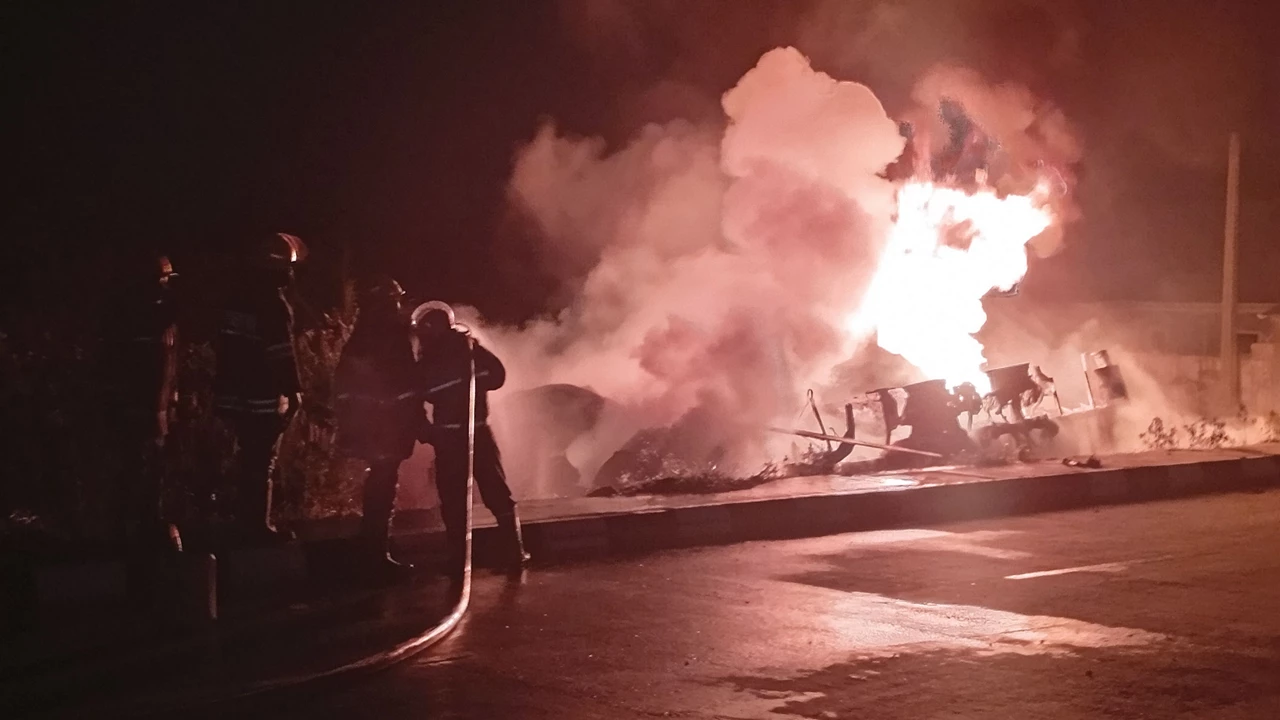
Firefighters with a hose spray a burning truck that is engulfed in flame and smoke and has left the pavement, at night.
Firefighters extinguish a blaze caused by a truck crash in Ibeju-Lekki, Nigeria.
Credit:
Atiku Mohammed Oluwatosin
Twelve kilometers from the refinery, Dangote Industries has also developed a port to bring in large cargoes. The massive dredging required “has affected the integrity of our soil,” Ogunbanwo says. “We’ve seen so many houses collapsing.”
The impact on the local marine ecosystem is similarly alarming. The company has restricted access to the water, disrupting traditional fishing jobs, and residents fear that the refinery is releasing chemical pollution. Lasisi says he found three fish “dying on top of the water due to the chemicals.”
Dangote Industries did not respond to specific questions for this article by the time of publication.
Nationally, advantages dominate
Despite local challenges, the average Nigerian welcomes the changes the refinery brings, says Dipo Oladehinde, head of the energy desk at the Nigerian business intelligence publication BusinessDay. “We’re coming from an era of uncertainty about petroleum production, an era of reduced capacity,” Oladehinde says.
Since the Dangote refinery opened, the price of gasoline has dropped from around 1,500 Nigerian naira ($1.03) per L to around 1,000 naira, he notes. A regular, affordable supply will lead to improvements for the local economy, such as more reliable shipments of goods into shops, Oladehinde stresses.
The decline is a needed change after a tripling of gasoline prices in May 2023, when the government suddenly stopped subsidizing the fuel, Uddin, the economist, explains. She says the cost of energy is a primary driver of inflation in Nigeria.
The country produces around 13 GW of electricity via gas and hydroelectric power stations. By comparison, there is around 14 GW of small-scale diesel- and gasoline-powered electricity generation in the country, which Uddin says people rely on “to run their businesses.” The Dangote refinery itself has a dedicated 400 MW power plant.
Since the refinery opened, “there has been some evidence to suggest that it has contributed to a slight reduction of inflation,” Uddin says.
The International Monetary Fund says the combination of reduced imports and increased exports means that the Dangote refinery will improve the country’s balance of payments by $5.5 billion annually (PDF). Such promising signs are one reason that some people expect Nigeria to become one of the world’s top five economies by the end of the 21st century.
But optimistic economic forecasts assume that the country diversifies into industries beyond oil and solves the problems behind its high inflation and interest rates, Uddin says. “While it’s possible, if you look at the historical trajectory of the country, I am skeptical,” she says. “It is a periphery economy that is dependent structurally on oil. It’s going to be an uphill task, and I don’t know if it’s really taking [it] seriously.”
The refinery also risks losing its value if the world continues to move away from fossil fuel use. “It’s a $20 billion stake against the energy transition,” Uddin says. She notes that Nigeria has a goal of net-zero carbon emissions but is “convinced that it can maximize oil and gas before the transition happens, which remains to be seen.” Investment in renewable energy in Nigeria is much lower than investment in the Dangote refinery, she adds.
Many would argue that Nigeria can’t afford for the Dangote refinery not to harness the oil wealth that has enriched other countries. Yet by doubling down on the production of fossil fuels and plastics, the project casts perilous shadows, both environmental and economic.
“The refinery is a high-stakes gamble,” Uddin says. “It’s in the best interest of the government that it diversify the economy as quickly as it can.” As the refinery scales to become the world’s largest, it is paradoxically fueling Nigeria’s prosperity and exposing its vulnerabilities.
Chemical & Engineering News
ISSN 0009-2347
Copyright ©
2026 American Chemical Society