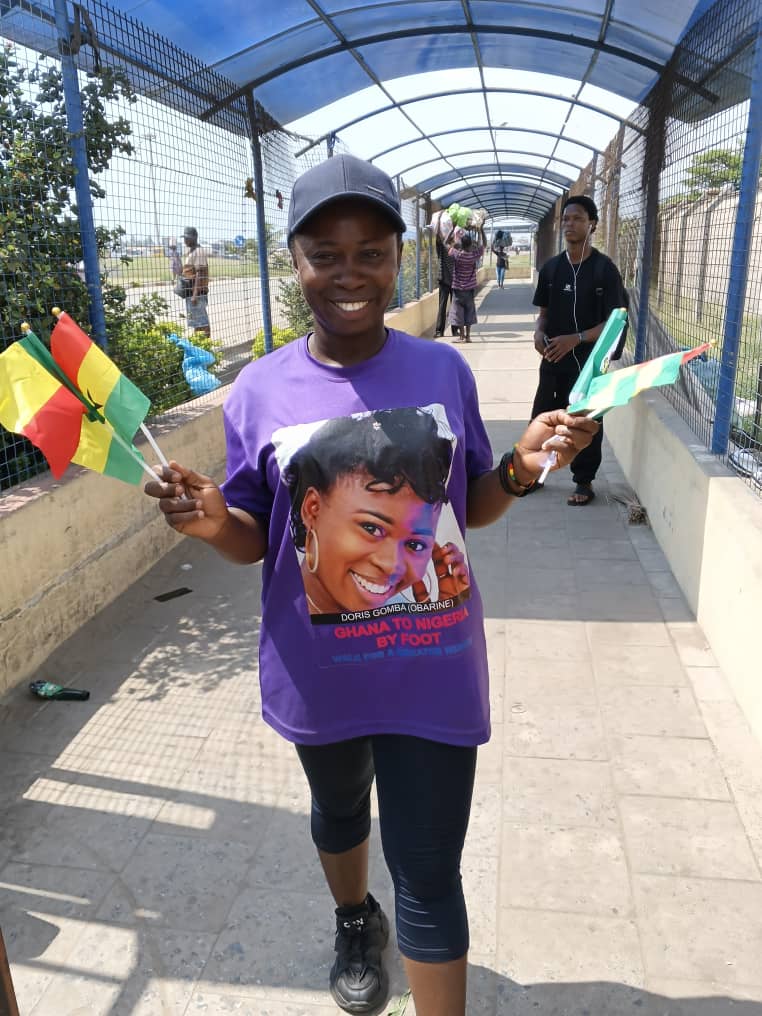
A Nigerian woman, Doris Gomba Obarine, has completed a 27-day cross-border trek from Ghana through Togo and the Republic of Benin to Lagos, Nigeria, in an advocacy campaign aimed at drawing attention to the plight of orphans and challenging long-held societal attitudes toward children who lose their parents.
Speaking with SaharaReporters in an exclusive interview, Obarine said the physically and emotionally demanding journey, which took her across three West African countries on foot, was driven by both personal pain and purpose.
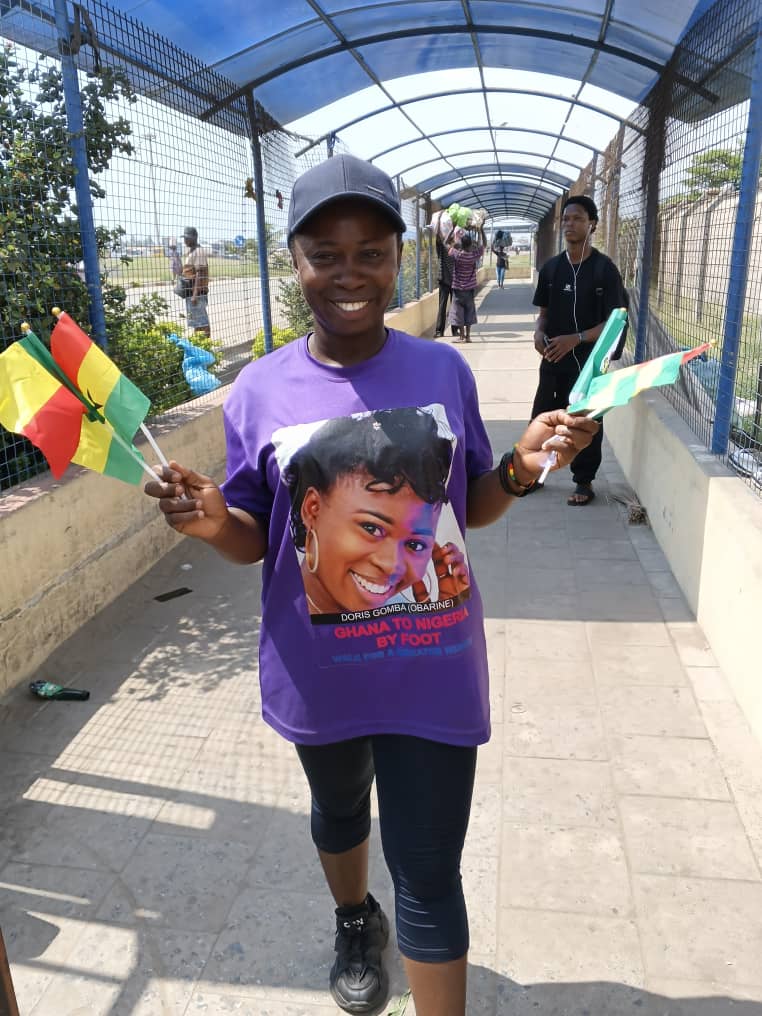
Obarine, also an actor and singer, said the expedition was conceived as a platform to amplify the voices of orphans, many of whom, she said, are neglected, misunderstood, or written off after the death of their parents.
“I have always wanted to help humanity, especially orphans, because I am one,” she said in an interview.
“I know what it means to lose both parents and face the world alone. I need to stand out so that when I speak, people will listen.”
Obarine said she is a graduate of Theatre and Performing Arts from Ahmadu Bello University, Zaria, Kaduna State, and also holds a diploma in Mass Communication.
.jpeg)
She described herself as deeply passionate, noting that her academic background and life experiences have shaped her approach to both acting and advocacy.
According to her, the project was motivated by two core objectives: to become a voice for orphans and to gain visibility in an acting career that has spanned nearly a decade without a defining breakthrough.
She explained that she deliberately chose an unconventional path to draw attention to her message.
“If I came out on the streets to talk about changing the narrative around orphans, nobody would listen. I needed to stand up so that I could stand out,” she said.
.jpeg)
Obarine revealed that she initially intended the trek to qualify as a Guinness World Record attempt and submitted applications several times in 2023.
She told SaharaReporters that although she received acknowledgement emails, no further response came even after more than a year of waiting.
“After waiting for so long, I had to prove to them, and to myself, that I could do this with or without them,” she said. “That was when I decided to go ahead on my own.”
Obarine said the journey lasted a total of 27 days, as she spent eight days trekking through Ghana, five days in Togo, and 14 days in the Republic of Benin before finally arriving in Lagos.
She described Ghana as the most accommodating leg of the journey, noting that communication was easy because English is widely spoken, and locals were generally welcoming.
“Almost everyone who saw me on the road wanted to give me a lift because they didn’t want me walking under the hot sun,” she recalled. “Once I explained that it was a project, they understood and encouraged me.”
Obarine added that finding hotels in Ghana was relatively easy compared to other countries.
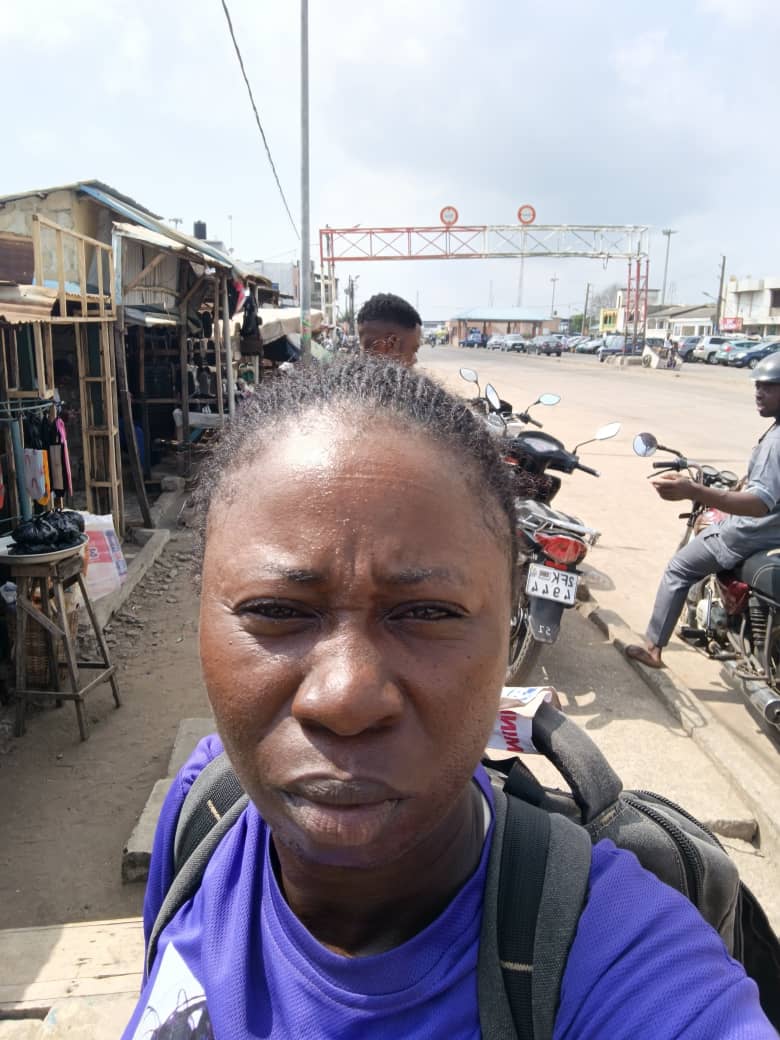
However, the journey was not without moments of fear and doubt, as she pointed out that trekking through bushy areas nearly broke her resolve.
“There were times I almost gave up,” she said. “But I told myself, ‘If I perish, I perish.’ There was no going back.”
In Togo, Obarine said the challenges intensified, particularly due to the language barrier.
Obarine, who does not speak French, said she struggled to communicate, relying heavily on translation apps, written notes, and sign language.
“Sometimes it was hard to even ask for directions or the names of places,” she said. “Not everyone could read what I typed on my phone, so I had to start demonstrating with my hands.”
She said that finding accommodation was another major hurdle, as many hotels were located deep inside villages.
Beyond logistics, she said she encountered suspicion from locals who were wary of strangers.
“If you are a stranger and you ask questions, people are very careful about answering,” she said. “Some of them didn’t answer at all.”
She added that negative perceptions about Nigeria influenced how some people treated her.
“Some saw me as someone from a bad country. I had to stand my ground and explain that not everyone in Nigeria is bad,” she said, noting that these conversations often happened with people who understood a little English.
Obarine said that the Republic of Benin proved to be the longest and one of the most challenging legs of the trek, lasting 14 days.
According to Obarine, language barriers persisted, and Gomba said navigating food options was difficult.
Despite the challenges, she praised Benin for its cleanliness and safety standards.
“The environment is very serene. Everywhere is clean, and their safety measures are top-notch,” she said.
She expressed admiration for the country’s road discipline, saying, “You can cross the road without fear. Nobody drives against traffic, everyone stays in their lane, and motorcyclists wear helmets.”
Obarine told SaharaReporters that crossing international borders was among the most stressful aspects of her journey.
She said that being a woman traveling alone exposed her to profiling and financial pressure.
“They always feel you came into those countries to hustle, so they expect you to drop big cash before you cross,” she said. “But God saw me through.”
She described the Nigerian border officials as supportive, saying they were pleased that she was representing the country positively.
However, she noted that video recording was prohibited at border points across the countries.
“As someone who studied photojournalism, I found ways to document my journey without drawing attention,” she said. “I needed evidence that I actually did the work.”
Financially, Obarine said the trek was draining, noting that the poor exchange rate significantly reduced the value of the naira when converted to CFA francs and Ghanaian cedis.
“When I changed ₦100,000, it became very small,” she said. “Hotel bills ranged from 20,000 to 40,000 CFA per night, depending on location.”
She said that internet access was another burden, with data costs in Togo and Benin consuming as much as ₦7,000 to ₦8,000 daily.
“I needed to keep people following the project updated,” she said.
Obarine said her campaign is inseparable from her personal history, stressing that she lost her father when he was only 41 years old and her mother at 40, an experience she said abruptly altered her life and derailed her family’s plans.
“When my parents died, all our dreams took an unexpected turn,” she said.
She told SaharaReporters that one of her most painful memories was losing a scholarship opportunity to study in the United Kingdom.
Although it was a scholarship, she said she was required to pay initial tuition fees before travelling, something she could not afford after her mother’s death.
“I was still a student myself and had become responsible for my younger siblings,” she said. “There was no way to raise that money.”
She said the experience left a lasting scar and strengthened her resolve to advocate for orphans.
“Many orphans lose hope the moment their parents are buried. Some become depressed, some end up on the streets, and others abandon their dreams entirely,” she said.
During the trek, Obarine said she visited an orphanage in Benin, where she donated what she could, spent time with the children, and shared words of encouragement.
“I told them to stay focused, determined, and to trust God,” she said.
Obarine said she arrived in Lagos to a modest but organised reception coordinated by her manager and mentor, Dr Enoh Samson.
She said no government agency was formally involved in the project.
“There was no time to start writing letters after what happened with Guinness,” she said. “I was already emotionally down and needed to do it my own way.”
Reflecting on the expedition, Obarine described herself as “partially fulfilled.”
According to her, while the physical journey is complete, she said the core objective of the project is still unfolding.
“The walk was just the foundation,” she said. “The real work is reaching out to orphans, helping them acquire skills, and giving them hope.”
Obarine said she has been acting for about nine years and has been a registered member of the Actors Guild of Nigeria since 2010.
She said she has featured in several films but has yet to gain widespread recognition.
She cited Funke Akindele and Mercy Johnson Okojie as her role models and hopes the project would have drawn the attention of industry leaders.
Looking ahead, she said any support she receives from individuals or organisations will be channelled toward orphan advocacy and skills acquisition programmes, while she continues to pursue her acting career.
In her concluding message, Obarine called on leaders and society at large to treat orphans with empathy and responsibility.
She urged individuals, especially orphans, urged individuals, especially orphans, to remain focused and determined despite adversity.
“If you don’t believe in yourself, no one else will,” she said. “Your greatest competitor is the person you see in the mirror.”
As she recovers from the physically taxing journey, Obarine said she is trusting in God’s timing for both her advocacy mission and her acting career, confident that persistence will eventually lead to a breakthrough.