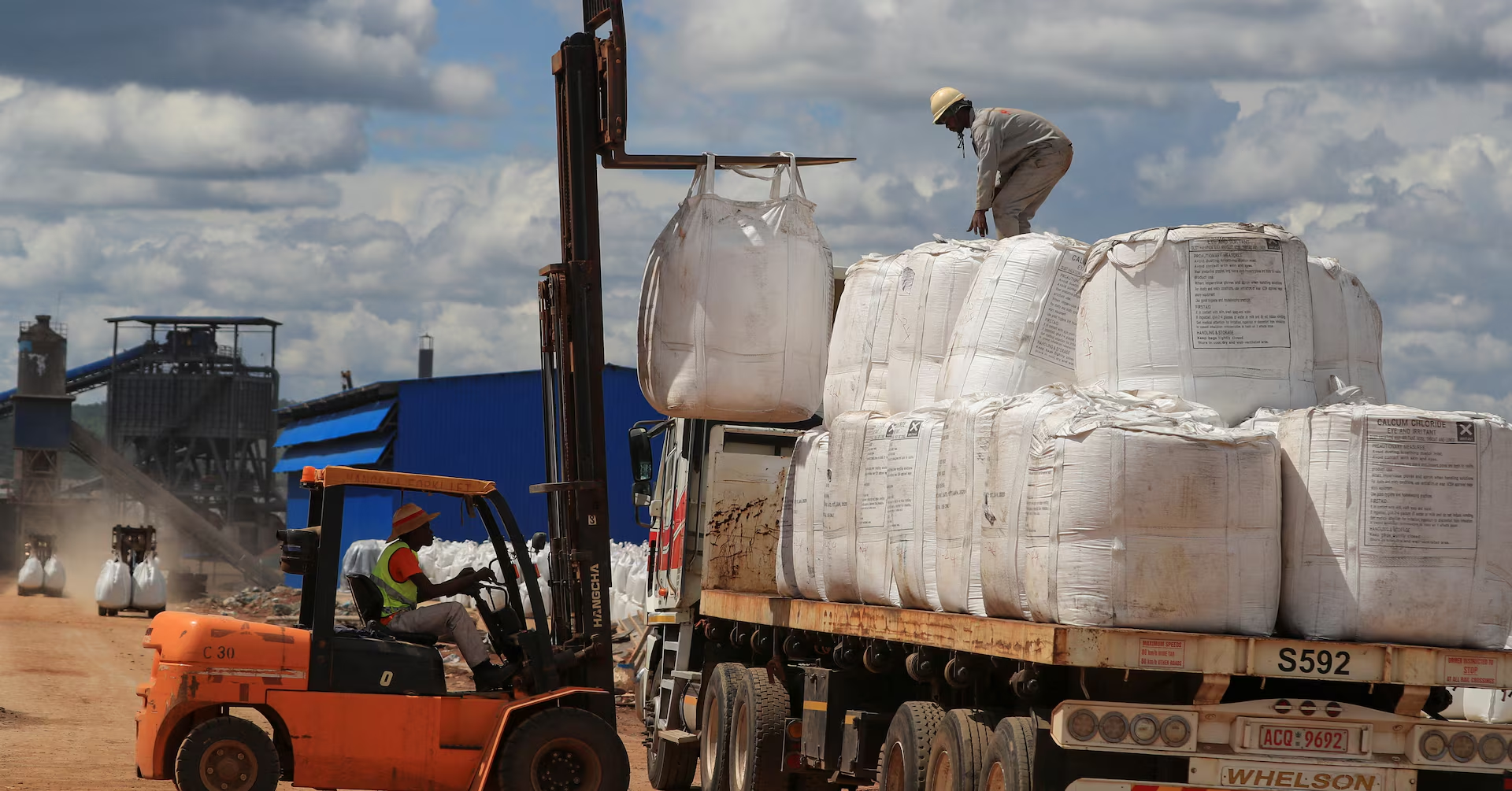
HARARE, June 10 (Reuters) – Zimbabwe will ban the export of lithium concentrates from 2027 as it extends its push for more local processing, mines minister Winston Chitando said on Tuesday.
Africa’s top producer of lithium, used in batteries to power renewable energy technologies, banned the export of lithium ore in 2022 and has been pushing miners to process more domestically.
Sign up here.
Lithium miners in Zimbabwe, who are mostly from China, have been exporting concentrates to their home country.
Chitando said lithium sulphate plants were currently being developed at two Zimbabwean mines, Bikita Minerals, owned by Sinomine (002738.SZ), opens new tab and Prospect Lithium Zimbabwe, owned by Zhejiang Huayou Cobalt (603799.SS), opens new tab.
Lithium sulphate is an intermediate product which can be refined into a battery-grade material such as lithium hydroxide or lithium carbonate used in battery manufacturing.
“Because of that capacity which is now in the country, the export of all lithium concentrates will be banned from January 2027,” Chitando said during a media briefing following a weekly cabinet meeting.
In 2023, Zimbabwe gave lithium miners up to March 2024 to submit plans for developing local refineries, but softened its stance after prices of the metal collapsed.Sinomine and Zhejiang Huayou Cobalt are part of a group of Chinese firms, including Chengxin Lithium Group (002240.SZ), opens new tab Yahua Group (002497.SZ), opens new tab and Canmax Technologies (300390.SZ), opens new tab, which have spent more than $1 billion since 2021 to acquire and develop lithium projects in Zimbabwe.
Reporting by Nelson Banya; Editing by David Goodman and Jan Harvey
Our Standards: The Thomson Reuters Trust Principles., opens new tab