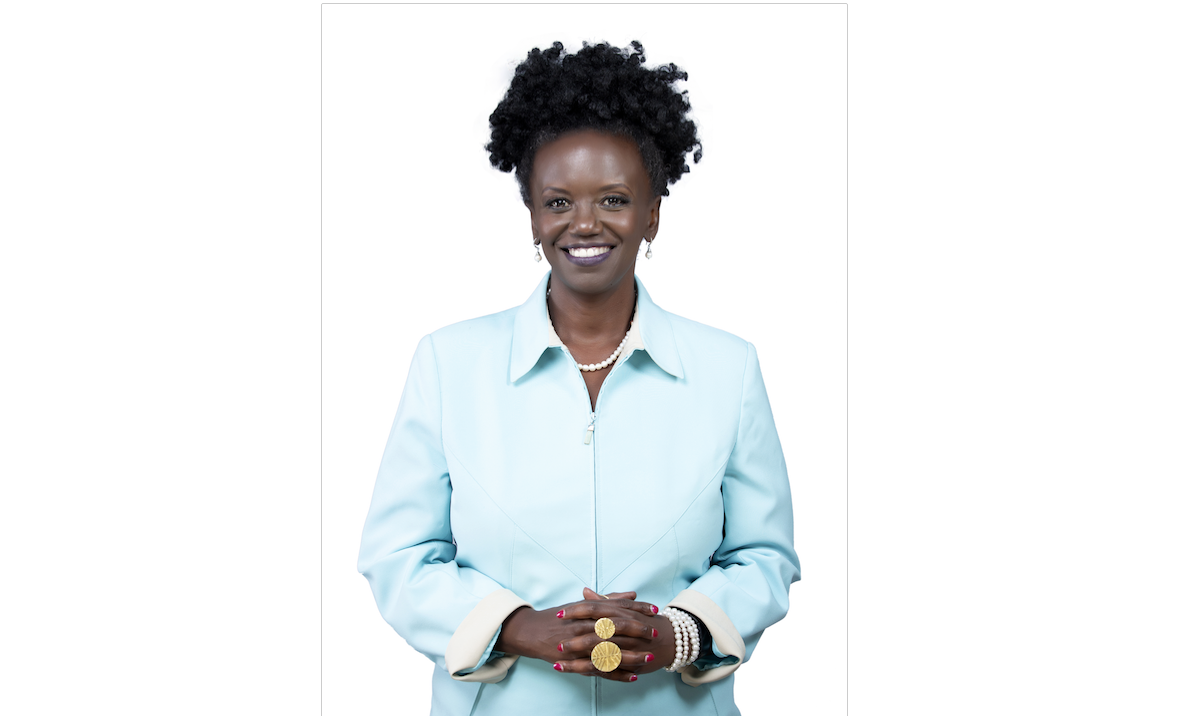
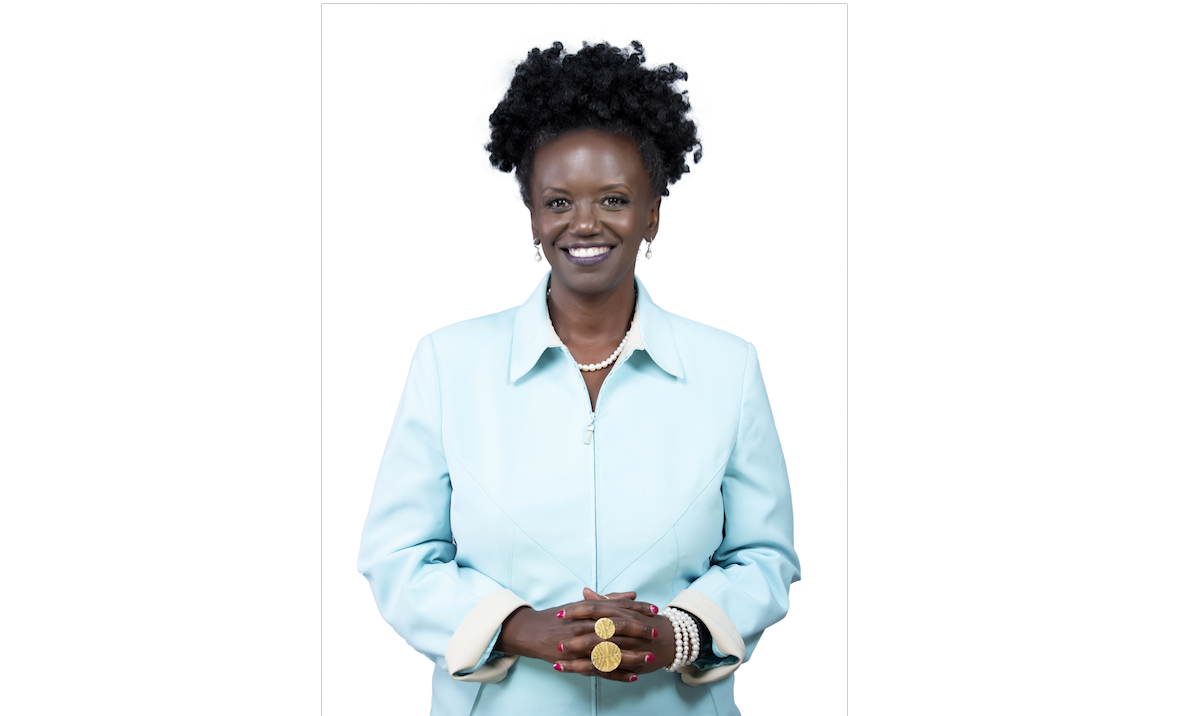
 KCB Foundation Director Mendi Njonjo / HANDOUT
For years, corporate social responsibility in Kenya
has carried a credibility problem. Many initiatives arrive loudly and exit
quietly, leaving behind press releases rather than measurable change. Mendi
Njonjo does not evade this critique. She names it directly.
“A lot of people think foundations are just the
PR arm of a brand,” says Njonjo, Director of the KCB Foundation. “It’s a fair
question.”
What she describes is reputational CSR: activity
designed to polish image rather than alter outcomes. “If you interrogate the
substance, it rarely tilts social impact or social justice in any meaningful
way. It has its place. But if you look at institutions that are actually
shifting conditions, corporate foundations have to move beyond reputation and
into impact.”
For Njonjo, that shift is not semantic. It is structural.
“The work has to be grounded in corporate citizenship. In our case, the
organising idea is shared prosperity. If you are deploying capital, time and
institutional power, it should result in durable change.”
This framing underpins her attempt to reorient
how corporate Kenya engages development. Shared prosperity is not treated as
aspiration but as design logic.
After more than two decades working across
gender, youth employment, climate and finance, her focus is clear: building
systems that make finance usable, legible and consequential for African women,
while creating pathways to jobs, income security and dignity.
A CALLING SHAPED BY SERVICE
Njonjo’s orientation toward public purpose was
shaped early. “I always knew I wanted to work with people,” she says. The
specifics changed over time, but service remained constant.
Her parents modelled it. Her father’s work with
the Kenya Red Cross and her mother’s deep community involvement normalised
service as obligation rather than exception. Though she trained in mathematics
and geography, humanitarian work ultimately prevailed.
“By the end of university, I was certain I
wanted to work in the humanitarian or development space. Looking at Kenya and
the region, I felt called to do something that addressed real conditions.”
That calling now translates into a simple
operational question: What actually shifts fortunes?
“At KCB Foundation, we asked ourselves how you
create shared prosperity for the communities the Group banks or engages. The
answer is education and employment. Those two determine whether people can
access opportunity or are locked out of full citizenship.”
WOMEN AND THE PRODUCTIVE ECONOMY
Njonjo speaks about women’s economic role with
both precision and impatience. “I joke that Kenyan women must have chronic
backache from carrying the economy,” she says. The joke rests on data. Across
agriculture, hospitality, informal trade and MSMEs, women are the dominant
participants. They are also the largest cohort starting nano and micro
enterprises. Yet they face layered constraints.
Access to collateral remains a central barrier.
“Advancing a business requires assets. Land. Property. And this is where sociocultural
norms stop being ‘soft’ and start being structural.”
Time poverty compounds the problem. “The idea
that everyone has the same 24 hours is false. A woman’s time is not equivalent
to her brother’s or her partner’s, especially when care work is unequally
distributed. Time poverty directly limits women’s participation in the
productive economy.”
These constraints aggregate into the gender
finance gap. “The capital shortfall for women-owned businesses is in the
hundreds of billions across Africa. If that capital moved, GDP gains of up to
30 per cent are plausible.”
The paradox is well established. “Women repay.
The data is unequivocal. Lending to women owned enterprises carries lower
default risk.”
2JIAJIRI AND SYSTEMS DESIGN
These insights converge in 2Jiajiri, the KCB
Foundation’s flagship programme.
Each year, roughly one million young people
enter Kenya’s labour market. Only a fraction find formal employment. 2Jiajiri
addresses this mismatch through two linked pathways.
The workforce development arm focuses on
readiness. “We work to ensure young people can be employed, self employed or
become employers.”
The enterprise arm strengthens MSMEs. “Early
business failure is usually about weak systems. We work to make enterprises
investor-ready, credit-worthy and resilient.”
Scholarships anchor the workforce strategy. The
Foundation supports roughly 15,000 learners annually, making it one of the
largest TVET scholarship programmes in the country.
Placement outcomes are actively tracked through
partnerships with training institutions and counties. Financial literacy is
embedded throughout. “Basic financial management is not intuitive. Separating
household and business finances, managing shocks, keeping records. These are
survival skills.”
Women entrepreneurs are supported through the
KCB Biashara Club, which provides peer learning, coaching and mentorship.
“The objective is straightforward,” Njonjo says.
“Decent jobs. Decent incomes. A labour market people can actually participate
in.”
LIVELIHOODS, CLIMATE AND JUSTICE
Beyond enterprise and employment, the Foundation
runs Mifugo ni Mali, a livestock programme spanning species from bees to
cattle. It focuses on productivity, value addition, financial literacy and
market access, particularly in arid and semi-arid regions.
Climate justice cuts across this work. “There is
no plan B,” Njonjo says. “This is the only planet we have.”
She points to the employment potential of the
green transition, including Kenya’s tree-growing agenda, but stresses unequal
impact.
“Those least responsible for climate change bear the
heaviest burden. When water is scarce, it is women who walk further to fetch
it.”
Excluding women and youth from climate solutions
leads to shallow outcomes. “You end up with interventions that look good but do
not address root causes.”
SCALE, AMBITION AND LEGACY
Asked what she is proudest of, Njonjo does not
cite outputs. “I’m proud of the ambition. Of our refusal to be incremental.”
She values partners who share that posture. “The
best partners do not want small outcomes for Kenyan people.”
Legacy, for her, is not personal. “It is about
building systems that outlast you. Creating space for others to step in.
Changing conditions so people can exercise full citizenship.”
If lives are measurably different before and
after an intervention, that is sufficient. “That is legacy. Raha tupate na
ustawi.”
Asked what hope means to her, she answers
simply.
“Possible.”