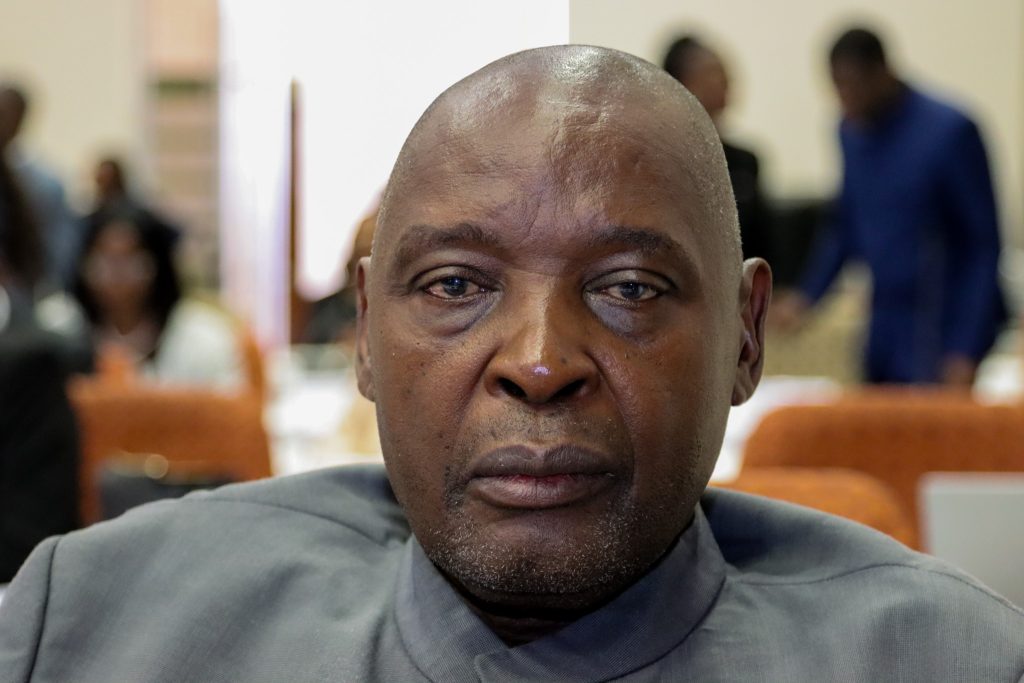
URBAN and rural development minister James Sankwasa says he will not approve regional and local authority councillors’ trips that do not benefit the country.
Sankwasa yesterday told The Namibian that all travel, whether domestic or international, must clearly demonstrate value to the state.
“Whether you travel abroad or internally, the question is whether the trip is beneficial to the state or not. That is the first criterion,” the minister said.
“If you travel abroad, what are you going to learn and bring back? Councillors don’t even provide reports. If your travel does not benefit the state, why do you travel? You cannot travel for a holiday at the state’s cost,” Sankwasa added.
The minister said even fully sponsored trips still require his approval, as the government usually covers additional costs.
“Things like incidental matters are paid for by the government,” Sankwasa said.
He added that councillors must formally apply for travel approval and ensure that their councils have allocated budgets for such trips.
“The council must have a budget to cater for that. If there is no budget, you cannot travel,” he said.
Sankwasa also criticised poor prioritisation by some councils, citing cases where travel is approved while staff salaries go unpaid.
“For example, a councillor wishes to travel to Lesotho for sport, but at the end of the same month, they cannot pay salaries for staff members. What is that? How do you prioritise travelling but fail to prioritise salaries?” he asked.
He emphasised that his stance does not mean all travel requests will be rejected.
“It is not that I disapprove of everything. There are trips that I have approved, many trips that were convincing and showed that Namibia would benefit.
“But I will not approve a trip for a joyride where I see no benefit to the state. There must be a benefit for Namibia and for the regional council or local authority concerned,” he said.
The Local Authorities Act of 1992 does not contain any provision that explicitly requires councillors to seek the minister’s approval before travelling abroad.
However, regulation 15(4) of the local authorities: subsistence and travelling allowances regulations, made under the Local Authorities Act, provides that all official trips by council staff members outside Namibia may only be undertaken with the approval of the minister.
“The council may, upon prior written approval, pay to staff members N$2.50 per kilometre travelled for the use of his or her private motor vehicle on an official trip, and the staff member must submit a declaration of the distance travelled and proof of fuel purchased during such an official trip to the council,” part of the regulation reads.
Former City of Windhoek councillor Joseph Kauandenge says municipalities are classified differently under the law.
He argues that councillors from part one municipalities such as Swakopmund, Walvis Bay and Windhoek do not require ministerial approval to travel.
“Villages and town councils might need approval from the minister, but the minister is not a law unto himself. He works within a legal framework, and if he decides to say, ‘No, this trip cannot go ahead,’ he must be in a position to explain why. For a long time, the minister has been overreaching in the decisions he takes. He must be reasonable in whatever he advances to various local authority councillors,” Kauandenge says.
Yesterday, Windhoek Observer reported that Zambezi regional councillors involved in an unauthorised trip to Botswana and Zambia last year have fully repaid N$136 000 in subsistence and travel allowances (S&T).
The repayments follow an order by Sankwasa, who a month ago directed the Zambezi Regional Council to recover the funds spent on trips that took place between September and October.
The Namibian last month reported that Sankwasa had ordered former Windhoek councillors to repay about N$20 million spent on ‘unapproved’ international trips.
The beneficiaries of these trips include councillors from Swapo, the Independent Patriots for Change, the National Unity Democratic Organisation and the Affirmative Repositioning.
Municipal officials who accompanied the councillors allegedly also benefited from the funds.
The amount covered flights, accommodation and daily expenses for a string of overseas trips undertaken throughout 2025.
Sankwasa ordered the money to be paid back to the City of Windhoek on 25 November 2025. Still, the municipality says the directive is difficult to enforce as most implicated councillors left office after the 26 November 2025 elections.
City of Windhoek records show that its councillors made around 12 international trips between March and November last year.
In an age of information overload, Sunrise is The Namibian’s morning briefing, delivered at 6h00 from Monday to Friday. It offers a curated rundown of the most important stories from the past 24 hours – occasionally with a light, witty touch.
It’s an essential way to stay informed. Subscribe and join our newsletter community.

The Namibian uses AI tools to assist with improved quality, accuracy and efficiency,
while
maintaining editorial oversight and journalistic integrity.
Stay informed with The Namibian – your source for credible journalism. Get in-depth reporting and opinions for
only N$85 a month. Invest in journalism, invest in democracy –
Subscribe Now!