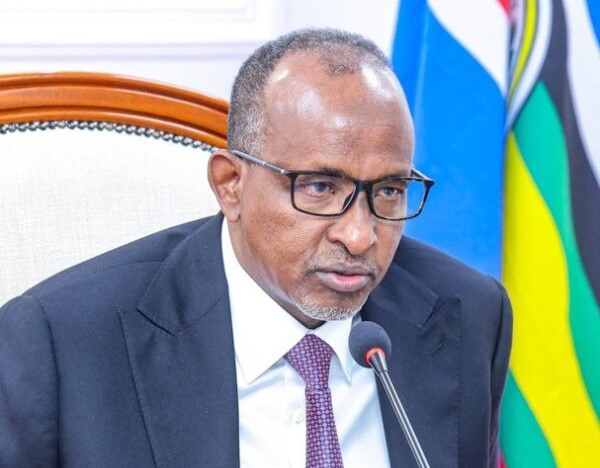
Only foreign doctors with specialised skills unavailable locally and from within the East African Community (EAC) will be allowed to practise in Kenya, Health Cabinet Secretary Aden Duale has announced.
Speaking on Wednesday during a press conference, Duale said the move aims to protect jobs for thousands of unemployed Kenyan medical professionals and ensure public investment in medical training benefits local practitioners first.
He noted that the government will no longer renew licences for foreign doctors practising as general practitioners, including medical officers, dentists and other basic cadres.
“We are not renewing the licences of foreign doctors. Those from within the East African Community are not affected, but even then, we will only allow specialists whose skills are not found in our country,” he said.
The CS said the policy shift was informed by the growing number of Kenyan doctors who remain jobless despite years of costly training funded by taxpayers.
He noted that the government spends billions of shillings on university education, paid internships, postgraduate programmes and specialist training, yet many graduates remain without employment.
“For many years, parents everywhere I go tell me, ‘Minister, my son or daughter has finished medical school and internship, but they have no job,’” Duale said.
“Why should foreigners come to treat Kenyans when our own doctors are at home without jobs?”
Duale revealed that since the January licence renewal period began, he has personally rejected more than 200 renewal applications from foreign doctors. Some of those affected, he said, had previously been banned by medical regulators in their countries of origin, effectively turning Kenya into what he described as a soft landing for unqualified or discredited practitioners.
“Kenya was becoming a place where somebody would just walk in and open a clinic,” he said.
He also singled out private hospitals for employing large numbers of foreign doctors, citing a recent meeting with a private facility where he found that nearly all the doctors were from Egypt.
He directed such institutions to prioritise hiring Kenyan professionals.
“I told them to go and employ Kenyan doctors,” Duale said, drawing a comparison with former US President Donald Trump’s ‘America First’ policy.
“Trump said America first. I am saying Kenya first.”
While acknowledging that the directive may be unpopular in some quarters, Duale said the decision was guided by data from the Director of Medical Services showing that Kenya has a surplus in certain medical specialities.
He, however, exempted mission and faith-based hospitals from the blanket directive, saying they may be allowed to employ a limited number of foreign specialists to keep critical services running, particularly in remote areas.
Even so, he insisted that public and private hospitals must give priority to Kenyan doctors.
“It is not a choice. That is why we have medical schools in this country. That is why parents sacrifice to take their children to medical school,” he said.
Duale said the policy aligns with President William Ruto’s manifesto pledge to expand employment opportunities for healthcare workers and assured parents and young professionals that the government remains committed to ensuring Kenyan doctors are given priority in serving the nation.