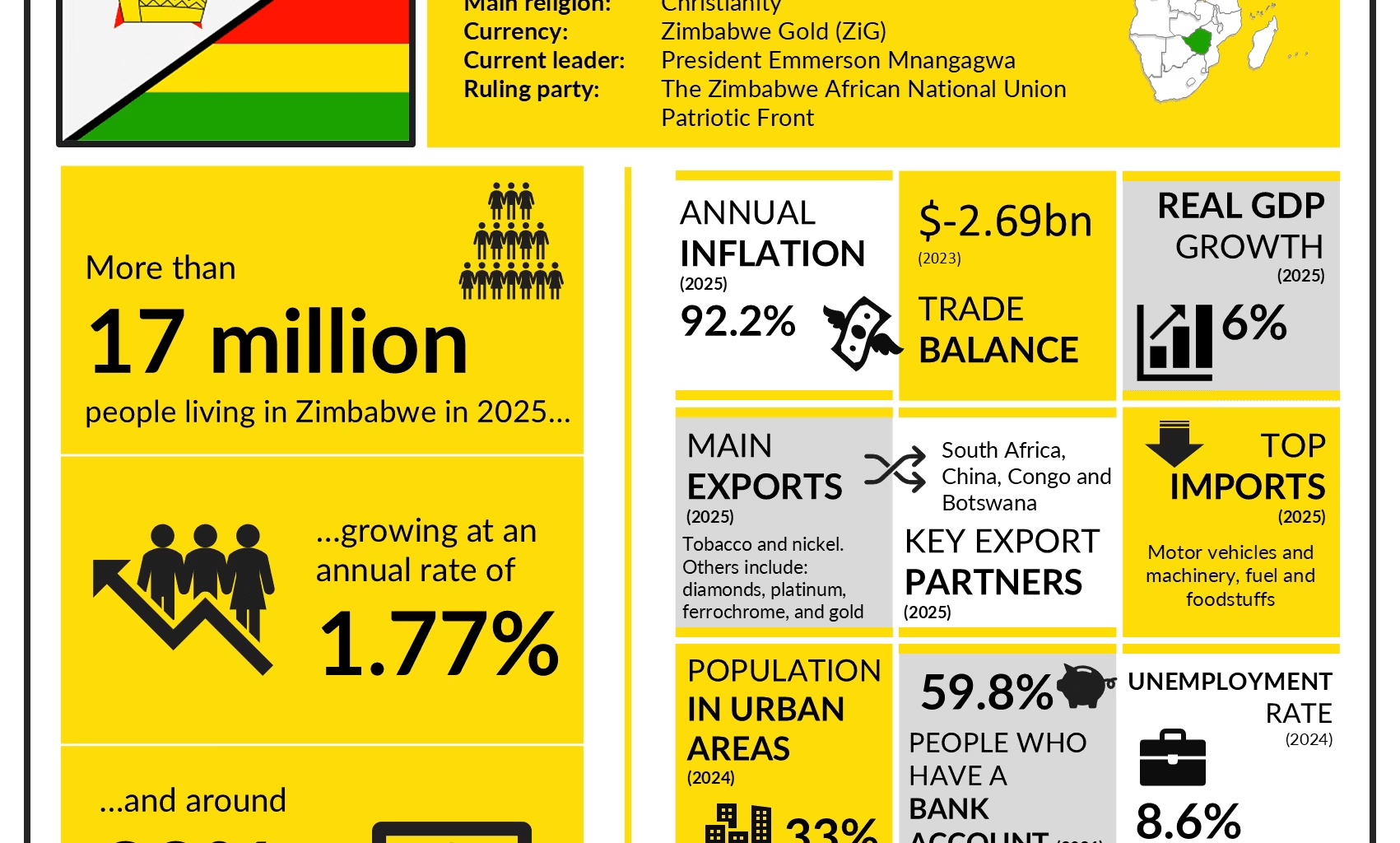
Country overview:
IOA has conducted wide-spread research and consulting into Zimbabwe to assemble a thorough analysis of the country’s commerce, politics and society. Our researchers have real-time experience tracing the evolution of economic and political developments. A country with extensive resources and valuable human capital struggles against poor government leadership and corruption to realise its full national potential. Economic problems are directly linked to political malpractice and incompetence, leading to a diminishment in standards of living. A lack of economic freedom also constrains economic growth. Sanctions imposed because of the government’s poor human rights record are aimed at national leadership. Inflation and climate change-induced drought remain constant problems.
With proper management and investment, agriculture has the potential of returning to its former glory as “the breadbasket of Southern Africa”. Mineral resources, particularly gold, platinum, coal, and diamonds, are present in sufficient and significant quantities to sustain a mining industry for decades, with the recent global surge in gold prices further boosting export potential and investor interest in the sector.
Key opportunities in Zimbabwe:A revival of the agricultural sector can lead the economy’s turn-aroundThe tourism sector may also be revived in a country that possesses Southern Africa’s top natural attraction: Victoria FallsThe mining industry is assured a long future due to extensive mineral depositsKey concerns/risks in Zimbabwe:A one-party state seems incapable of good governance and reforming its human rights abusesInflation and climate change are established problems set to continuePolitical violence is a persistent threat as the populace revolts against poor governance Tips on doing business in Zimbabwe:Starting a business:Zimbabwe is known for being more restrictive in terms of foreign business and property ownership though the state has taken efforts to ameliorate this in recent years. As opposed to many other African markets, companies in Zimbabwe may have 100% foreign shareholders but at least one of the company’s directors must be Zimbabwean. This is in stark contrast to past years in which local “indigenisation” policies required majority local ownershipForeigners can own leases on real estate properties in urban areas but may not own rural agricultural land without significant investment and specific permission from the government
(Read more at: https://zidainvest.com/)Doing business:Zimbabwean authorities have undertaken steps to improve its investor friendliness in recent years. This includes measures designed to offer tax and import waiver incentives to foreign investors, especially those who have set up in Special Economic Zones. This includes zero Corporate Income Tax for the first five years of operation of the SEZ with a corporate tax rate of 15% applying thereafter and duty-free importation of capital equipment. Additionally, a special initial allowance of 50% of cost from year one and 25% in the subsequent two years is grantedThe market is well known for its challenges which include slow and inefficient bureaucracy, very high inflation, exchange rate volatility, unreliable utilities and persistent brain drainCulture and society:English is widely spoken by the majority of the population, which can expedite the investment process for foreigners. The culture places high value on the elderly and as such seniority within firms is generally granted a premiumFirm structures can be quite hierarchical, with junior managers rarely holding much key decision-making power. When travelling in the country, it is advisable not to take pictures as this can lead to run-ins with local security forcesDiplomatic relations between Zimbabwe and many western countries are quite strained and foreign governments may have limited ability to assist in cases of emergency