
By Shalom Shawurwa
Government has begun a second round of nationwide public consultations on a proposed Road Accident Fund (RAF) Bill as stakeholders call for diversified funding, inclusive governance and stronger post-crash emergency response systems.
The consultations led by the Ministry of Transport and Infrastructural Development opened in Marondera on Monday and are expected to shape the final version of the Bill before it is presented to Parliament.
The proposed law would replace the country’s fault-based third-party motor insurance system with a no-fault compensation model allowing road traffic accident victims to access benefits without having to prove liability.
Speaking through a keynote address read on her behalf, the ministry’s permanent secretary, Engineer Joyline Makumbe said the reforms were urgent, citing high levels of road deaths and injuries.
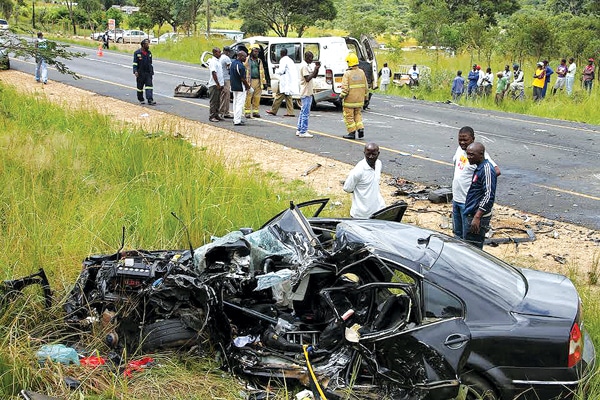
“A road traffic accident occurs every 15 minutes in Zimbabwe, resulting in more than 1,800 deaths and over 10,000 injuries annually. The Road Accident Fund will extend a social safety net to every citizen involved in road crashes, including vulnerable road users,” she said.
She said the Fund would cover medical costs, funeral expenses and other related claims while reducing lengthy legal processes that currently delay compensation for victims.
Under the proposed funding structure, 35% of the existing third-party insurance premium would be channelled to the RAF, 34.3% would remain with insurance companies to cover vehicle damage and the balance would go towards broker fees, regulatory costs and road safety awareness programmes.
Traditional leaders at the consultations broadly welcomed the Bill but urged the government to ensure it is people-centred and culturally sensitive.
Chief Chinamhora said communities should be consulted before road construction, particularly in areas with graves and sacred sites.
“Some roads were built without consulting communities, disturbing graves and sacred sites and these areas have become accident black spots. Development must respect culture if lives are to be saved;” he said.
Chief Seke called for the inclusion of traditional leaders in the governance of the proposed Fund.
“As custodians of our communities, we must have a voice in how this Fund is managed and that deductions for the RAF should be made transparently through insurance premiums,” he said.
Representatives from the business sector warned that relying solely on motorists could undermine the sustainability of the Fund, proposing alternative revenue streams.
One participant suggested allocating a portion of radio licence fees and levies on alcohol sales to the RAF.
“Road accidents affect society as a whole, so motorists should not be the only contributors,” the representative said.
Several stakeholders also urged the adoption of technology-driven solutions in line with the Smart Zimbabwe 2030 Master Plan.
Proposals included an ICT-based transport management system using Geographic Information Systems (GIS) to improve coordination between traffic authorities, police, health institutions and emergency services.
Emergency service providers and health officials placed particular emphasis on strengthening post-crash care, especially during the critical “Golden Hour” immediately after an accident.
Emergency responder Elliot Chivige suggested that fines from reckless driving offences be directed towards the Fund.
“If drivers are fined for reckless behaviour, that money should go towards saving lives and rehabilitating victims,” Chivige said.
Health officials also called for dedicated funding for first aid training, prevention programmes, improved emergency response capacity and rehabilitation services.
“Many lives are lost because help arrives too late,” one health official said.
Community-led initiatives were also highlighted during the consultations, including church groups in Macheke that have organised prayer walks along major roads to promote safer driving practices.
The Ministry of Transport said the proposed Road Accident Fund is a key component of Zimbabwe’s Vision 2030 agenda and aligns with the United Nations Decade of Action for Road Safety which seeks to halve global road traffic deaths and injuries by 2030.
