Mbarara University of Science and Technology
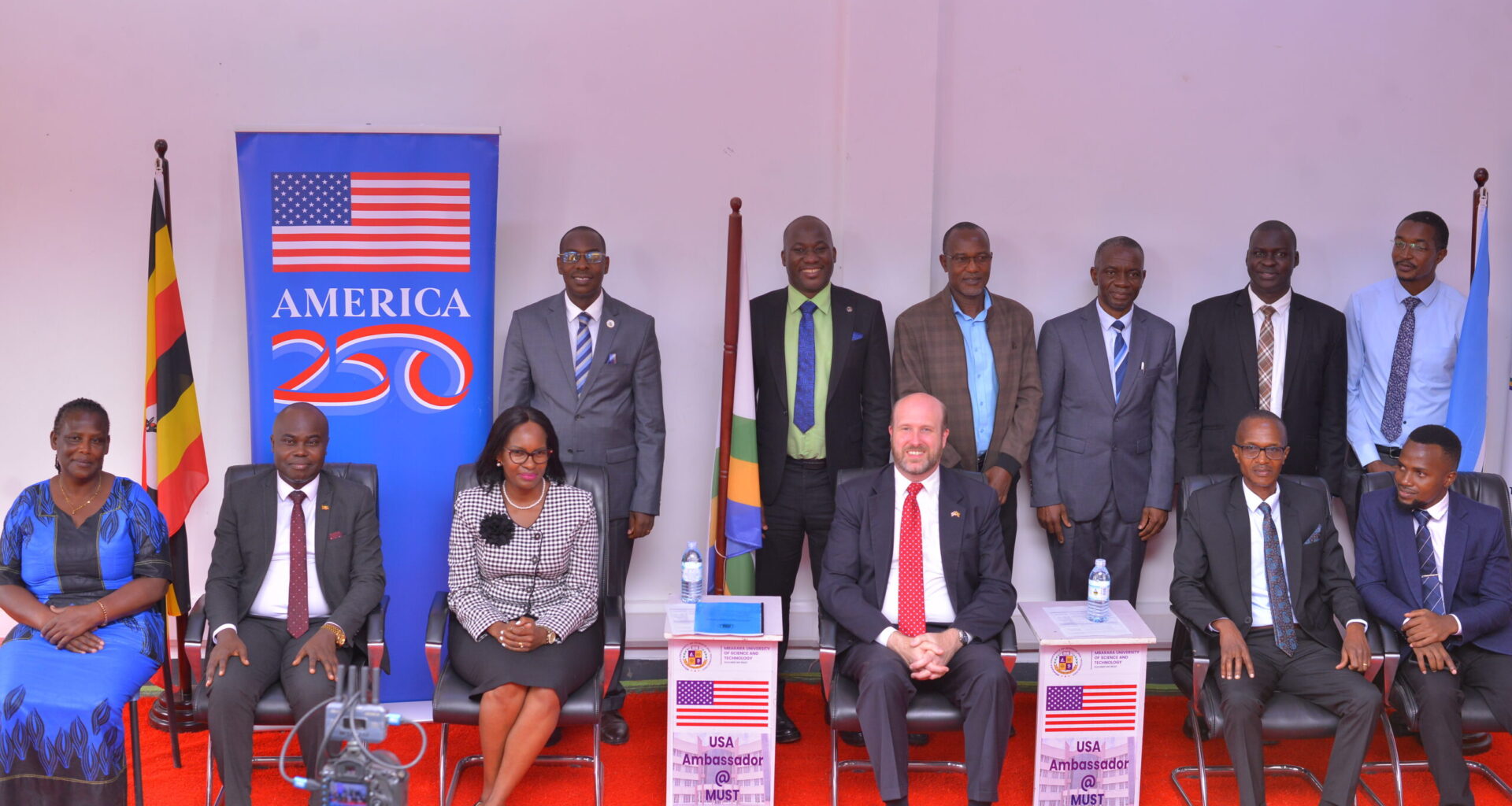
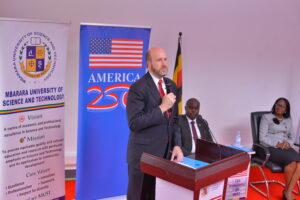 Vice Chancellor, distinguished faculty members, honored guests, and most importantly—students of Mbarara University of Science and Technology—thank you for welcoming me to your campus today. This is my first visit to MUST, and I must say, the energy and excellence I feel here are inspiring.
I’ve been looking forward to this visit because MUST represents something vital: a commitment to science, to innovation, and to building the future through education. These are values that the United States shares deeply, and they’re values that connect us across continents and cultures.
Today, I want to talk with you about innovation, about the skills that will shape tomorrow’s world, and about why the partnership between the United States and Uganda—and specifically with this university—matters so much for our shared future.
This year, 2026, holds special significance for the United States. We’re commemorating Freedom250 — the 250th anniversary of our nation’s founding. As we mark this milestone, we’re reflecting not just on our history, but on the spirit of innovation and determination that has defined the American experience.
From our earliest days, Americans have been dreamers and builders. We’ve believed that with curiosity, hard work, and a willingness to take risks, we can solve problems and create a better future.
 Think about Thomas Edison, working through thousands of failed experiments before perfecting the light bulb—literally bringing light to the world. Or the Wright brothers, two bicycle mechanics who believed humans could fly, and on a cold December morning in 1903, proved it.
In 1969, when Neil Armstrong stepped onto the moon, he carried the dreams of millions who had dared to imagine the impossible. And we didn’t stop there. We went to the moon, and now we are on the doorstep of Mars. Our satellites have flown millions of miles across the galaxy and peered into the very pillars of creation where stardust and gases collide to create the solar systems of tomorrow.
Today, American innovation continues—advancing artificial intelligence, making space more accessible through NASA and SpaceX, developing breakthrough biotechnology, renewable energy, and quantum computing.
But here’s what’s important: these innovations may have been born in America, but they have impacted the world. They have inspired researchers everywhere —including right here in Mbarara.
 America has thrived in its great democratic experiment these 250 years because our founders recognized that government for the people and by the people ought to promote the innovation and creation of its citizens instead of throttle it. We take risks to allow our entrepreneurs to thrive. And we excel most when we unleash the creative talents of all our people.
America today stands on the shoulders of giants. Our forebears have laid the foundation for growth and partnership at home and abroad—including right here in Uganda.
Which brings me to why I’m so excited to be here today.
The relationship between the United States and MUST is more than just a talking point—it’s a living, breathing collaboration that’s advancing science and improving lives.
Through the U.S. National Institutes of Health, we’re investing in high-impact research right here in Mbarara. Your faculty and researchers are working on critical projects in public health, infectious diseases, and medical technology. Your scientists are contributing to global knowledge, developing solutions to challenges that affect people everywhere, and building Uganda’s capacity as a center of scientific excellence.
These collaborations do something powerful: they combine American resources and expertise with Ugandan knowledge, context, and innovation. The result is research that’s more relevant, more impactful, and more sustainable, and the work that happens here makes Ugandans, and Americans safer.
For more than six decades, the United States government has partnered with Ugandans to advance global health security.
 In September, we launched the America First Global Health Strategy which outlines a comprehensive vision to make America safer, stronger, and more prosperous while saving millions of lives, stopping the spread of diseases globally, and moving countries away from dependency on foreign assistance. Then in December we signed a five-year, $2.3 billion Health MOU with Uganda which strengthens U.S. support for lifesaving programs across the country.
It is important for you – and every Ugandan – to know that the Government of Uganda is stepping up by committing to increase domestic health spending by over $500 million over five years—demonstrating national ownership and shared responsibility.
This MOU means protecting Americans and Ugandans alike by preventing disease outbreaks, strengthening surveillance, and building resilient health systems that can respond to HIV, TB, malaria, Ebola, and other future health threats.
In order to achieve these goals, we need skilled expertise on the ground in Uganda, and that is where MUST is a key player.
We see MUST as a hub of excellence—not just for Uganda, but for East Africa and beyond. Your graduates are the scientists, doctors, engineers, and innovators who shape the future of this region and the world.
Let me speak directly to the students here today.
You are preparing for a world that will offer you opportunities beyond anything your parents could have imagined.
 The workforce of tomorrow needs strong foundations in science, technology, engineering, and mathematics. But you’ll also need adaptability and lifelong learning. You’ll need creativity and problem-solving abilities. And critically, you’ll need ethical judgment—scientists and engineers who ask not just “Can we do this?” but “Should we do this?”
The good news? The demand for people with these skills is exploding. Artificial intelligence, robotics, cybersecurity, renewable energy, biotechnology—these fields are hungry for talented professionals. Your MUST degree is your passport to these opportunities.
One more thing about the digital future: as you work in AI, biotechnology, and data science, remember that how data moves across borders matters. The United States supports trusted cross-border data flows and frameworks like the Global Cross-Border Privacy Rules Forum that protect data while enabling the international research partnerships we have right here at MUST. Your ability to collaborate globally, to access and contribute to worldwide datasets securely—that will be essential to your success as scientists and innovators.
So, here’s my challenge to you:
 Dream big. Don’t limit yourself by what seems possible today. What will you create that we can’t yet imagine?
Embrace challenges and contribute to the global technological landscape. You’re not just students in Mbarara—you’re future leaders in a connected world.
And explore opportunities for collaboration with the United States. These relationships will enrich your education and expand your opportunities.
As I look around this room, I see the future. Your generation has the potential to shape a brighter, more connected, more prosperous future for Uganda, for the United States, and for the world.
The strong relationship between our countries is an investment in that future. We’re committed to supporting your success because your success is our shared success.
Thank you for welcoming me to your campus today. Thank you for your dedication to learning, to science, and to innovation. Thank you for being partners with the United States in building a better future.
Keep studying. Keep questioning. Keep innovating. The world needs what you have to offer.
Thank you very much.