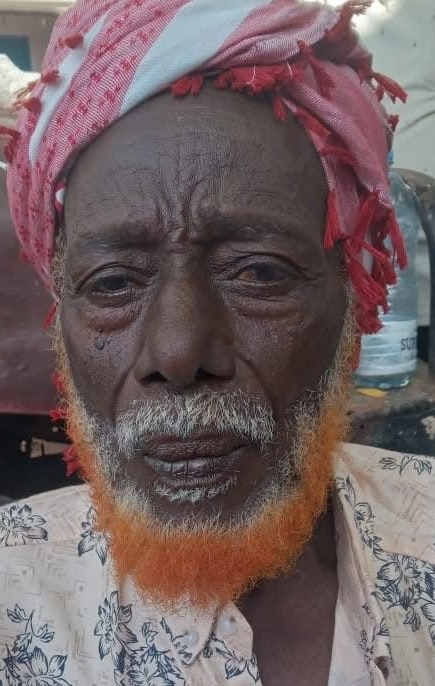
 Ibrahim Duale, father of Adow Ahmed who was mauled by a hyena in
Wajir South
Tragedy has struck drought-ravaged
Wajir South, where the harsh grip of climate change has turned daily survival
into a perilous struggle for pastoralist communities.
Herder Adow Ahmed, 45, lost his life in a brutal encounter with a hyena, a stark reminder of
the dangers faced by families trying to eke out a living amid worsening drought
conditions.
His death has left his father,
Ibrahim Duale, and the rest of the family in deep grief.
The herder had been missing for
11 days before his skeletal remains were discovered on Monday evening in dense bushland far from the safety of home.
Residents say Ahmed had
ventured into remote grazing areas in search of pasture, as water and forage
have become increasingly scarce. Such scarcity has forced herders deeper into
dangerous terrain, where encounters with wildlife have become more frequent—and,
in this tragic case, deadly.
Authorities believe the ongoing
drought pushed hyenas closer to human settlements in search of food and water,
putting pastoralists at greater risk.
“I received the news of his death on
Monday evening. His remains were brought in a sack,” his grieving father said.
Ahmed had been working for a local livestock trader, looking after camels for
the past two years.
The family, staying in a hotel in
Wajir town as they struggle to cope, recounts the heartbreaking final moments.
“We were told he went out alone to
search for a missing camel. He never came back from that mission,” his
father said.
Desperate searches through the
parched, unforgiving landscape yielded no hope, and the herder never returned
alive.
Ahmed may have been at his weakest
when the attack occurred, suffering from extreme thirst and hunger after days
in the sun-scorched bush.
“It is possible he was attacked when
he was exhausted, thirsty and hungry,” his father said quietly, struggling to
contain his sorrow.
Ahmed, the second-born of
nine siblings, leaves behind a family grappling with shock and loss.
They are now appealing to the Kenya
Wildlife Service and the government for support and compensation for his death.
“What has happened has happened,” his father said.
“We are requesting the
government to help us in whichever way possible.”
The death came amid a worsening
humanitarian crisis in Wajir South, where the National Drought Management
Authority reports that 174,200 people are in urgent need of food assistance.
The constituency is the worst-hit in
the county, with Wajir West not far behind.
As the drought continues to tighten
its grip, the death of Ahmed is a stark reminder of the human cost
of climate-related hardship.
For families like his, each day in
the drought-stricken lands of Wajir is a fight for survival, one where nature
itself has become an unpredictable and unforgiving adversary.
Instant analysis
The death of Adow Ahmed underscores the deadly intersection of climate change and rural livelihoods in Kenya. Prolonged drought in Wajir South is forcing pastoralists into remote, unsafe areas in search of pasture and water, increasing encounters with wildlife and exposing families to extreme risk. Beyond the immediate loss, the incident highlights systemic gaps in disaster preparedness, wildlife management, and support for vulnerable communities. Ahmed’s death is both a human and environmental story—reflecting how ecological stress directly threatens lives. Urgent interventions are needed to protect pastoralists, provide food and water, and reduce risks posed by climate-induced wildlife displacement.