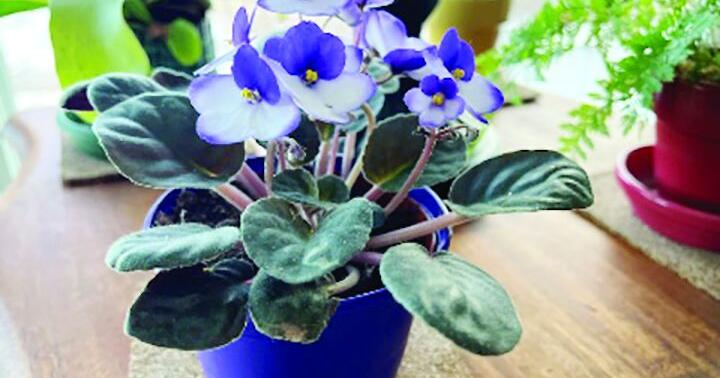
AMES – African violets (Saintpaulia) have long been favorites among indoor gardeners for their velvety leaves and vivid blooms while many outdoor landscapes are dormant. When properly cared for, these plants can bring vibrant color to homes during the winter months.
Native to the Usambara Mountains of Tanzania, African violets were discovered in the late 1800s and quickly gained worldwide popularity. Today, hundreds of hybrid varieties are available in a range of flower and leaf colors, shapes and sizes.
“It’s fascinating to think that a plant from a remote African forest is now one of the most common houseplants,” said Aaron Steil, consumer horticulture extension specialist at Iowa State University. “African violets are most rewarding when their basic needs are met.”
Bright light and household temperature
African violets thrive in bright, indirect light. The light should be bright enough to cast a shadow, but avoid placing the plant in direct sunlight, as this can scorch its leaves. In many homes, a north- or east-facing window works well. The plants can also grow easily under fluorescent or LED grow lights.
Typical household temperatures are ideal. Maintain temperatures between 60 F and 80 F, avoiding any sudden temperature changes from cold drafts or heat sources.
Water carefully and fertilize
Proper watering is essential for African violets. African violets prefer evenly moist soil; be careful not to overwater. When watering from above, avoid getting water on the foliage, as this can cause leaf spotting. To avoid this issue, bottom watering is an effective method. Place the pot in a shallow dish for 20 to 30 minutes, allowing the soil to absorb moisture.
“One of the biggest mistakes people make is overwatering,” Steil noted. “Let the soil dry slightly before watering again, and be sure the soil is a lightweight, well-draining potting mix that is organic, but doesn’t hold too much moisture.”
African violets should be fertilized regularly, but not excessively. Use fertilizer labeled for African violets or dilute an all-purpose fertilizer to one-half or one-quarter strength.
“When you get the light, watering and fertilizer just right, African violets can bloom almost continuously, making them one of the few houseplants that provide color year-round,” Steil added.
Common problems and solutions
Yellowing leaves that droop and become mushy are often the result of excessive watering or poor drainage, which leads to root rot. Proper watering is the best defense against root rot.
A lack of blooms can be caused by inadequate light or improper fertilization. “African violets need regular fertilization, but too much leads to vigorous vegetative growth and poor flowering,” explains Steil.
Pests such as spider mites or mealybugs require prompt treatment. Steil advises home gardeners to inspect plants regularly. “If you see pests, thoroughly rinse with room temperature water, isolate the plant and treat with an insecticidal soap,” he added.
Easy to propagate and rejuvenate
African violets can be easily propagated from leaf cuttings, making them great for sharing. Remove a healthy leaf with about an inch of stem, insert it into moist perlite or a very well-drained potting mix and cover it with a clear dome or plastic bag to maintain humidity. New roots usually form in three to four weeks, followed by young plants a couple of weeks later. Once the new plants are several inches tall, separate them and pot them individually.
As plants age, repotting can help them maintain their appearance and health. “If more than one rosette of leaves develops, carefully divide the crowns and replant in fresh potting soil,” Steil said. “For plants with a neck, repot deeply, burying the stem up to the lowest leaves,” Steil said.