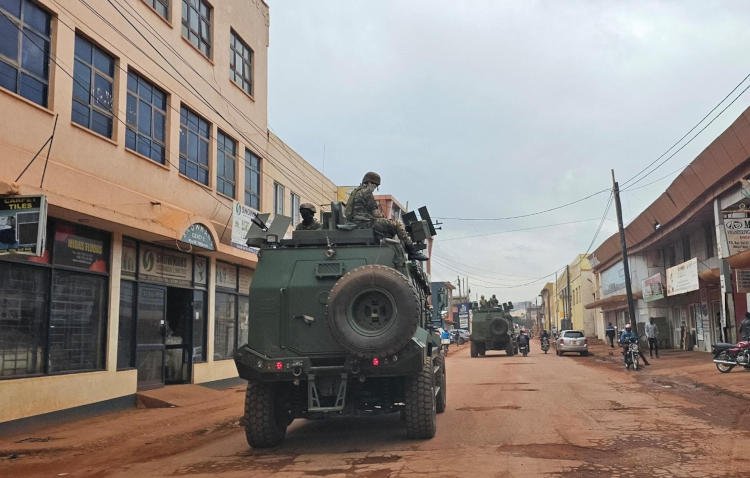
As Uganda moves closer to its January 2026 general election, Africa’s principal human rights body has issued a warning that goes beyond concern and into alarm.
Development Diaries reports that the African Commission on Human and Peoples’ Rights says violations of freedom of expression in Uganda are escalating at precisely the moment citizens most need access to information, open debate, and independent scrutiny of power.
Throughout 2025, journalists in Uganda faced sustained harassment, intimidation, and violence, with at least 32 journalists assaulted or having their equipment destroyed by security forces while covering political events during a March by-election alone.
It is understood that cameras were smashed, reporting was disrupted, and no credible accountability followed. One of the most visible cases involved Canary Mugume, a senior reporter with NBS Television, who was beaten by unknown assailants in Kampala.
His attack was a warning shot aimed at the entire media ecosystem ahead of a national vote on 15 January. Alongside physical attacks, the state has continued to tighten its grip on digital space, as Ugandan authorities have repeatedly threatened to shut down the internet during elections, a tactic the country knows all too well.
Facebook has remained blocked since the 2021 elections, and officials have openly warned citizens against using VPNs to bypass censorship. These actions are clear political tools designed to manage what citizens can see, share, and question.
The system failing here is electoral governance itself. Elections are not free simply because ballot boxes are present. They are free when citizens can access information, compare alternatives, and speak without fear. When journalists are beaten and digital platforms restricted, elections may look orderly on paper while being hollow in substance.
Article Nine of the African Charter on Human and Peoples’ Rights guarantees freedom of expression and access to information. In its statement, the ACHPR explicitly urged the Ugandan government to uphold these commitments and to refrain from ‘undue restrictions’ such as internet shutdowns and media repression.
The commission also called on Uganda to ratify the African Charter on Democracy, Elections and Governance, a step that would further bind the state to democratic standards it publicly endorses.
Yet the gap between obligation and behaviour remains wide, as responsibility sits squarely with state institutions. The Uganda Police Force, the Electoral Commission, the Ministry of ICT, and the executive branch collectively shape the civic environment in which elections take place.
When journalists are attacked and platforms are restricted without consequence, these institutions are active participants in shrinking civic space.
Community reporters, women journalists, and rural media workers face the greatest risks because they lack institutional protection and international visibility.
Young voters, who rely heavily on social media for political information, are disproportionately affected when platforms are blocked. What is framed as a security measure becomes, in reality, a mechanism of exclusion.
This is why the ACHPR’s intervention matters, because it reframes Uganda’s situation as a continental test of whether African elections will be governed by shared democratic norms or by state-managed silence.
Ugandans should not accept this trajectory as inevitable. Documenting abuses, supporting independent media, and insisting on digital rights are not acts of defiance; they are acts of citizenship. Regional bodies, civil society, and political actors must also move beyond statements towards sustained pressure when fundamental rights are curtailed.
An election conducted under the shadow of internet shutdowns, media violence, and fear cannot be meaningfully free, no matter how efficiently votes are counted.
As Uganda heads to the polls, the real question is not whether these threats exist; they do. The question is whether citizens and institutions will challenge them or allow repression to become routine.