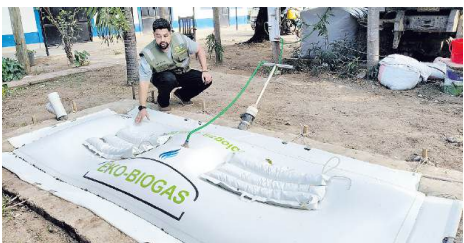
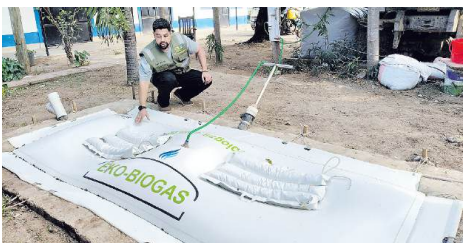
 Mombasa environment and solid waste management chief officer Hamid Shehan/BRIAN OTIENO
From an early age, Hamid Shehan has been pushed
to the limits by his father, who just wanted the best for him.
“But
I did not realise that at first when I was young. I always thought he was
punishing me. I even questioned whether he was my real father and that I was
adopted,” Shehan says.
Because
of his huge size, almost being obese, which ran in the family and caused health
problems, he was forced into different sports, including swimming, taekwondo,
rugby, basketball, and tennis, among others.
He
loved swimming the most.
And
to instill discipline and a positive work ethic, Shehan and his siblings were
not supposed to be found in bed past 7 am, whether it was a Monday or a Sunday.
“We
used to be woken up at 7 am, even when there was nothing to do. We just had to wake up.
There was no sleeping past 7 am. It was a crime,” he says.
This
push by the father helped him become a good swimmer, representing Kenya in the
All Africa Junior Championships in Johannesburg, South Africa, in
1997, as he waited to join Form 1.
He
started swimming while in Class 4.
“My
dad was afraid I was becoming obese and there was a history of high blood
pressure, hypertension, diabetes and other chronic conditions in my family and
he didn’t want me to join the long queue,” he says.
“Swimming
taught me how to live with different people from different cultures.”
This
experience also enhanced his competitive nature.
“My
competitiveness is unique because I do not compete with others. That will only
limit me to the limits of my competitors. I compete with myself, so I can be
better than I was yesterday,” he says.
He
suffered two job losses and at some point stayed for almost six months without
a job, making him feel he was becoming a burden to his family.
Shehan, however, learned from an early age the spirit of being a fighter and this is
what he has been using to get by in life.
The
chief officer in Mombasa County’s Department of Environment and Solid Waste Management was born and raised in the Old Town, where culture and tradition persist among the coastal communities of Bajuni and Swahili Arabs.
He
went to Aga Khan primary and secondary schools, completing his Form 4 in
2001, before taking a diploma in IT from Jomo Kenyatta University of Agriculture and Technology, a course which
was being offered at Jeffery Institute of Professional Studies.
“At
that time, however, everyone was doing an IT degree and I felt the field would
be saturated. I wanted something that would make me unique and stand out.
Someone advised me to do an accounting course called ACCA (Association of
Chartered Certified Accountants) at Memon College.”
His
father was an electrician, while most of his uncles were accountants.
But
being a teenager, he did not take the course seriously and failed in each of
his first papers, angering his father who thought he was playing with his
money.
“To
‘punish’ me, he said he would not pay for my fees anymore and that I would have
to pay for my own fees from the small jobs I used to get as a computer
technician,” Shehan says.
Shehan says it was his first time he realised the
value of money and how hard it is to earn it.
He
got a job as an accountant at Indiana Beach Apartments, juggling work
and college.
In
2006, after graduating from Memon College, he secured a job in Zanzibar as an
accountant at a water company called Drop of Zanzibar, where pay was much more
than the one at Indiana Beach Apartment.
However,
after about 18 months of work, an opportunity to work at Somak Luxury Travel
back home arose and he grabbed it.
Unfortunately,
this was during the post-election violence time and shortly after he lost his
job because the violence negatively affected the tourism industry. He was forced out due to a lack of business in the sector.
He
tarmacked again before being linked with an auditing job at Devani-Devani,
earning less than half what he was earning at Somak.
“This
is the first job that gave me discipline and meticulousness. I learnt to be
very meticulous about papers and contracts. My boss Paraag Devani was impressed
about my work and he is the one who taught me to be meticulous and
disciplined,” he says.
Shehan worked there for four years before eventually
securing another job as a chief finance officer at an electrical and air
conditioning company in Nairobi.
“But
then Covid came and I was laid off. This was the second time I was being laid
off because of outside circumstances,” he says.
He
stayed jobless for three years before an opportunity at the Mombasa county
government arose, and he was pushed to apply for it by his friends who were fed
up of his whining about poor service delivery.
“I
was one of the fiercest critics of the county government and I was constantly
pointing out failures. So those around me saw the call for applications in the
county and asked me to apply so they could see what I would do if I were on the
other end.”
He
says he also applied for the opportunity to prove people wrong.
“There
was this notion that coastal youth are lazy and cannot work. It was so annoying to me. I
had gone to Zanzibar to work and people still thought we were lazy,” he adds.
He
got lucky and secured a job in the county where he was first posted as the chief
officer in the department of agriculture, livestock, and blue economy.
This
was the first job in the public sector he got, and there was a huge culture
shock.
“But
I had learned from my father, who died in 2018, that I should do anything to the
best of my ability. Never do anything halfheartedly.
“I
started doing online courses on the blue economy to grasp anything and
everything about it. I was green in the area,” he says.
A
year later, there was a reshuffle, and he was transferred to the environment and
solid waste management department.
“This
is where the discipline I had learned before came in handy. My mentor, Deputy Governor
Francis Thoya, who is a hard worker, also helps me a lot in this department,”
Shehan says.
His
competitive nature has seen him push himself and fellow workers to heights
never seen before in Mombasa.
Through
him, Mombasa has been ranked the 18th cleanest city in Africa
by Africa Report, a position never achieved before.
“It
makes me happy and sad. Happy that we’ve been recognised, sad that we’re are not top 10
or top 5?” he says.
He
says there is still a long way to go to reach excellence.
“The
road to perfection is not travelled in a single night. We hope that the next
report comes after we have cracked the top 10,” he Shehan
adds.
He
says as a son of Mombasa, he does not expect other people to make Mombasa
great.
“The
saying ‘Charity begins at home’ has deep meaning. If I don’t start it myself, I
cannot expect others to start it.”
He
says his team is strong and constantly surprises him with how dedicated they
are.
“I
used to sketch during my free time. I love physical fitness and recently took up
boxing as a sport. I am now trying to get back to regular workouts because of the
nature of my work; sometimes I don’t have time,” he says.
He
is an avid lover of fantasy and Sci-Fi novels and series.
“I
am a die-hard fan of Japanese manga series, both the animated and cartoon versions. Cartoons take away the daily stress,” he says.
He
loves long drives, and when alone in the car, he is a daredevil, testing the
speed limits of the cars he drives.
“But
when I have people in the car, I am very disciplined and careful of how I
drive,” he says.
He
still enjoys open sea swimming, having competed in the open sea swimming gala
eight times, winning seven times in first place.
“I
credit my father for all this because he is the person I emulate. He didn’t
tell me how to live; he showed me how to live. I hope one day I make him
proud,” he says.