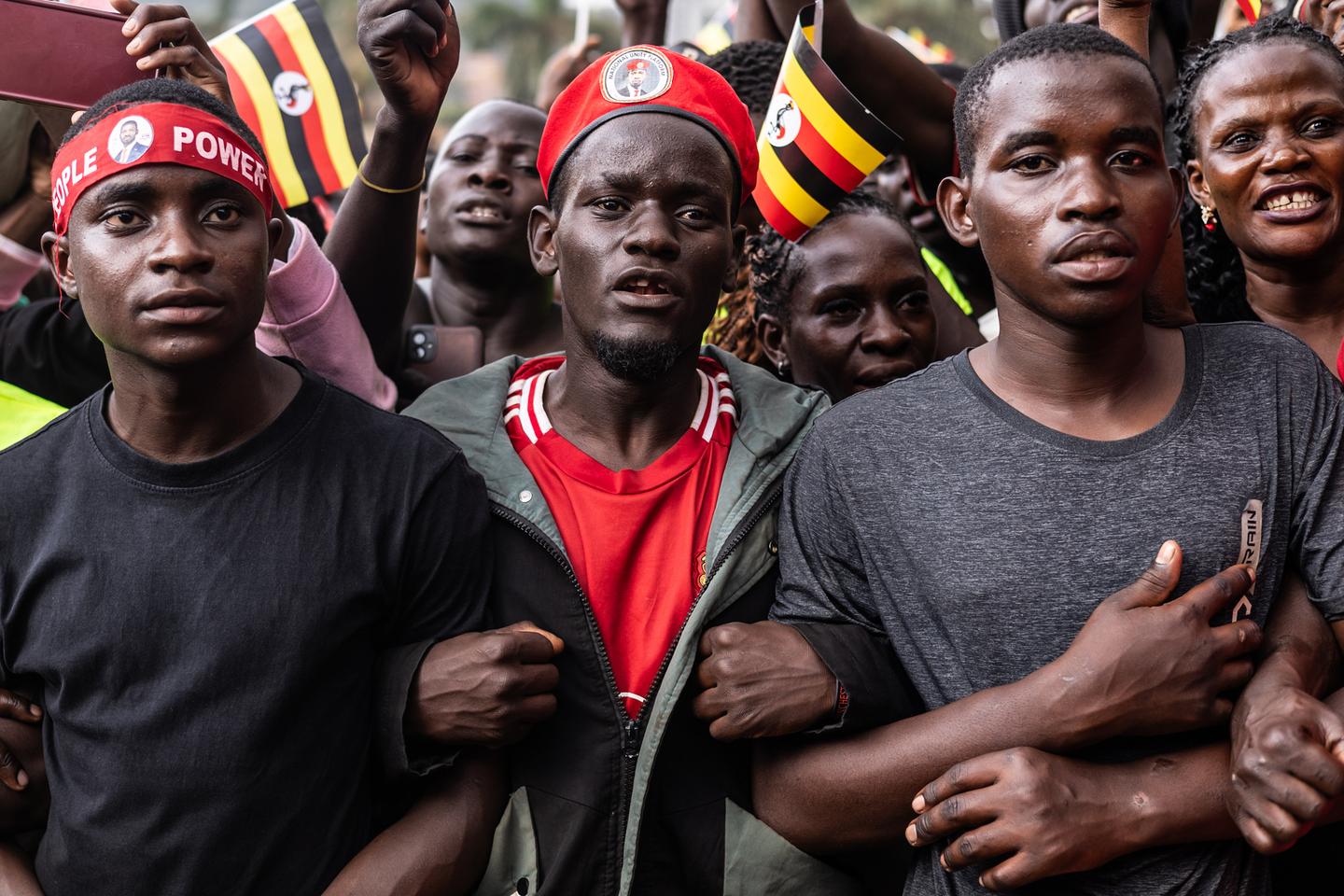
 Supporters of Ugandan opposition presidential candidate Robert Kyagulanyi Ssentamu, known as Bobi Wine, during an election rally in Kampala on January 12, 2026. SAMSON OTIENO / AP
Ugandan authorities shut down internet access nationwide on Tuesday, January 13, two days ahead of elections in which President Yoweri Museveni has overseen a crackdown on the opposition as he seeks to extend his 40-year rule. The 81-year-old leader, who once said African rulers should not overstay their time in office, is widely expected to win a seventh term on Thursday due to his total control over state and security bodies.
But he is taking no chances against a popular opponent, Bobi Wine, a 43-year-old singer-turned-politician, who has drawn large crowds to his rallies despite violent repression from the security forces.
Read more Subscribers only Being gay in Uganda, where the death penalty looms
Museveni held his final campaign rally in the capital Kampala on Tuesday, in a grand show most international media were blocked from covering. Despite the heavy security presence on Tuesday, thousands attended the colourful rally featuring a life-size mascot of Museveni that waved mechanically at the cheering crowds. Thousands walked to Kololo National Ceremonial Gardens, with many telling Agence France-Presse (AFP) they were only there for the free rice and meat and did not intend to vote for Museveni.
Foreign journalists were repeatedly denied access to the grounds despite having accreditation from the government, and some were threatened with arrest. “Your camera is not welcome,” an unidentified Special Forces Command (SFC) officer told the reporters. Rights groups and international monitors say hundreds of opposition supporters have been arrested in the run-up to the election.
Another key opposition figure, Kizza Besigye, who has run four times against Museveni, was kidnapped in Kenya in 2024 and brought back to a military court in Uganda, where he is still on trial.
‘Misinformation’
The internet was shut down around 3 pm local time on Tuesday, AFP journalists confirmed. Internet monitor NetBlocks said there was a “nation-scale disruption to internet connectivity in Uganda” in a post on X.
The Uganda Communications Commission had earlier ordered internet providers to cut access, saying it was necessary to prevent “misinformation” and “incitement to violence,” and would last until further notice. There was no official statement from the government. One official told AFP it was because no one wanted to “own” the decision.
Partner service
Learn French with Gymglish
Thanks to a daily lesson, an original story and a personalized correction, in 15 minutes per day.
Try for free
Help us improve Le Monde in English
Dear reader,
We’d love to hear your thoughts on Le Monde in English! Take this quick survey to help us improve it for you.
Take the survey
New
Le Monde’s app
Get the most out of your experience: download the app to enjoy Le Monde in English anywhere, anytime
Download
The country had already shut down the internet during the last election in 2021 – a vote that was marred by widespread allegations of rigging and state violence. The government repeatedly promised the internet would not be cut this time, stating in a post on X on January 5 that “claims suggesting otherwise are false, misleading and intended to cause unnecessary fear and tension among the public.”
Neighboring Tanzania also shut down the internet during its election in October, which triggered massive unrest over rigging allegations. Security forces responded by killing hundreds of protesters, according to the opposition.