Kampala, Uganda
Reuters
Ugandan authorities cut internet access and limited mobile services across the country on Tuesday, two days before an election in which President Yoweri Museveni will stand for a contentious seventh term after four decades in power.
The Uganda Communications Commission ordered mobile service providers to shut down public internet connections from 6pm on Tuesday in order to curb “misinformation, disinformation, electoral fraud and related risks”, according to a letter seen by Reuters.
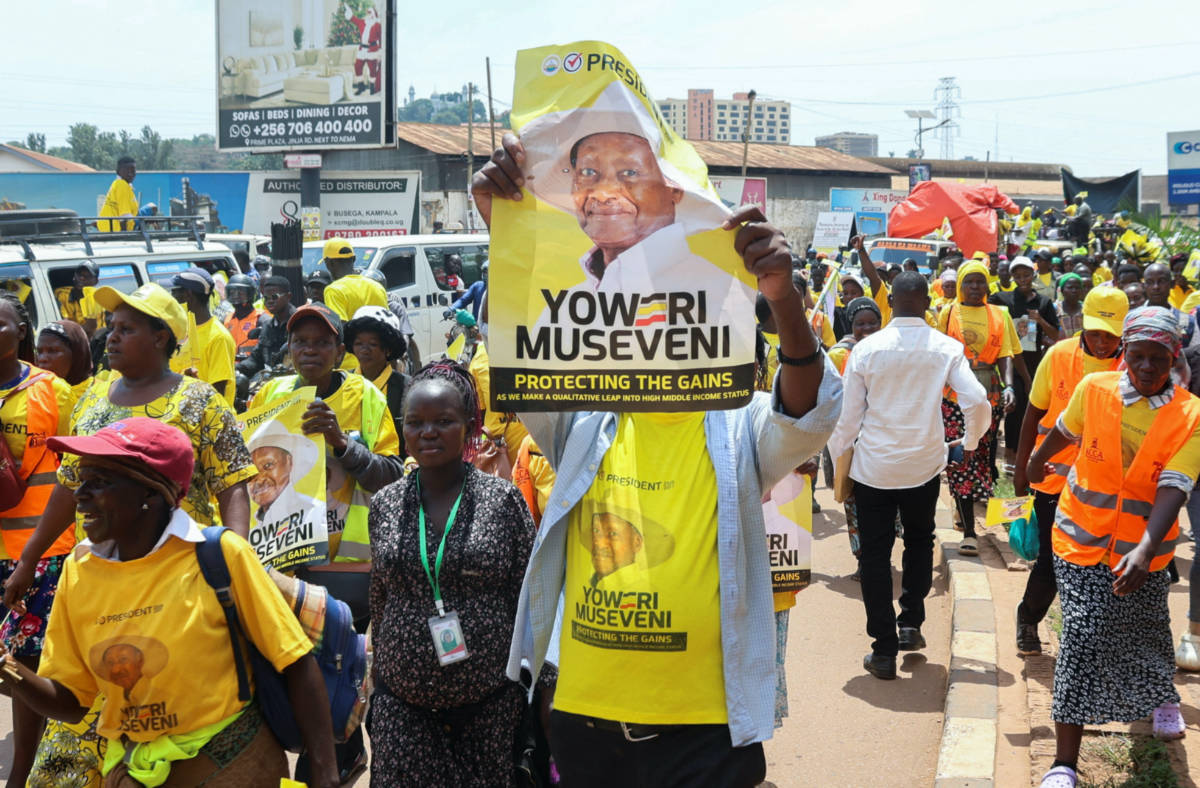
Supporters of Uganda’s President and the leader of ruling National Resistance Movement (NRM) party, Yoweri Museveni, march along the street before attending his campaign rally in Kampala, Uganda, on 13th January, 2026. PICTURE: Reuters/Michael Muhati
Security forces have detained hundreds of opposition supporters in the run-up to the election and repeatedly fired live bullets and tear gas at campaign events in support of Museveni’s leading challenger, pop star Bobi Wine.
“The UCC acknowledges the operational challenges this directive may impose and appreciates your full cooperation in upholding national stability during this sensitive period,” the UCC said in the letter dated Tuesday and addressed to Licensed Mobile Operators and Internet Service Providers.
The 81-year-old Museveni, who came to power in 1986 after leading a five-year rebellion, is Africa’s third-longest ruling head of state.
He has changed the constitution twice to remove age and term limits, and his dominance of Ugandan institutions means there is little prospect of an election upset in the East African country of 46 million people, political analysts say.
We rely on our readers to fund Sight’s work – become a financial supporter today!
Watchdogs have spoken out about rights violations
Uganda’s internet went out at 6pm local time, a Reuters witness confirmed.
The government also early on Tuesday ordered two local rights groups to cease operations before Thursday’s election, which the United Nations Human Rights Office says is taking place in an atmosphere of repression and intimidation.
The two groups had denounced the alleged arbitrary detention and torture of opposition supporters and journalists.
The state-run National Bureau for NGOs said in a letter to one of the groups, Chapter Four Uganda, that it was found to be involved in activities “prejudicial” to Uganda’s security and “should cease operations…with immediate effect”.
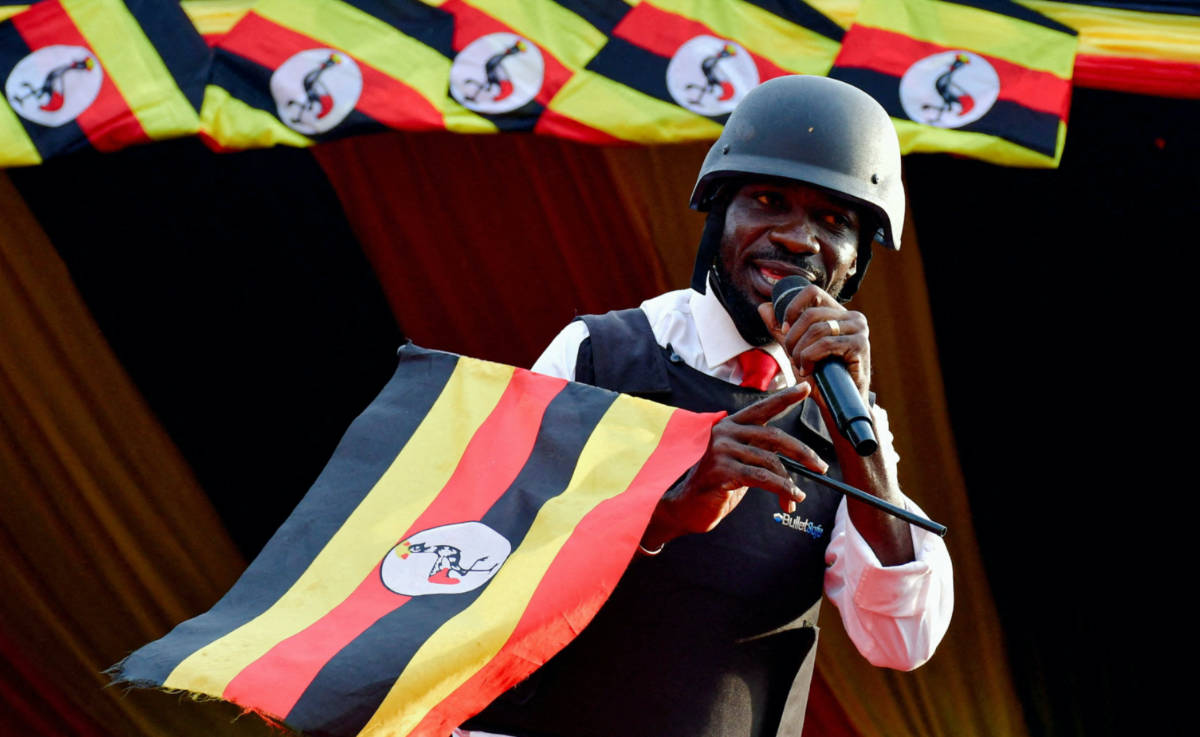
Ugandan presidential candidate Robert Kyagulanyi, also known as Bobi Wine, of the National Unity Platform (NUP), addresses the crowd during his campaign rally ahead of the general elections, in Kampala, Uganda. PICTURE: Reuters/Abubaker Lubowa
Robert Ssempala, who heads the Human Rights Network for Journalists-Uganda (HRNJ-U), told Reuters he had received the same letter ordering his organisation to stop operating.
Stephen Okello, head of the state NGO bureau, confirmed to Reuters that he had written the letters.
Reports of arbitrary arrests
The UN Human Rights Office said in a report on Friday that Uganda’s police and military had used live ammunition to disperse peaceful rallies, carried out arbitrary detentions and abducted opposition supporters ahead of the vote.
A Ugandan Government spokesperson did not respond to a request for comment on the report.
Museveni’s government has defended the security forces’ actions as a justified response to what it called lawless conduct by opposition supporters.