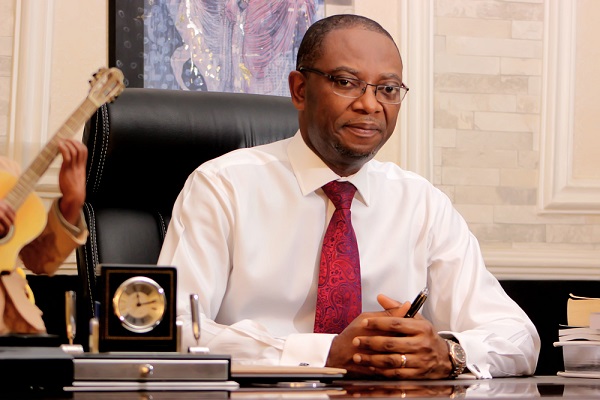
…says leadership demands restraint, maturity, the courage to navigate power, politics, and people
…urges public servants to pursue integrity, long-term reforms, and excellence over quick wins
A Nigerian public governance expert, Dr Joe Abah, has declared that governing a country is far more complex than rocket science, arguing that the challenge of leadership lies not in technical difficulty but in navigating people, power, and competing interests.
Dr Abah made the assertion on Tuesday while delivering the keynote address at the Hadiza Bala Usman @50 Governance Colloquium held at the Transcorp Hotel in Abuja, where senior government officials, policy experts, and public servants gathered to reflect on leadership, delivery, and public sector performance.
Drawing from years of experience in public service and advisory roles, Abah said governance demands a level of maturity and restraint that is often underestimated by those outside government.
“Governance is not rocket science; it is harder than rocket science,” he said, explaining that unlike technical systems, government operates in a terrain shaped by politics, identity, expectations and institutional pressures.
He noted that while rockets respond predictably to scientific laws, governance requires leaders to constantly balance issues of ethnicity, religion, political affiliation, regional sensitivities and public perception.
“In government, no matter your experience, you must navigate all these realities at the same time,” he said.
Abah used practical illustrations to underscore his point, stressing that authority must be exercised with caution, adding that power should be understood as a responsibility to be deployed sparingly, not as a weapon to intimidate colleagues or subordinates.
He emphasised that effective leadership often lies in knowing when not to wield authority, even when it is firmly available.
The governance expert also spoke on the complexity of delivering presidential mandates, noting that political will is rarely the responsibility of a single individual.
“Political will does not only come from the President. It comes from the political party, the cabinet, colleagues and the broader power structure around the presidency”, he said.
He warned advisers and senior officials against taking it personally when their recommendations are not immediately adopted, explaining that leaders often operate under multiple pressures that are not always visible to those around them.
Abah further described leadership as an inherently difficult task, citing historical and philosophical examples to illustrate how even the most revered leaders faced doubt and resistance from those they led.
According to him, resistance to change is natural, as reforms often threaten entrenched interests while offering uncertain benefits to others.
He argued that public officials should therefore expect pushback when driving reforms and should not be discouraged by temporary unpopularity.
On public service impact, Abah observed that the results of reforms are often not immediately visible, noting that some initiatives only bear fruit long after their architects have left office.
He urged public servants not to lose hope when outcomes appear delayed, stressing that well-designed systems and institutions eventually deliver results.
Abah also underscored the importance of integrity and personal reputation in public office, describing a good name as a lasting asset that outlives material wealth.
He challenged public officials to remember the weight of both their family names and institutional identities, urging them to act in ways that strengthen public trust.
In his concluding remarks, Abah praised Hadiza Bala Usman, describing her as a public servant known for insisting on due process and standing firm on what she believes is right, even when such positions attract controversy.