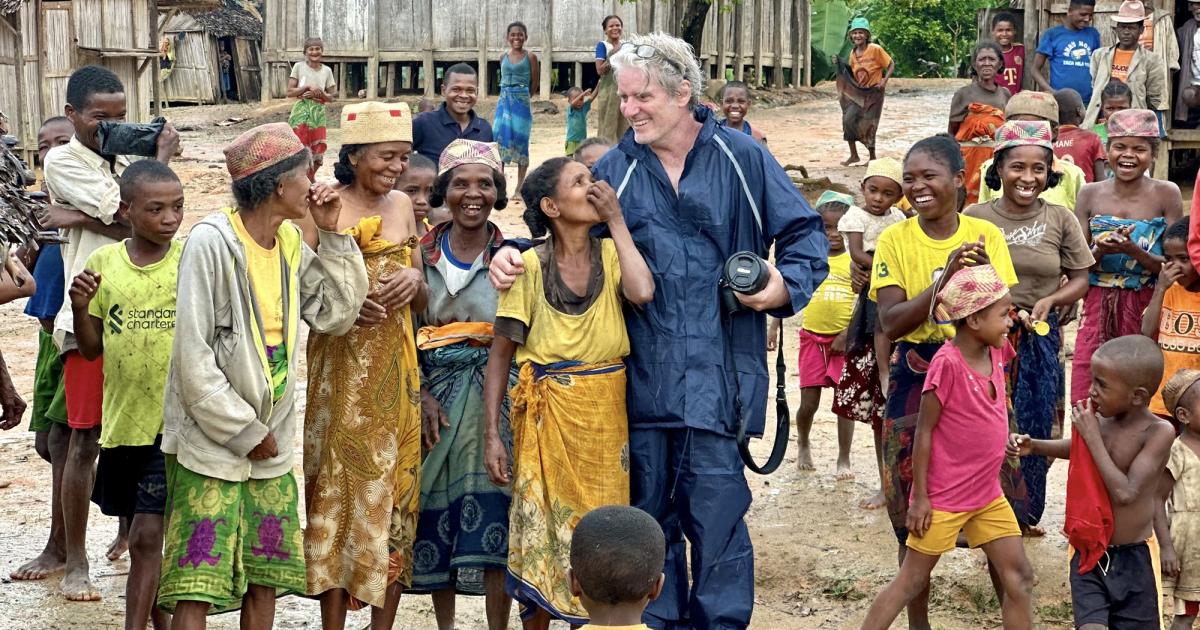
Peter Biro, a Regional Information Officer, is currently based in Nairobi, covering East and Southern Africa for the European Union’s humanitarian aid office.
Peter is a photographer, reporter and humanitarian worker with 3 decades of experience in crisis zones — from Cambodia and Kosovo to Sierra Leone, East Timor and Iraq.
When we connected for a recent interview, I saw not only the breadth of his experience but the person it has shaped. Years of documenting conflict and disaster have not blunted his sensitivity to the people he meets. If anything, he says, the scale of suffering he encounters makes it essential to stay emotionally connected.
‘The suffering can sometimes overwhelm you because it is so vast,’ Peter says. ‘To work in this field, you need to be able to understand and feel for people. Their stories and emotions always have to be part of the reporting.’
A crisis overlooked
Sudan, one of the countries in Peter’s portfolio, is now gripped by one of the world’s most severe humanitarian crises. Conflict has uprooted millions and pushed communities to the edge, leaving many without food, protection or basic services. The country is also among the deadliest in the world for humanitarians. By April 2025, all aid workers killed there were local staff, underscoring the extreme risks faced by those trying to deliver aid. Yet even amid reports of mass killings, widespread sexual violence and relentless displacement, international attention has been limited.
‘It’s a story that needs to be told,’ Peter says. ‘Some of these conflicts have been going on for decades. The toll on civilians is immense, yet Africa still sits in the shadows of global media attention.’
Across the wider region the pressures are significant: Somalia’s long-running emergency, escalating conflict in eastern Democratic Republic of Congo, overstretched camps in Ethiopia and Uganda, recurring climate shocks across the Horn and southern Africa, the effects of recent cyclones in Mozambique, Kenya’s sizeable refugee population, and continued migration through Djibouti toward the Gulf.
‘It’s difficult to get sustained attention from the public or the media,’ he notes. ‘But the scale of suffering is huge and the stories we tell, along with the EU’s assistance, matter.’
What Peter values most, he says, is meeting people and documenting both their hardship and their resilience. He recalls meeting a family in Somalia who were displaced 3 times in a single year: first by conflict, then by drought, then by flooding.
‘Some countries experience multiple crises simultaneously,’ Peter says. ‘You can prepare for natural disasters to some degree, but it’s not as easy to predict man-made ones — and they affect millions.’
When discussing climate-related disasters, Peter often speaks with older community members. After droughts or floods, he asks whether they have ever seen conditions like these in their lifetime.
‘Most say no, and some are over 80 years of age,’ he says. ‘Scientific evidence supports what they describe: more frequent and intense climate shocks. Many communities are in a very vulnerable situation, but they still find ways to adapt.’
Yet even in these fragile places, Peter regularly encounters remarkable solidarity. In displacement camps, neighbours who met only days earlier share food, water or a bit of shade. In remote villages, people band together to repair roads, assist widows or support families who have lost everything.
‘You see so many small acts of kindness,’ he says. ‘They don’t erase the hardship, but they show how strong communities can be when everything else falls apart.’
He is also encouraged by the young people he meets — volunteers, students, community organisers — who refuse to accept that crisis is the only story their countries can tell. Many push for education, environmental action and new opportunities.
As crises multiply, those most at risk — women and girls, but also men and boys — face widespread physical and sexual violence. In Sudan, Congo and elsewhere, sexual violence is routinely used as a tactic of war, leaving survivors with profound physical and psychological scars.
EU-supported aid organisations operate in often dangerous conditions, providing psychosocial support, safe spaces and medical care for survivors of sexual and gender-based violence. The European Union reinforces these efforts by advocating for gender equality, funding reproductive healthcare in conflict zones and engaging community leaders to challenge harmful norms.
Resilience in the face of crisis
Peter also points to broader humanitarian challenges in regions with limited infrastructure and scarce services. In parts of the Democratic Republic of Congo, dense forests and the lack of paved roads can make travel brutally slow, with relatives sometimes carrying a sick patient for days to reach the nearest clinic. These conditions underscore the need for sustained humanitarian attention.
Peter has also seen the tangible impact humanitarian assistance can make. In areas where the EU supports clinics, mobile health teams or water projects, child malnutrition fall, schools reopen and communities begin to rebuild.
‘These improvements may seem small from afar,’ he says, ‘but for the people living through the crisis, they mean safety, dignity and a chance to recover.’
Even in the most difficult environments, moments of warmth, humour and welcome are common.
‘Those moments stay with you,’ Peter says. ‘They remind you that people are not defined by crisis. There is always hope.’
And I believe him.