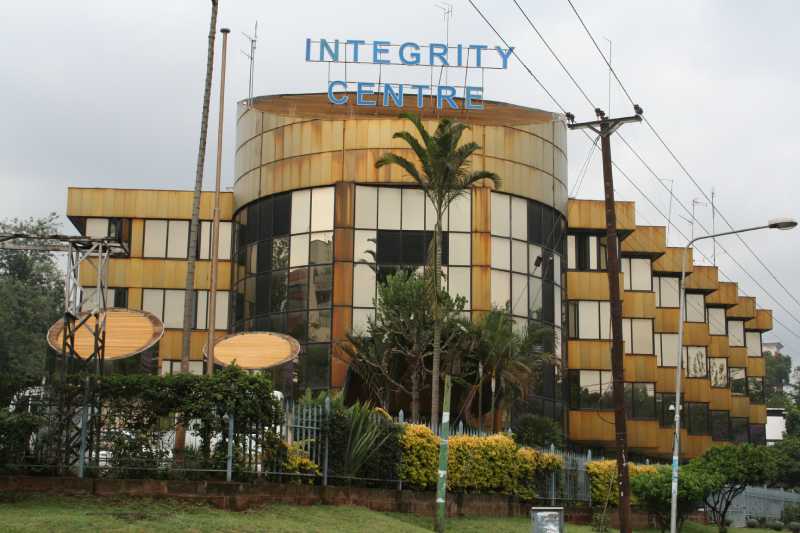
The Ethics and Anti-Corruption Commission has recommended the suspension of National Government Affirmative Action Fund (NGAAF) CEO Roy Sasaka Telewa, even as the Employment and Labour Relations Court issued temporary orders stopping any move to remove him from office.
In a letter dated January 12, 2026, and addressed to Gender CS Hanna Wendot,
the commission is conducting investigations related to the CEO’s wealth and other
issues touching on financial administration.
The Commission said the investigations are being conducted under the
Anti-Corruption and Economic Crimes Act 2003, the Proceeds of Crime and
Anti-Money Laundering Act 2009 and the Public Procurement and Asset Disposal
Act 2015.
According to the letter signed by EACC CEO Abdi Mohamud, the agency
conducted searches on January 8 at Telewa’s residence and office pursuant to a
court-issued warrant.
The Commission claimed that “several documents and information
were recovered” during the operation.
The EACC said the nature of the allegations and the ongoing inquiry warrant the temporary removal of the CEO from office.
“We recommend that the
above-named officer be suspended from office for a period of six months,” the
letter stated.
The Commission cited various legal provisions supporting its recommendation,
including Section 42(7) of the Leadership and Integrity Act 2012, which allows
the suspension of a state officer where such action is considered necessary
pending the determination of allegations.
The letter further referenced Regulation 25 of the Leadership and Integrity
Regulations 2015, which permits suspension once the Commission has initiated
investigations and made such a recommendation.
Regulation 25(3) provides that an officer under suspension shall be on half pay
while investigations continue.
The EACC also highlighted provisions of the Public Service Code of Conduct
and Ethics 2016, specifically Section 36(6), which states that a public officer
facing allegations may be suspended while an inquiry is underway.
The agency noted that it has powers under Section 4(4) of the Leadership and
Integrity Act to require public entities to take necessary actions to enforce
compliance with ethical and leadership standards.
“The Commission is empowered… to require public entities to carry out such
functions and exercise such powers as may be necessary to enforce compliance
with the leadership and integrity requirements,” the letter stated.
The recommendation places responsibility on the Ministry of Gender, Culture
and Children Services, under which NGAAF falls, to act on the proposal.
The Commission said it would notify the ministry once the inquiry is
concluded.
The letter was copied to the Chief of Staff and Head of Public Service Felix
Koskei, and the Chairperson of the NGAAF Board.
However, a day after the EACC’s letter, the ELRC issued conservatory orders
that temporarily halted any attempt to suspend or remove Telewa from his
position.
The orders, issued on January 13, 2026, by Lady
Justice Jemimah Wanza Keli, arose from a Notice of Motion dated January 12,
filed by Telewa against the NGAAF Board, the Cabinet Secretary for Gender and
Affirmative Action, and two other respondents.
The court certified the application as urgent
and restrained the respondents from convening or proceeding with a Board
meeting scheduled for January 13, or any other meeting “in furtherance of the
impugned process,” pending the hearing of the application.
“That pending the hearing of this Application and the court is further
pleased to issue a temporary conservatory order restraining the Respondents
whether by themselves, their agents, servants or any person acting under their
authority, from suspending, removing, terminating or purporting to terminate
the Petitioner’s contract of service; convening, directing, influencing or
acting upon any Board meeting or process aimed at his removal; appointing or
retaining any person in an acting or substantive capacity as CEO of NGAAF; or
in any other manner interfering with the Applicant’s lawful tenure and
functions as CEO,” Justice Keli ordered.
The orders were issued pending the hearing of
the application inter partes on January 21, 2026.
The court directed that the application be
served for response within seven days and issued a penal notice warning that
disobedience of the orders would result in consequences for those involved.