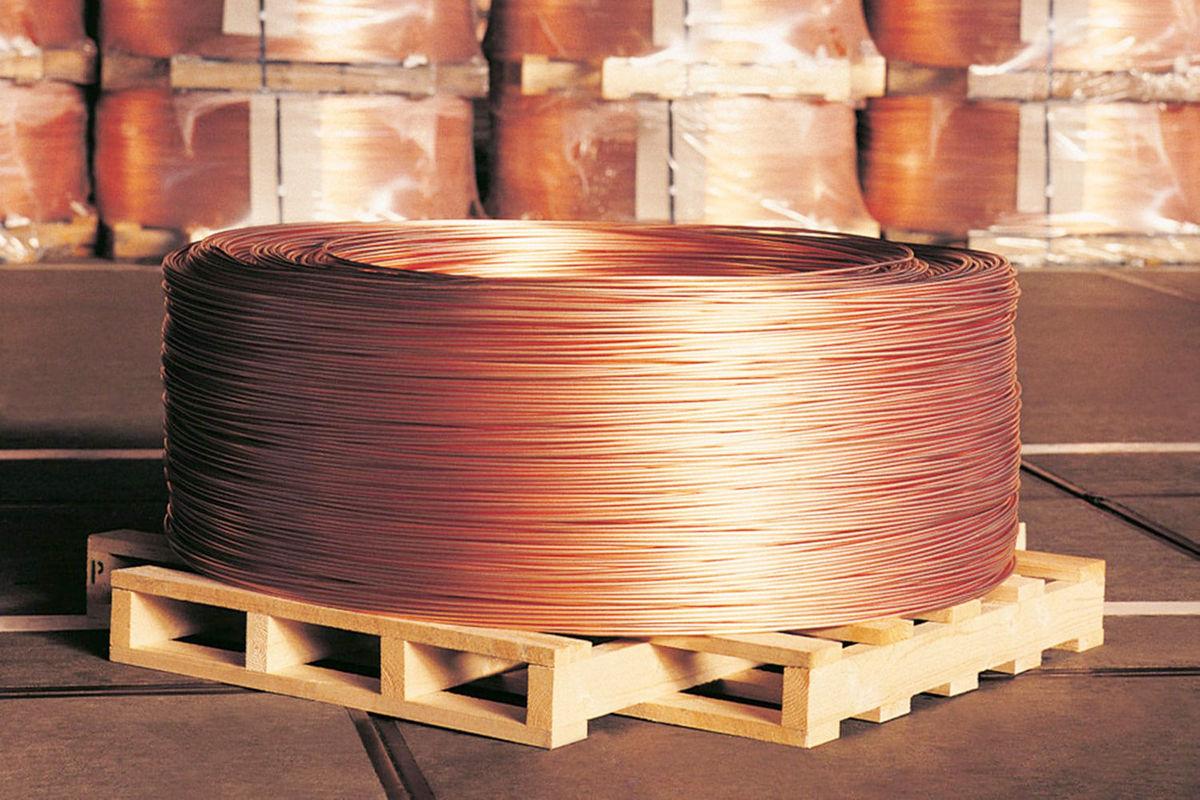
Dar es Salaam. Global copper prices have surged to a historic high of more than $13,000 a tonne, a development that has sent a wave of optimism through Tanzania’s mining sector as the red metal cements its position as one of the world’s most strategic commodities.
On Monday last week, international benchmark prices crossed the $13,000-a-tonne mark for the first time in history after a strike at Capstone Copper’s Mantoverde copper and gold mine in northern Chile revived fears of a deepening supply crunch.
Copper on the London Metal Exchange gained 4.6 percent to $13,042 a metric tonne by late trading, having earlier touched $13,045 to surpass the previous record of $12,960 set in December.
In the United States, Comex copper futures jumped by a similar margin to a record $5.9005 per pound, equivalent to about $13,008 a tonne.
Traders said the strike at Mantoverde, expected to produce between 29,000 and 32,000 tonnes of copper annually, had reinforced a broader narrative of shortages in a market already under strain from the rapid expansion of renewable energy, electric vehicles and grid infrastructure.
This international price rally is being viewed by Tanzanian authorities as a strategic window of opportunity to accelerate domestic projects.
Speaking on the implications of the price hike, the Managing Director of the State Mining Corporation (Stamico), Dr Venance Mwasse, noted that the current market dynamics provide both the incentive and the catalytic spark needed to intensify exploration.
“This price environment is an opportunity for us and it gives us strong motivation to intensify exploration on our projects,” he told The Citizen.
“It brings momentum and energy. We have already started procuring exploration equipment so that we can move faster.”
Stamico holds the licence for the Changube Copper Project in Kiruru–Ibweijewa Village, Lembeni Ward, Mwanga District in Kilimanjaro Region. Although production is yet to begin, the company sees the current global dynamics as a justification to accelerate work.
According to the project’s 2010 feasibility study, total estimated development costs stand at $32.3 million.
The renewed urgency fits into a broader national strategy to shift Tanzania from being primarily a mineral exporter to a value-addition hub.
In August 2025, Minister for Minerals Anthony Mavunde laid the foundation stone for the country’s first nickel and copper refining and processing plant, a $15 million facility at Zamahero Village in Bahi District, Dodoma.
Three months later, in November, the minister announced that construction of another nickel and copper processing and smelting plant in the Mayamaya area of Bahi District had reached 85 percent completion following an inspection tour.
The plants are expected to anchor a new downstream industry that will allow Tanzania to capture more value locally rather than exporting concentrates. Data from the Tanzania Mining Commission show that national copper production more than doubled between 2020 and early 2025, rising from 21,154.64 metric tonnes to 44,690.56 tonnes.
Over the same period, exports increased from 13,405.03 tonnes worth Sh252.5 billion to 27,528.46 tonnes valued at Sh533.9 billion.
Speaking to The Citizen in April last year Ms Annasia Kwayu of the Commission’s Financial Audit, Tax Review and Local Content Section told the paper that the industry is witnessing growth across exploration, processing and mining, particularly among small and medium-scale operators.
She said assuming an average annual growth rate of 15.08 percent, copper output could reach 205,713.88 metric tonnes by 2030.