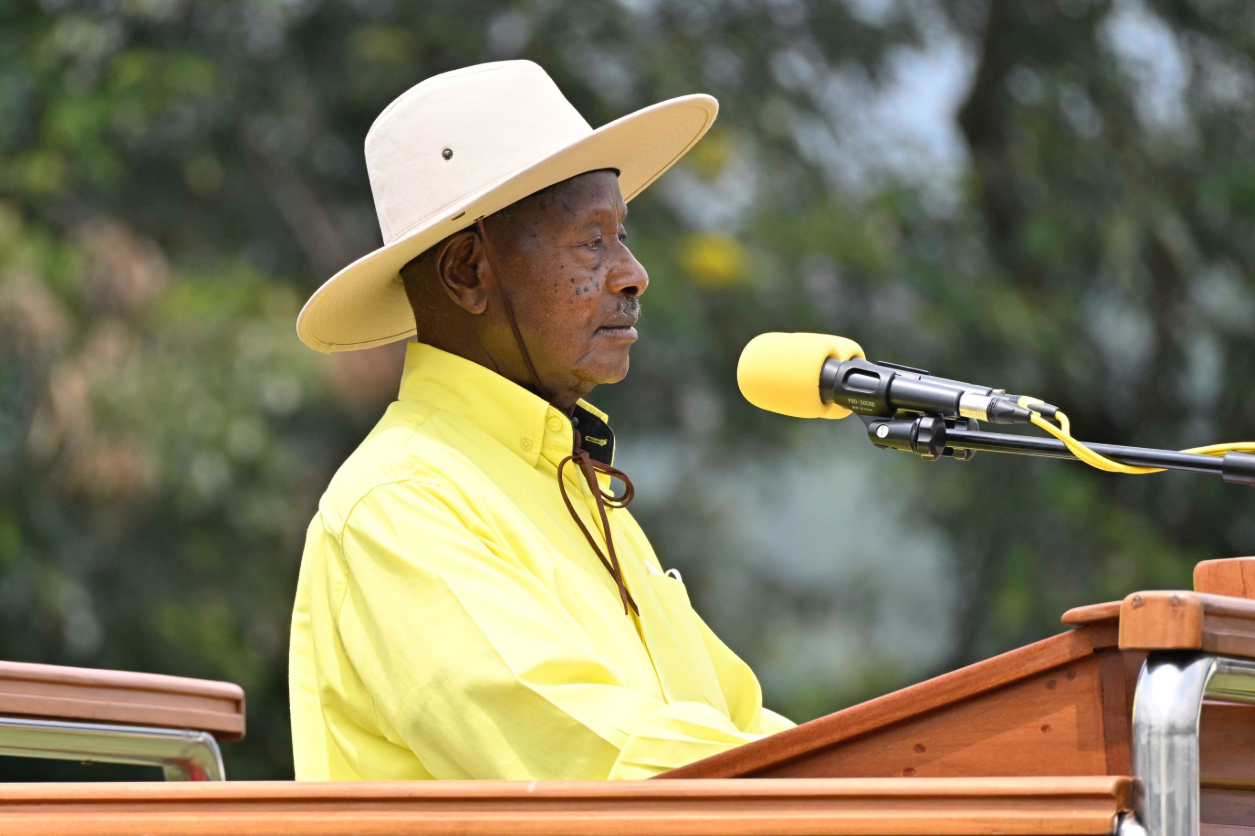
 Authorities blocked internet access on Jan. 13, just days before President Yoweri Museveni, who has been in power since 1986, seeks his seventh term in office. @KagutaMuseveni X
Ugandan religious leaders are urging calm as the country prepares for elections on Jan. 15, following a nationwide internet shutdown that has cut major communications networks.
Authorities blocked internet access on Jan. 13, just days before President Yoweri Museveni, who has been in power since 1986, seeks his seventh term in office.
The shutdown mirrors the 2021 general election, when the government imposed a similar nationwide blackout lasting roughly five days. This pattern also reflects a broader trend across Africa in 2025. Tanzania, Ethiopia, Democratic Republic of Congo, Mozambique, Cameroon, Togo, Kenya, South Sudan, Guinea, and Libya have all restricted internet access, primarily during elections, unrest, or protests.
The Inter-religious Council of Uganda, representing leaders from the Province of the Church of Uganda, Uganda Orthodox Church, Association of Pentecostal and Evangelical Churches, and Islamic organizations, has raised alarm over reports of intimidation in the days leading up to the election.
“As religious leaders, we recognize our sacred duty to promote peace. At the same time, we firmly affirm that any process in which our nation engages must be grounded in justice and fairness. Without these, we risk sowing seeds of resentment, violence, and disorder,” the council wrote in a statement.
The group noted a heightened sense of anxiety among citizens and growing animosity between candidates vying for leadership positions.
“This anxiety is further compounded by the destabilizing effects that elections have had in some of our neighboring countries, as well as by our own history, when disputed elections led to insurgencies for which Uganda paid a heavy price in human life and loss of property,” the statement continued.
The council emphasized that every national election offers Ugandans a chance to reflect on what has worked well, what has damaged the social fabric, and which leaders can be trusted to build a just, peaceful, and prosperous nation. Nation building, the statement stressed, has never depended on one person or one political party but requires collective effort, participation, sacrifice, and goodwill from all citizens and institutions.
Freedom of speech and intimidation of opponents
President Museveni’s main challenger is Robert Kyagulanyi Ssentamu, widely known as “Bobi Wine”, a former musician who turned to politics. Another long-time rival, Dr. Kizza Besigye, remains in detention on treason charges after Ugandan security forces abducted him in Kenya in late 2024 and took him to Uganda’s capital Kampala.
Special prayers were held at the Kasangati home of Besigye, bringing together opposition leaders, families of detainees, religious leaders, and supporters calling for the release of political prisoners and peaceful elections. The gathering occurred amid growing criticism from opposition figures who say political repression has intensified before the elections.
Winnie Byanyima, Dr. Besigye’s wife, argued that arrests, abductions, and intimidation during campaigns undermine electoral credibility. She urged Ugandans to reject violence and brutality, describing the jailing of political opponents as a sign of weakness rather than strength.
The Evangelical Alliance of Uganda, through General Secretary Jonathan Odoi, called on all believers to pray for the nation, seeking peace, wisdom, justice, and restraint among all those involved, and for a calm and lawful process. He expressed hope for leaders who fear God and work for the common good, citing Proverbs 29:2: “When the righteous thrive, the people rejoice; when the wicked rule, the people groan.”
The African Commission on Human and Peoples’ Rights (ACHPR) a body of the African Union expressed concern regarding reports of violations of freedom of expression and access to information. The commission highlighted harassment, intimidation, arbitrary arrest, and abuse directed at journalists and media practitioners in Uganda in the lead up to this year’s elections.
A Jan. 8 statement from the commission notes that journalists have faced various types of physical assault, intimidation, and harassment, both offline and online. “Specifically, during the Kawempe north by-election in March 2025, at least thirty-two journalists, including three women, were either assaulted by security operatives or had their equipment confiscated or damaged,” the commission wrote.
The commission also noted with concern statements from authorities following assurances by the Uganda Communications Commission that internet access would not be shut down.
The commission emphasized that shutting down the internet or placing excessive limits on digital communication violates Article 9 of the African Charter, which protects the public’s right to access information and freely share opinions. These actions also contradict the commission’s Guidelines on Freedom of Association and Assembly, which affirm people’s right to gather freely and peacefully in both public and private spaces.
“The state must respect and protect expression carried out through assemblies, without discrimination based on the views being expressed. Speech on public, political, or policy issues, including criticism of government and public officials, deserves the strongest level of protection, especially during peaceful assemblies,” the commission underscored.
As voters head to the polls today, the Inter-religious Council of Uganda calls on aspiring political leaders to demonstrate political maturity through restraint and magnanimity, emphasizing the importance of dialogue across political divides. Citing Archbishop Desmond Tutu, the council underscored that lasting peace and stability require engagement not only with allies but also with perceived or actual opponents.
The statement also urged citizens to avoid provocation, intimidation, and acts of retaliation, while affirming that Uganda remains a shared homeland in which all people must pursue their aspirations together.