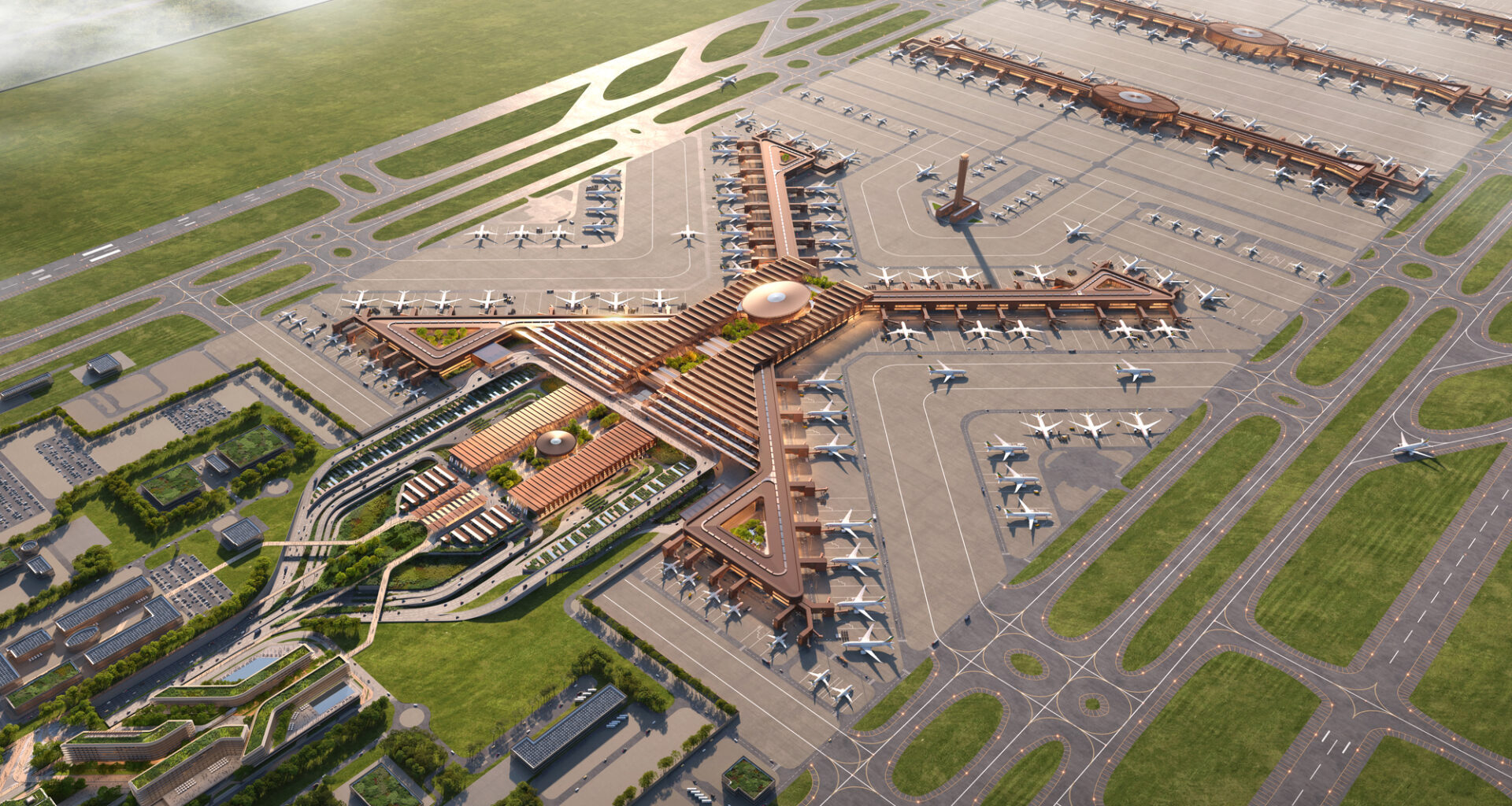
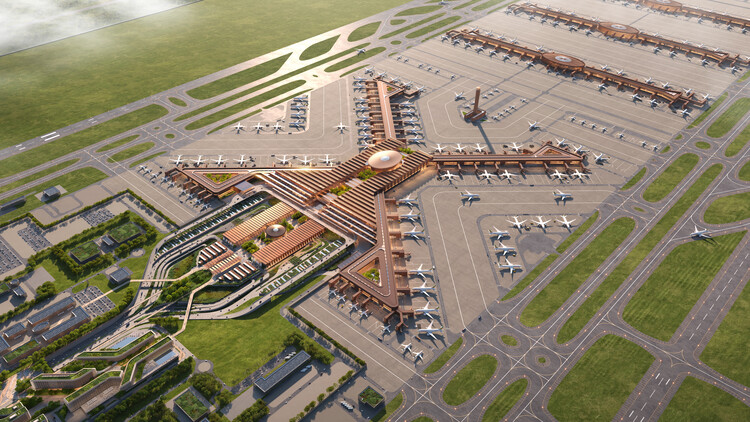
 Zaha Hadid Architects’ Bishoftu International Airport render. Image © X Universe
Share
Or
https://www.archdaily.com/1037842/zaha-hadid-architects-break-ground-on-bishoftu-international-airport-for-ethiopian-airlines-in-addis-ababa
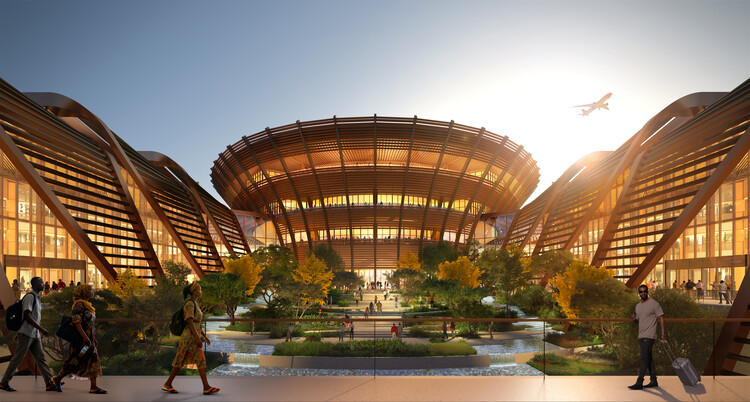
Construction has begun on the new Bishoftu International Airport (BIA), designed by Zaha Hadid Architects for Ethiopian Airlines Group. Ethiopia‘s Prime Minister, Abiy Ahmed Ali, laid the cornerstone at the airport’s groundbreaking ceremony on Saturday, January 10, 2026. The new airport will be located approximately 40 kilometers south of the Ethiopian capital, Addis Ababa, and is planned to become Africa‘s largest airport. Phase One of the project is designed to serve 60 million passengers per year. Subsequent phases are expected to increase capacity to up to 110 million passengers annually, supported by four runways and parking for 270 aircraft, more than four times the capacity of Ethiopia’s current main airport, according to statements by the Prime Minister.



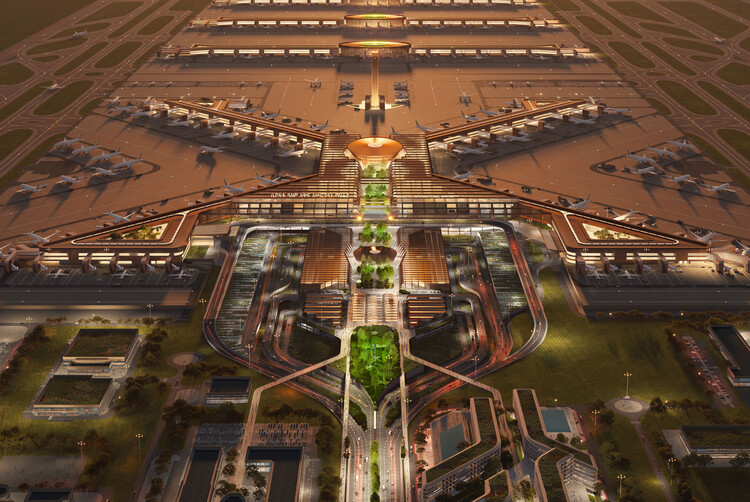 Zaha Hadid Architects’ Bishoftu International Airport render. Image © X Universe
Ethiopian Airlines is currently Africa’s largest carrier. The new airport will be connected to central Addis Ababa and the existing Bole International Airport via a high-speed rail link and is intended to function as a key component of a broader regional transport network. Located to enable 24-hour operations without a curfew, BIA and its integrated Airport City, comprising mixed-use buildings, are planned to serve a local population of approximately 80,000 people. The airport site sits nearly 400 meters lower than Addis Ababa’s existing airport and allows for longer runways, which are intended to improve aircraft performance and support higher maximum take-off weights, enabling longer non-stop routes with increased passenger and cargo capacity.
 Zaha Hadid Architects’ Bishoftu International Airport render. Image © X Universe
 Zaha Hadid Architects’ Bishoftu International Airport render. Image © X Universe
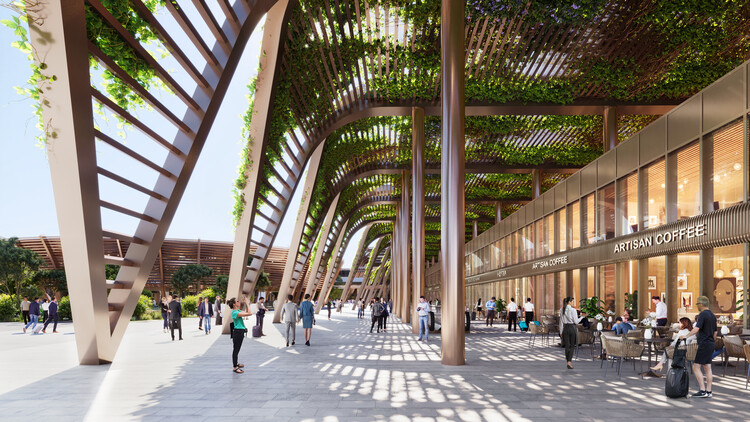
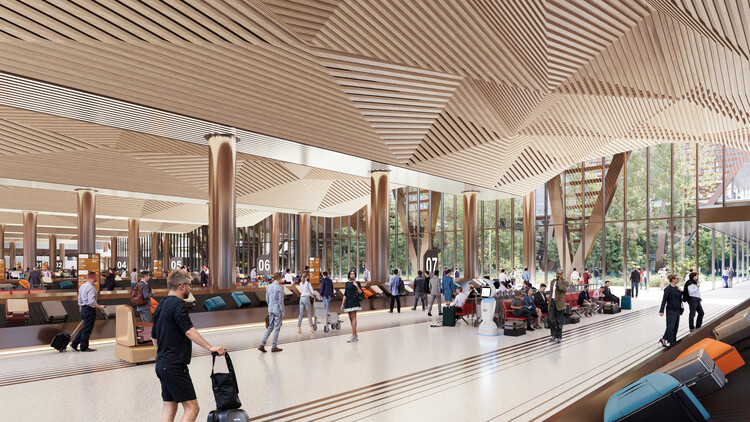
The project has been designed by Zaha Hadid Architects to respond to Ethiopian Airlines’ projected passenger demand and operational requirements, particularly its role as a transfer hub. With up to 80 percent of passengers expected to transit between destinations without leaving the airport, the terminal layout prioritizes efficient connections. The building incorporates amenities for transferring passengers, including a 350-room airside hotel, dining and entertainment facilities, as well as outdoor gardens and courtyards.
Related Article When Architecture Took Flight in the Golden Age of Aviation
Located in the temperate subtropical highland climate of Ethiopia’s Oromia region, the passenger terminal is planned to be naturally ventilated and incorporate integrated solar shading. Semi-enclosed spaces and outdoor areas are included to take advantage of the region’s warm summers and mild winters. The landscape design incorporates native drought-resistant planting and resettled trees, with landside public parks for local residents and airside gardens for passengers.
 Zaha Hadid Architects’ Bishoftu International Airport render. Image © X Universe
 Zaha Hadid Architects’ Bishoftu International Airport render. Image © X Universe
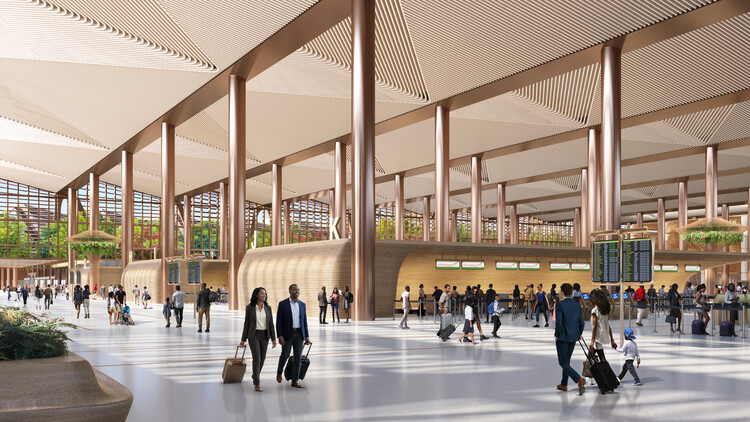
Interior materials and color palettes within the terminal piers have been selected to reference Ethiopia’s diverse regions. Drawing inspiration from the Great Rift Valley, which passes near Bishoftu, a central circulation spine connects the terminal’s facilities and aircraft piers, reducing transfer distances and supporting intuitive wayfinding for connecting passengers.
 Zaha Hadid Architects’ Bishoftu International Airport render. Image © X Universe
 Zaha Hadid Architects’ Bishoftu International Airport render. Image © X Universe
The airport will be delivered in multiple stages. The first phase, scheduled to open in 2030, will include two independently operating Code 4E parallel runways and a 660,000-square-meter terminal designed to accommodate 60 million passengers annually. Construction will employ modular fabrication and assembly methods to allow flexibility and efficiency. According to Zaha Hadid Architects, procurement will prioritize concrete, aggregates, and steel produced or recycled locally in Bishoftu. Stormwater collected from runways, taxiways, aprons, and building roofs will be directed to newly created wetlands and bioswales for storage and reuse, while photovoltaic arrays are planned to support on-site energy generation.
Other recent developments in Africa include the relocation of Equatorial Guinea’s capital from Malabo, on Bioko Island, to Ciudad de la Paz on the mainland; the opening of Limbo Museum, a new institution dedicated to architecture, art, and design in Ghana; the selection of the Waldorf School Nairobi by Urko Sánchez Architects among the winners of the 2025 Holcim Foundation Awards; and the presentation by Carlo Ratti Associati of a new cultural center and open-air stage in Addis Ababa.