Not that the U.S. has been a model of consistency. In May, its ambassador announced the U.S. was cutting $50 million of medications and medical supplies because of “systematic theft of these products” and “minimal responsive action by the government.” But just six months later, Washington unveiled a $1.5 billion grant over five years to build capacity in Zambia’s health care sector.
The reversal appeared a ploy to counter China, whose no-strings, look-the-other-way approach to mineral-rich nations can both produce results and leave a stain. In Zambia, for all his progressive and pro-business rhetoric, Hichilema has been accused of implementing oppressive measures, like a draconian cybersecurity law, while opposition figures have been targeted with a flurry of charges such as sedition, defamation, unlawful assembly, hate speech, and espionage. In August, Hichilema will seek re-election and has backed a controversial constitutional amendment that would allow him to stack parliament with presidential appointees. Hichilema insists that his government respects the rule of law and denies undermining democracy. “We want stability, peace, security,” he says. “This government does not support … conflict, settling matters in the streets, agitating populations, disrupting the flow of ordinary life and conduct of business.”
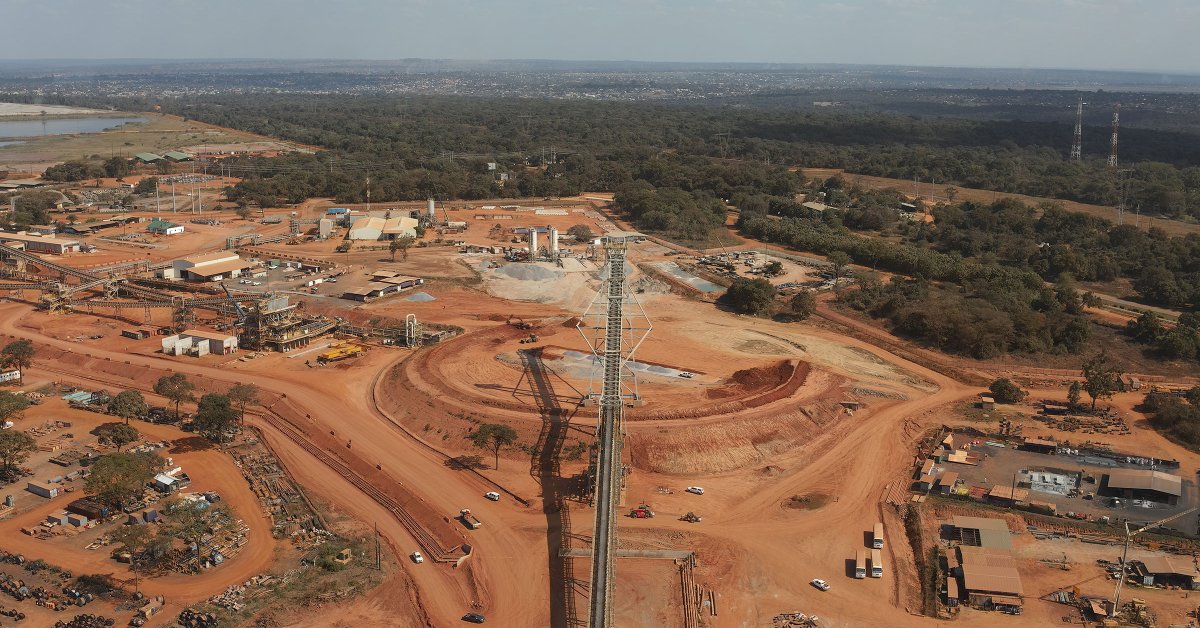
But the concern is that Zambia’s leverage in the global marketplace will be squandered without true accountability. In February, a tailings dam collapsed at a copper mine operated by a Chinese state-owned enterprise in northern Zambia, releasing some 13 million gal. of highly toxic and acidic waste—including heavy metals like arsenic, mercury, and lead—into the Kafue River, Zambia’s longest waterway and a major drinking-water source. The spill killed fish, destroyed crops, and rendered the water undrinkable. Experts say a full cleanup could take longer than a decade—and nobody is sure who is going to foot the bill. “We’re not happy about the spillage,” says Hichilema. “That is why we’re working closely with Sino Metals, working with the Chinese government, because they own the company, to make sure that there’s no repeat.”
Still, an independent audit into the disaster was dismissed by Lusaka, raising fears of a whitewash. (The fact that Zambia is burdened with more than $4 billion in Chinese debt, some of which had to be restructured after defaulting on foreign repayments in 2020, has not gone unnoticed.) In November, Hichilema was forced to abandon a speech in northern Zambia after the audience pelted him with stones.
The prospect of any nation getting a free pass is galling for Zambians, for whom autonomy also means being able to hold foreign companies to account. It’s also a potential self-inflicted wound for attracting the new investment necessary for Zambia to thrive. “If we’re going to grow in Zambia, it needs to be on the basis of strong institutions, low levels of corruption, and a democratic process,” says FQM’s Pascall.
Rather than begging for a seat at the West’s table, Africa now has every power clamoring for an invite to its own. But while the new paradigm of self-sufficiency means future successes will be purely African—failures must share that same label.