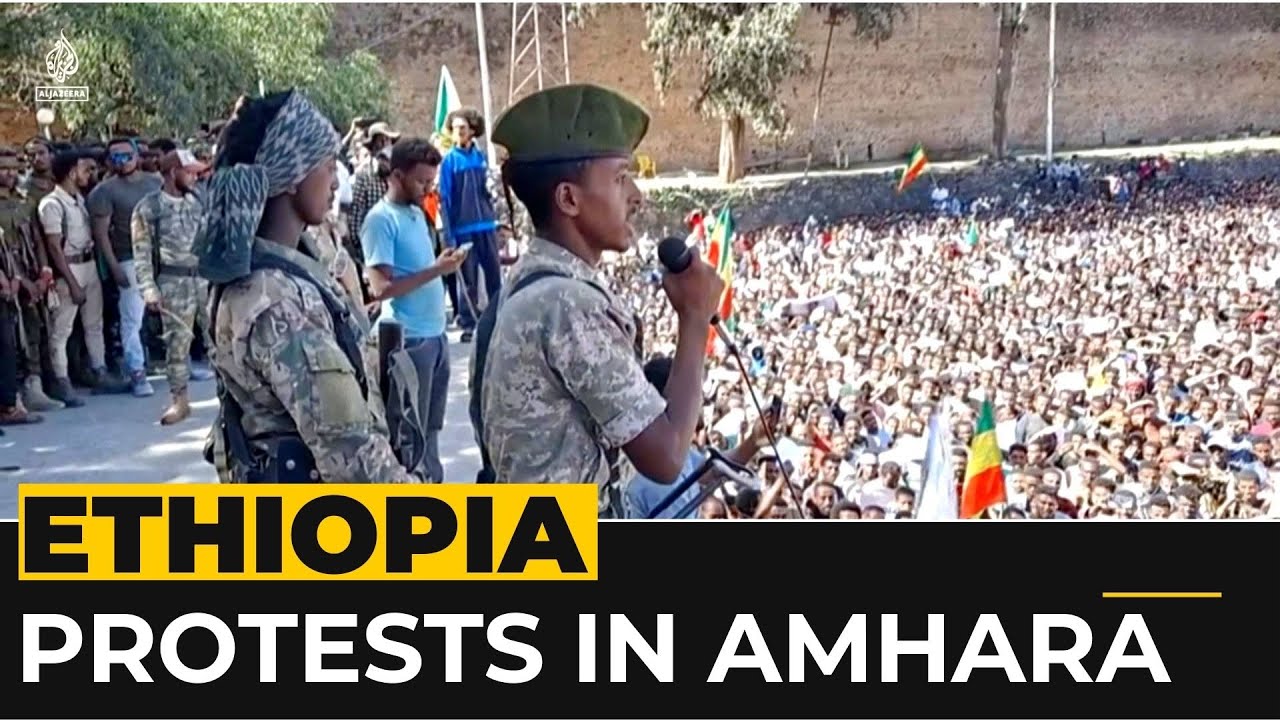
Ethiopian federal police announced late on Wednesday that they had seized 56,000 rounds of ammunition and arrested two suspects in the Amhara region, saying a preliminary investigation had “confirmed that the ammunition was sent by the Shabiya government.” Authorities said the men were “caught red‑handed” and that the shipment was intended to arm Fano militia fighters who have been in armed opposition to Addis Ababa since 2023.
The allegation instantly sharpened a bitter rivalry between Addis Ababa and neighbouring Asmara. Eritrea’s information minister accused Ethiopia’s ruling Prosperity Party of “floating false flags to justify the war that it has been itching to unleash for two long years,” and President Isaias Afwerki, in state media remarks earlier in the week, said the Ethiopian ruling party had “declared war against Eritrea” while adding, “We have no appetite for war. But we know how to defend our nation.” The Ethiopian prime minister has publicly insisted that Ethiopia prefers dialogue to open conflict, but the seizure injects new volatility into a relationship that has been through a fraught cycle of rapprochement and reversal.
The episode recalls deep historical wounds. Eritrea won independence from Ethiopia in 1993 after a decades‑long struggle, and the two states fought a devastating border war from 1998 to 2000 that left more than 100,000 dead. A 2018 rapprochement eased tensions and briefly rewrote regional alignments, but ties frayed after Eritrean forces intervened in Ethiopia’s 2020–22 war in the Tigray region and were excluded from later peace arrangements. Public disputes over issues such as Ethiopia’s repeated assertions of a right to sea access have continued to stoke mistrust in Asmara and Addis Ababa.
The Ethiopian police statement did not disclose full details of the chain of custody for the ammunition, the route by which the consignments allegedly crossed into Amhara, or whether any external intermediaries were involved. Those gaps leave an evidentiary burden for investigators and limit immediate independent verification. Analysts warn the accusation could itself be a catalyst for escalation: claims of cross‑border military assistance have historically been among the most dangerous triggers for interstate confrontation in the Horn of Africa.
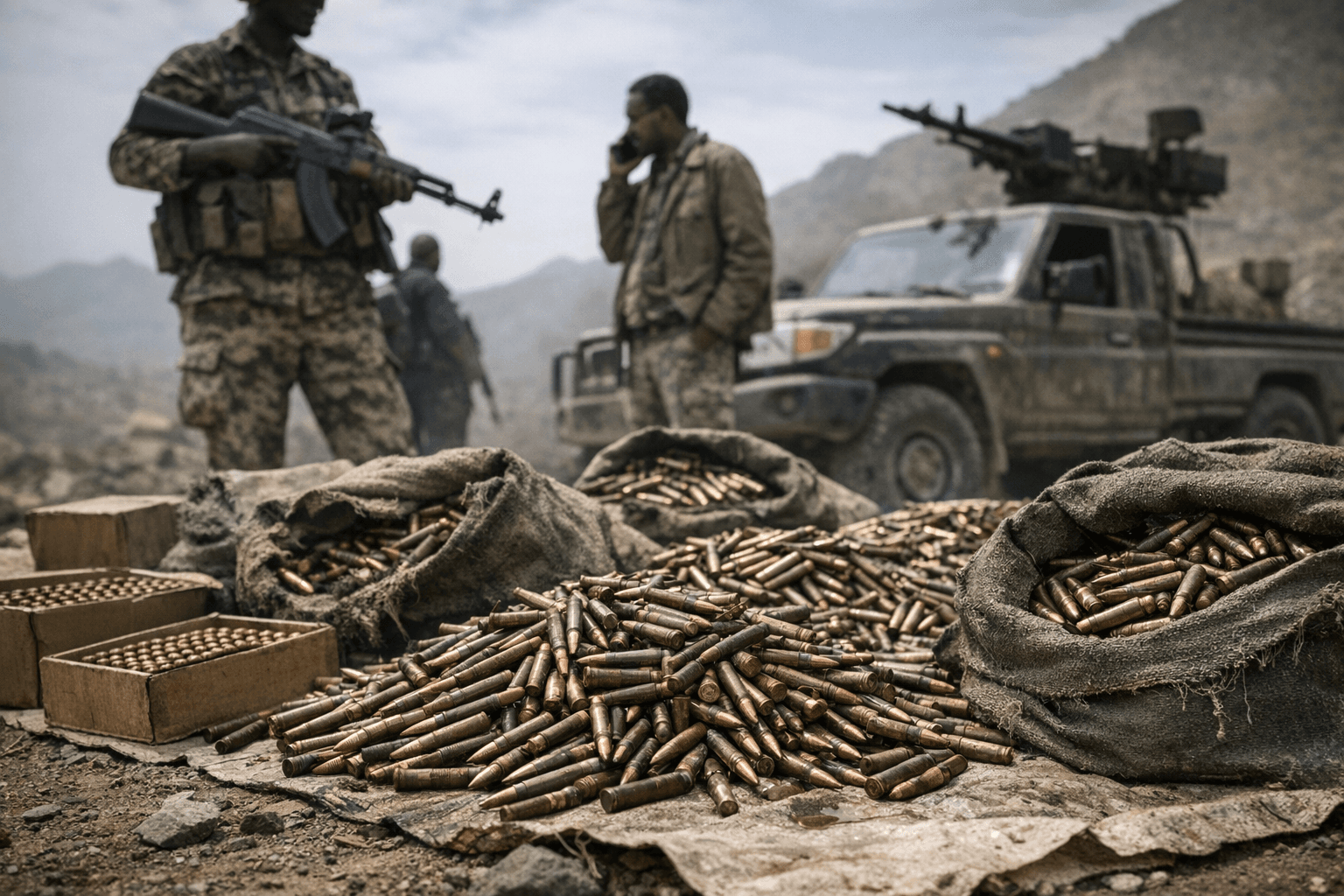 AI-generated illustration
Under international law, the direct transfer of arms by a state to non‑state armed groups in a neighbouring country would raise serious questions of sovereignty and could constitute unlawful intervention. Diplomats and regional organisations will be watching for forensic evidence, judicial proceedings against those arrested, and any formal diplomatic exchanges that clarify responsibilities. For now, the competing narratives — a federal police finding pointing to Eritrea and a forceful denial from Asmara — reflect the brittle mistrust that characterises the relationship.
The immediate stakes are both local and regional. For Amhara, the flow of weapons could deepen an already violent insurgency and further fracture national reconciliation. For the Horn of Africa, the episode threatens to reverse fragile gains in stability achieved since the end of large‑scale fighting in Tigray, and it could draw in external actors keen to limit instability on their borders. Independent verification of the ammunition’s provenance and transparent judicial processes in Ethiopia will be crucial to defusing a crisis that risks spiralling beyond the two capitals.