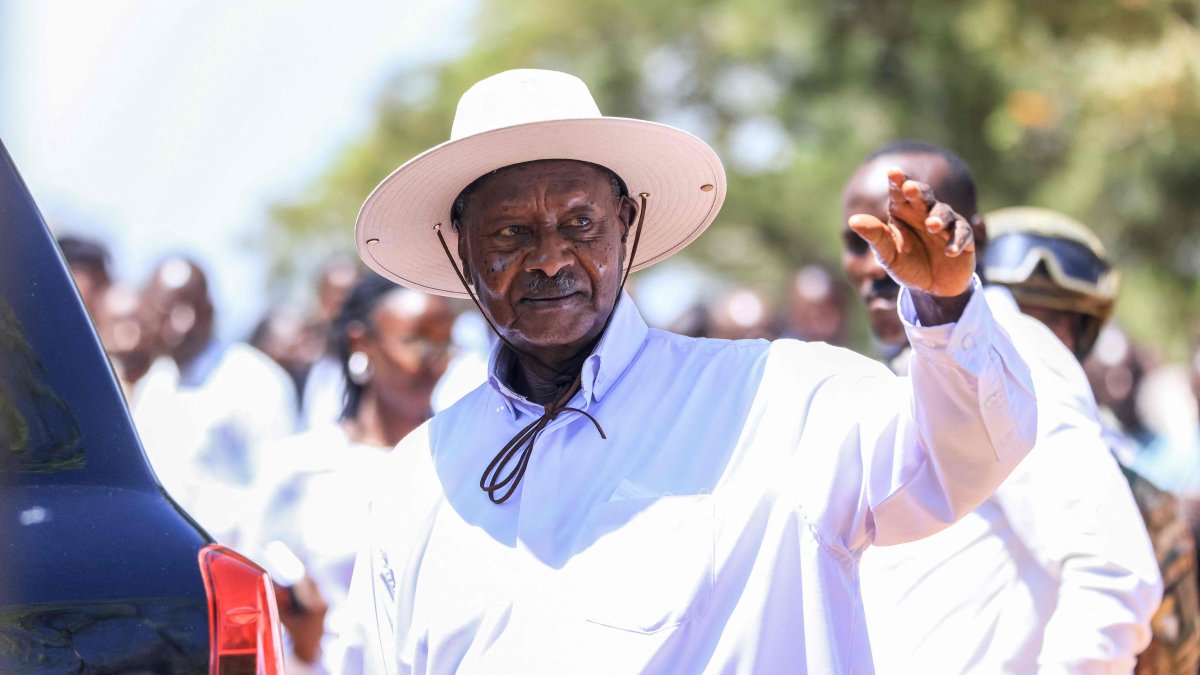
Ugandan President Yoweri Museveni surged to a dominant early lead in presidential election results Friday, as the opposition accused authorities of repression, fraud and effectively placing main challenger Bobi Wine under house arrest in a vote marred by delays, violence and a nationwide internet shutdown.
Partial results released by the electoral commission from nearly half of polling stations showed Museveni with 76.25% of the vote, far ahead of Wine on 19.85%, with the remaining ballots split among six other candidates.
Museveni, 81, has ruled Uganda since taking power as a rebel leader in 1986 and is seeking what would be a seventh term, extending his grip on the East African nation into a fifth decade.
Museveni said after voting Thursday that he expected to win around 80% “if there’s no cheating.” His government has repeatedly dismissed allegations of electoral misconduct.
Wine, a pop star-turned-politician whose real name is Robert Kyagulanyi, alleged widespread fraud and intimidation during the vote, which took place under a days-long internet blackout ordered by authorities.
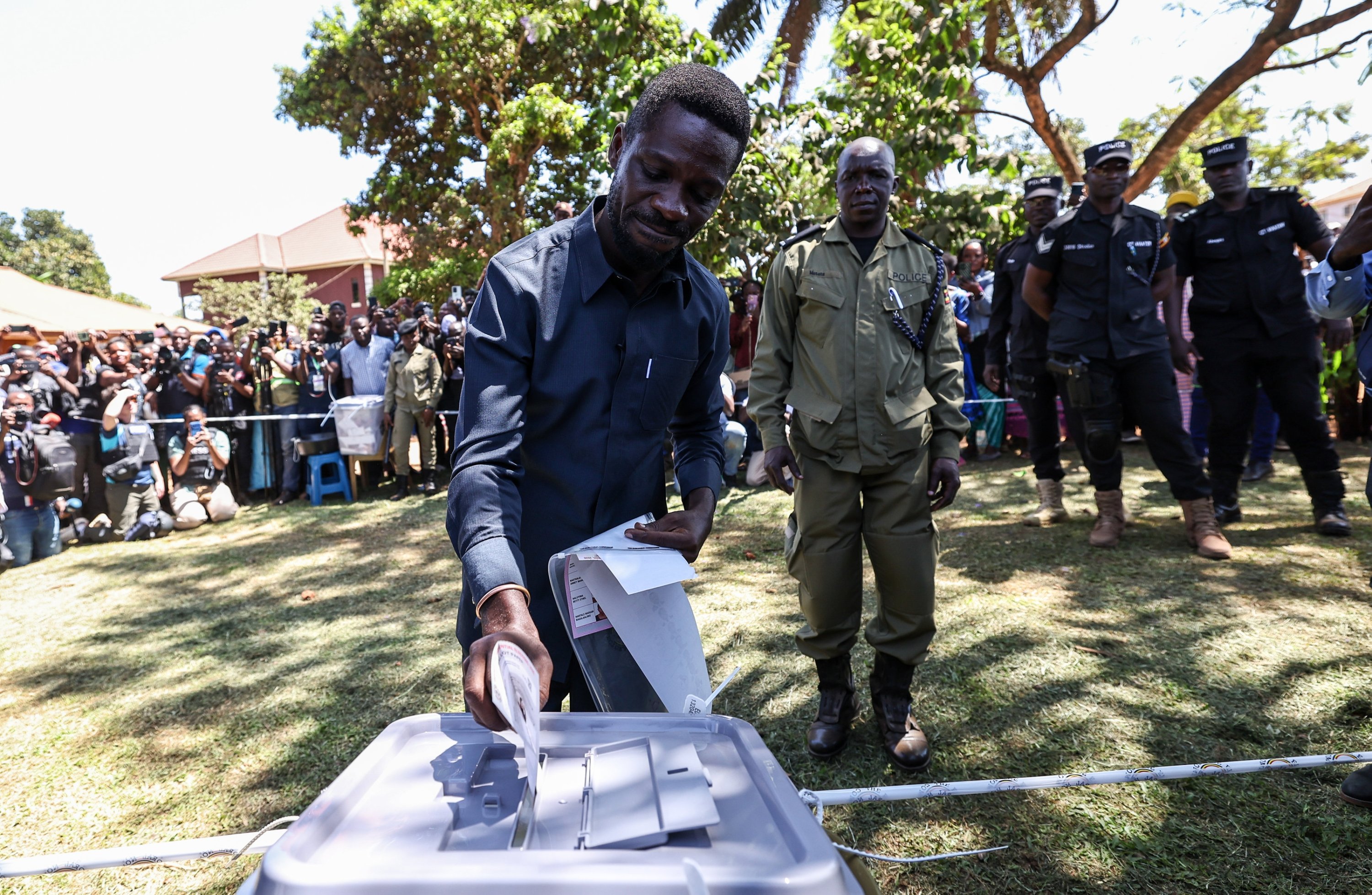
Uganda’s opposition leader Robert Kyagulanyi, popularly known as Bobi Wine, casts a ballot at the Kamwokya during the 2026 general elections, Kampala, Uganda, Jan. 15, 2026. (AFP Photo)
His National Unity Platform (NUP) party said late Thursday that military and police forces had surrounded Wine’s home in Kampala, “effectively placing him under house arrest.” Police spokesperson Kituuma Rusoke told Reuters he was unaware of any such order.
Wine called on supporters to protest alleged abuses, though no major demonstrations had emerged by Friday.
Uganda’s election unfolded amid heavy security deployments, delayed polling and growing concern from international observers.
The U.N. human rights office said the vote was conducted in an environment of “widespread repression and intimidation,” while Amnesty International accused security forces of a “brutal campaign of repression,” including firing live ammunition at opposition rallies and killing at least one supporter in eastern Uganda.
Voting on Thursday was plagued by logistical failures, particularly in urban opposition strongholds.
Many polling stations opened hours late due to malfunctioning biometric voter identification machines.
The electoral commission authorized officials to revert to paper registers, insisting the move was necessary to prevent voter disenfranchisement.
“I’ve been standing here for three hours,” said opposition lawmaker Ssemujju Nganda as he waited to vote in Kira municipality. “It’s going to be chaos.” Independent analyst Nicholas Sengoba said the delays disproportionately affected urban areas and favored the ruling party.
Frustration mounted as some voters were turned away after polls closed, even after voting hours were extended by one hour.
“My vote has not been counted,” said Emmanuel Tusiime, one of dozens barred from entering a polling station in Kampala. “I am very disappointed.”
Wine said many of his party’s polling agents and supervisors were arrested or chased away. “Many abducted, others chased off polling stations,” he wrote on X, also alleging ballot stuffing. Museveni acknowledged technical failures with voting machines but did not address claims of fraud.
The contest revived a bitter rivalry from the 2021 election, when Wine energized young, urban voters and secured 35% of the vote, Museveni’s weakest showing since multiparty elections resumed.
That vote was later deemed neither free nor fair by the United States, a claim Ugandan authorities rejected.
Uganda, a nation of about 45 million people with 21.6 million registered voters, has never experienced a peaceful transfer of presidential power since independence from Britain more than six decades ago.
Museveni already holds the third-longest tenure of any African leader, and critics say his rule increasingly relies on the military, headed by his son, Muhoozi Kainerugaba, widely viewed as a potential successor despite Museveni’s denials of grooming him.
The campaign period raised alarms over shrinking civic space, military interference and the risk of hereditary rule.
Authorities suspended several civil society organizations, including a prominent media watchdog, accused of activities “prejudicial to national security.”
Veteran opposition leader Kizza Besigye, a four-time presidential candidate, remains in prison on treason charges filed in February 2025.

The Daily Sabah Newsletter
Keep up to date with what’s happening in Turkey,
it’s region and the world.
SIGN ME UP
You can unsubscribe at any time. By signing up you are agreeing to our Terms of Use and Privacy Policy.
This site is protected by reCAPTCHA and the Google Privacy Policy and Terms of Service apply.