
The urbanisation narrative of the twenty-first century is being written simultaneously across two of the world’s most dynamic continental stages — Asia and Africa. In both regions, cities are expanding at velocities that strain infrastructure, overwhelm traditional construction methodologies, and demand equipment solutions of exceptional productivity and reliability. Stationary concrete pumps have emerged as indispensable instruments within this construction acceleration, enabling contractors to place concrete at heights, volumes, and speeds that conventional crane-and-bucket or wheelbarrow-dependent methods cannot approach. Understanding how these machines are reshaping construction practice across rapidly urbanising economies illuminates both the technological sophistication and the practical ingenuity driving the global building boom.
Asia’s Urbanisation Engine and the Stationary Pump’s Central Role
Asia’s urbanisation trajectory — most visibly expressed in the skylines of Shenzhen, Jakarta, Ho Chi Minh City, and Dhaka — has created construction environments where vertical concrete placement is not an occasional requirement but a daily operational constant. Stationary concrete pumps, with their high-pressure hydraulic circuits capable of driving concrete through pipelines extending 300 to 600 metres vertically, have become the enabling technology behind Asia’s high-rise proliferation. Unlike truck-mounted boom pumps constrained by outrigger footprint and boom reach limitations, stationary units can be anchored at grade or on intermediate building platforms, with pipeline systems climbing the structure’s exterior as floors accumulate. Chinese manufacturers — including Sany, Zoomlion, and Putzmeister’s Asian production network — have refined stationary pump engineering to extraordinary levels of output consistency, producing machines capable of sustained concrete delivery rates exceeding 90 cubic metres per hour at operating pressures above 200 bar. This performance envelope has made stationary pumps the preferred placement solution for Asia’s supertall residential and commercial tower programmes.
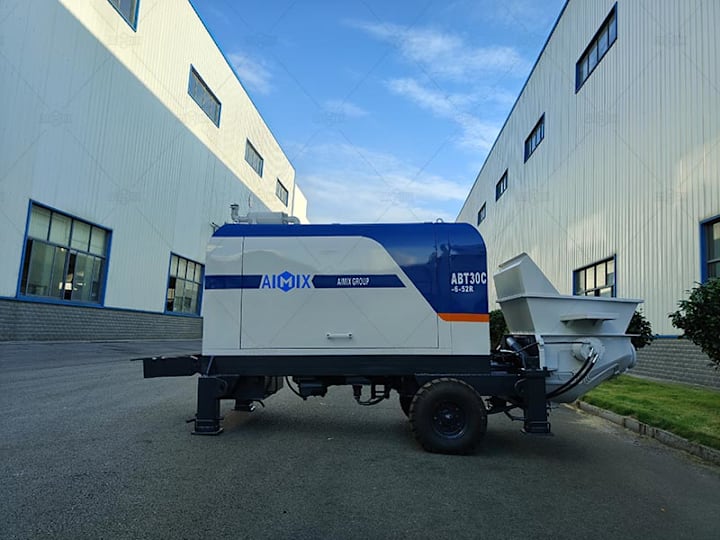
Beyond vertical construction, Asia’s infrastructure megaproject pipeline — encompassing dam construction, metro tunnel lining, bridge pier foundations, and airport apron slabs — generates concrete placement demands characterised by extraordinary volume and placement rate requirements. Stationary concrete pumps deployed on these projects operate in configurations that would appear extraordinary to conventional construction practitioners: multiple units manifolded in parallel to achieve aggregate output rates of 200 cubic metres per hour or more, pipeline networks extending horizontally across entire dam faces, and continuous pour operations sustained for 72 hours or longer without interruption. The machine’s ability to maintain consistent concrete delivery under these conditions — without the slump loss, segregation, or placement delay that manual handling methods introduce — is the foundation of its indispensability on Asia’s most demanding infrastructure programmes.
Africa’s Urban Construction Surge and Growing Pump Adoption
Africa’s urbanisation dynamic differs from Asia’s in texture and geography but not in urgency. While Lagos, Nairobi, Cairo, and Kinshasa command international attention, the continent’s most consequential population growth is occurring in secondary cities — Kumasi, Kampala, Lusaka, Conakry, Maiduguri — where infrastructure deficits are acute and construction activity is intensifying rapidly. Stationary concrete line pumps are penetrating these markets through multiple channels: direct procurement by major contractors executing government-funded housing and infrastructure programmes, equipment hire from emerging plant rental businesses, and project-specific importation by Chinese construction companies delivering Belt and Road Initiative-affiliated contracts across Sub-Saharan Africa. In each channel, the stationary pump’s fundamental value proposition remains consistent — the ability to place large concrete volumes precisely, rapidly, and with minimal labour dependency in environments where skilled construction workforce availability is constrained.
Deploying stationary concrete pumps effectively within African construction environments demands adaptation to conditions that differ materially from Asian operational contexts. Unreliable grid power necessitates diesel-driven pump configurations rather than the electrically powered units predominant in Asian urban sites. Aggregate quality variability — with locally sourced materials frequently exhibiting grading inconsistencies that affect pumpability — requires pump operators and concrete technicians to implement mix design adjustments, admixture protocols, and pipeline lubrication practices that maintain flow integrity. Spare parts supply chains, while improving as Chinese manufacturer distribution networks extend into African markets, remain less developed than the mature support ecosystems available in Asia. Leading manufacturers are addressing this through regional parts warehousing in hub cities including Nairobi, Lagos, and Johannesburg, progressively reducing the parts procurement lead times that previously represented the primary operational vulnerability for African pump operators.
 Technology Transfer, Localisation, and the Future Trajectory
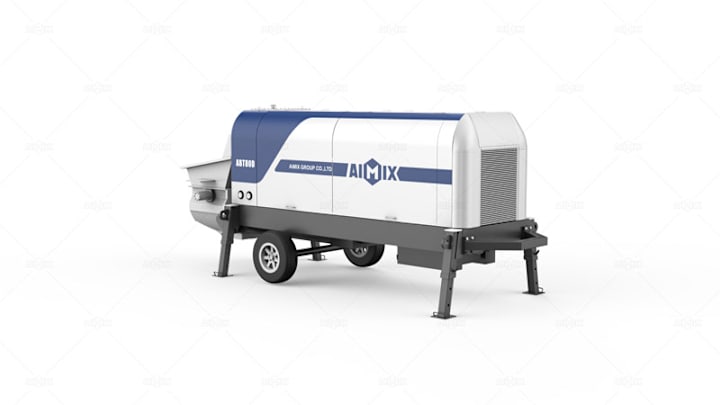
The sustainable integration of stationary concrete pump technology into African construction practice depends as much on human capability development as on equipment availability. Effective pump operation requires understanding of concrete rheology, pipeline pressure dynamics, blockage prevention protocols, and preventive maintenance disciplines that are not intuitively acquired. Chinese and European manufacturers exporting to African markets are progressively investing in operator training programmes — delivered through local distributor networks, on-site commissioning support, and increasingly through digital training platforms accessible in French, Portuguese, Swahili, and Arabic — that accelerate competency development within local workforces. This technology transfer dimension, often overlooked in equipment procurement discussions, is the mechanism through which stationary concrete pumps transition from imported solutions to embedded components of African construction capability. As operator expertise deepens and local maintenance ecosystems mature, stationary concrete pumps will assume an ever more central position in the infrastructure and urban development programmes defining Africa’s built environment for generations to come.