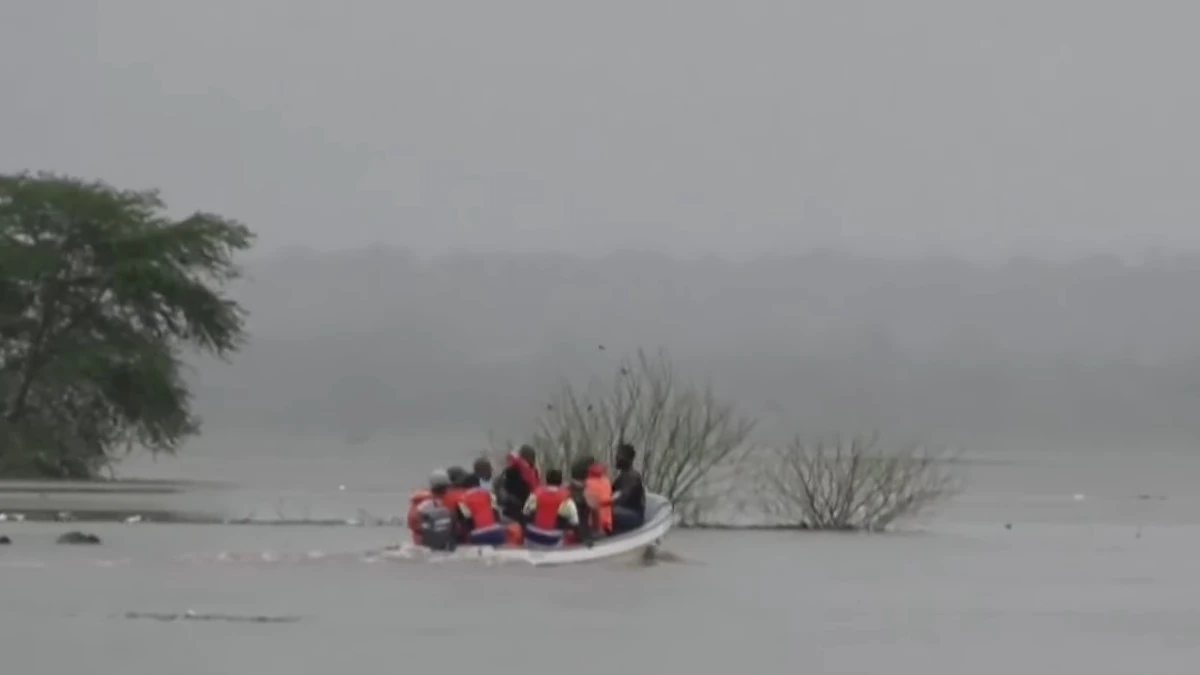
Heavy rains that began in late December 2025 triggered extensive flooding across much of southern Africa, affecting Mozambique, South Africa, Zimbabwe, and neighboring countries.
As of January 17, 2026, the cumulative death toll across the three countries has surpassed 200. National emergency services continue to warn that river levels remain critically high and that further rainfall could extend the crisis.
The flooding was driven by a combination of regional and global meteorological factors. Persistent La Niña conditions in the equatorial Pacific strengthened the Intertropical Convergence Zone (ITCZ) over southern tropical latitudes, drawing deep moisture from the southwestern Indian Ocean into the subcontinent.
December 2025 had already been unusually wet across much of southern Africa, with several provinces recording rainfall well above the monthly average and soils approaching full saturation.
When a quasi-stationary low-pressure system formed in early January 2026 over northern South Africa and southern Mozambique, it interacted with the moisture-laden ITCZ, sustaining multi-day convective storms across the region. The resulting combination of saturated ground and persistent heavy rainfall led to rapid surface runoff, widespread river overflow, and severe flooding.
Mozambique
The National Institute for Disaster Management and Risk Reduction (INGD) confirmed at least 103 deaths since late December 2025 as prolonged rainfall inundated central and southern provinces. Fatalities resulted from drowning, collapsed buildings, lightning strikes, electrocution, and water-borne diseases such as cholera. The INGD lists Zambezia, Sofala, Gaza, Inhambane, and Maputo as the worst-affected provinces.
According to INGD and the World Food Programme, more than 200 000 people have been affected, and tens of thousands have been relocated to temporary shelters established in schools and public buildings on higher ground.
Evacuations continue along the Pungwe, Buzi, Limpopo, and Save rivers as water levels remain above alert thresholds. Many of these basins were already swollen before the January downpours, leaving embankments saturated and floodplains prone to breach.
Thousands of dwellings have been destroyed or severely damaged in low-lying districts near Xai-Xai in Gaza Province and around Inhambane and Beira. Traditional wattle-and-daub houses collapsed as floodwaters undermined foundations, while brick structures sustained long-term damage after prolonged immersion.
INGD and WFP estimate that about 70 000 ha (173 000 acres) of cropland, mostly rice, maize, and cassava, are waterlogged or destroyed. Irrigation dikes in the lower Limpopo basin were breached, seed stocks washed away and grazing areas submerged, raising concerns over food security through mid-2026.
Livestock losses have been reported across flood-affected districts, with thousands of cattle, goats, and poultry drowned or swept away as pastures and kraals were inundated. In many rural areas, wells and boreholes have been contaminated by floodwaters and animal carcasses, leaving communities without safe drinking water.
Health authorities warn that the combination of livestock decay and polluted groundwater is heightening the risk of cholera and other water-borne disease outbreaks.
Sections of the EN1 and EN6 highways, Mozambique’s main north–south and east–west routes, have been cut by washouts, isolating districts from ports and markets. Several bridges over the Pungwe and Buzi rivers were damaged, and rail traffic to the port of Beira was temporarily halted.
Electricidade de Moçambique (EDM) reported widespread power interruptions across central provinces as intense rainfall and strong winds damaged sections of the national grid. More than 8 300 consumers in Sofala and Manica were left without electricity after conductors and poles were brought down in saturated ground, particularly near the Buzi River crossings.
Hydrological gauges along the Limpopo and Save rivers show persistently high flows as upstream rainfall from Zimbabwe and South Africa moves downstream. The government has warned communities in flood-prone districts to remain on alert.
South Africa
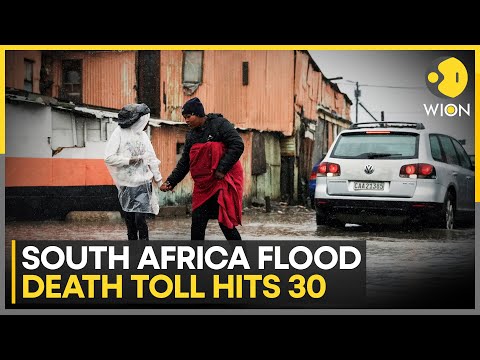
In northern South Africa, the most severe impacts have been recorded in Limpopo and Mpumalanga provinces, where heavy rain between January 8 and 14 produced extreme flooding along the Limpopo, Olifants, and Crocodile rivers.
By mid-January, at least 30 fatalities had been confirmed in incidents linked to flash floods, collapsed buildings and drownings. Several people remain missing in rural areas near riverbanks.
The South African Weather Service recorded rainfall totals of 100–200 mm (4–8 inches) over several days in many locations, with localized totals approaching 400 mm (16 inches). This represents several times the January average. The agency issued repeated impact-based warnings, culminating in a Level 10 red alert for disruptive rainfall over Limpopo and Mpumalanga.
More than 1 000 homes were damaged in Limpopo alone, with entire sections of informal settlements in Makhado, Musina, and Tzaneen districts inundated. Walls and roofs collapsed under water pressure, and mud-brick dwellings were washed away. Thousands of residents were evacuated to temporary shelters by provincial emergency services.
Sections of the R81 and R71 highways that connect rural municipalities to the provincial capital, Polokwane, were washed away after prolonged heavy rainfall caused severe scouring and undermined bridge abutments. Multiple smaller bridges and culverts along these routes failed under sustained flow, cutting off access to villages in Makhado, Tzaneen and Giyani districts.
The Limpopo Department of Transport confirmed that several road sections remained impassable as of mid-January, hindering the delivery of food and medical supplies. Provincial emergency services, supported by the South African Police Service and the National Defence Force, deployed boats and helicopters to rescue motorists and residents stranded on submerged roadways and to deliver essential relief materials to isolated communities.
Extensive agricultural losses have been reported across northern Limpopo, where floodwaters inundated citrus orchards and maize fields along the Limpopo and Letaba river basins. Irrigation systems, including pumps, pipes, and canal intakes, were destroyed or buried under sediment, while heavy runoff stripped topsoil and deposited silt over cropland.
The provincial agriculture department confirmed that several commercial citrus farms near Tzaneen and Musina suffered severe production losses, and smallholder plots along riverbanks were entirely washed away.
Livestock losses were recorded as kraals were submerged, while boreholes in rural settlements were contaminated by floodwater infiltration, leaving many communities temporarily without safe drinking water.
Kruger National Park sustained extensive flood damage as multiple rivers, including the Sabie and Crocodile, overflowed their banks following several days of heavy rain. Floodwaters submerged access roads, bridges and low-water crossings throughout the reserve, cutting off internal transport routes and isolating several tourist camps.
Park authorities closed all visitor gates as a safety measure while emergency crews and rangers coordinated evacuations. Approximately 600 tourists and staff were airlifted or moved by high-clearance vehicles to higher ground after key bridges and causeways became impassable.
Zimbabwe
Zimbabwe has endured its most destructive mid-season floods in several years. The Civil Protection Unit reports at least 70 deaths since early January 2026 in incidents related to flooding, landslides, lightning, and structural collapse.
The worst impacts have been recorded in Masvingo, Manicaland, Midlands, and Mashonaland East provinces, where sustained rainfall overwhelmed river systems and inundated low-lying communities.
The Meteorological Service Department reported totals of 250–300 mm (10– 12 inches) in Masvingo and Chipinge districts within one week — nearly double the January average. Continuous heavy rain and flood warnings were issued from January 9 to 16, urging residents near the Save, Runde, and Manyame rivers to move to higher ground.
The floods destroyed more than 1 000 homes and damaged thousands more. Entire sections of rural settlements in Gutu and Chiredzi districts were washed away while urban areas, including Mutare, experienced flash floods that damaged infrastructure and disrupted transport.
Bridges, roads, and schools across Masvingo and Manicaland collapsed or became impassable, cutting access to services. The Birchenough Bridge on the Save River was closed to light vehicles after inspection found compromised supports.
Heavy rain and standing water destroyed large areas of maize and sorghum, while grazing land was lost to flooding. The Ministry of Lands and Agriculture reported livestock deaths and well contamination and warned of local food shortages if replanting is delayed.
Authorities declared states of emergency in multiple districts and set up temporary evacuation centers in schools and churches.
The Meteorological Service Department warns that saturated soils and high river levels will maintain a high risk of renewed flooding through February as La Niña-related moisture persists.
Forecast and outlook
Seasonal outlooks for southern Africa indicate that the October 2025 – March 2026 rainy season will remain wetter than average across much of the region. Although La Niña is forecast to weaken toward neutral conditions by late in the season, flood risk remains elevated in catchments that are saturated.
Through February, further periods of moderate to heavy rain are likely in Mozambique, eastern Zimbabwe, and northeastern South Africa. Here, even moderate rainfall could trigger renewed flooding or landslides.
By March and April, a gradual transition toward seasonal norms is expected as ENSO returns to neutral, but hydrological hazards will persist for several weeks.
References:
1 More than 100 dead in torrential rains and floods across southern Africa – AP – January 16, 2026
2 Floods kill more than 100 across southern Africa as rains intensify – Al Jazeera – January 16, 2026