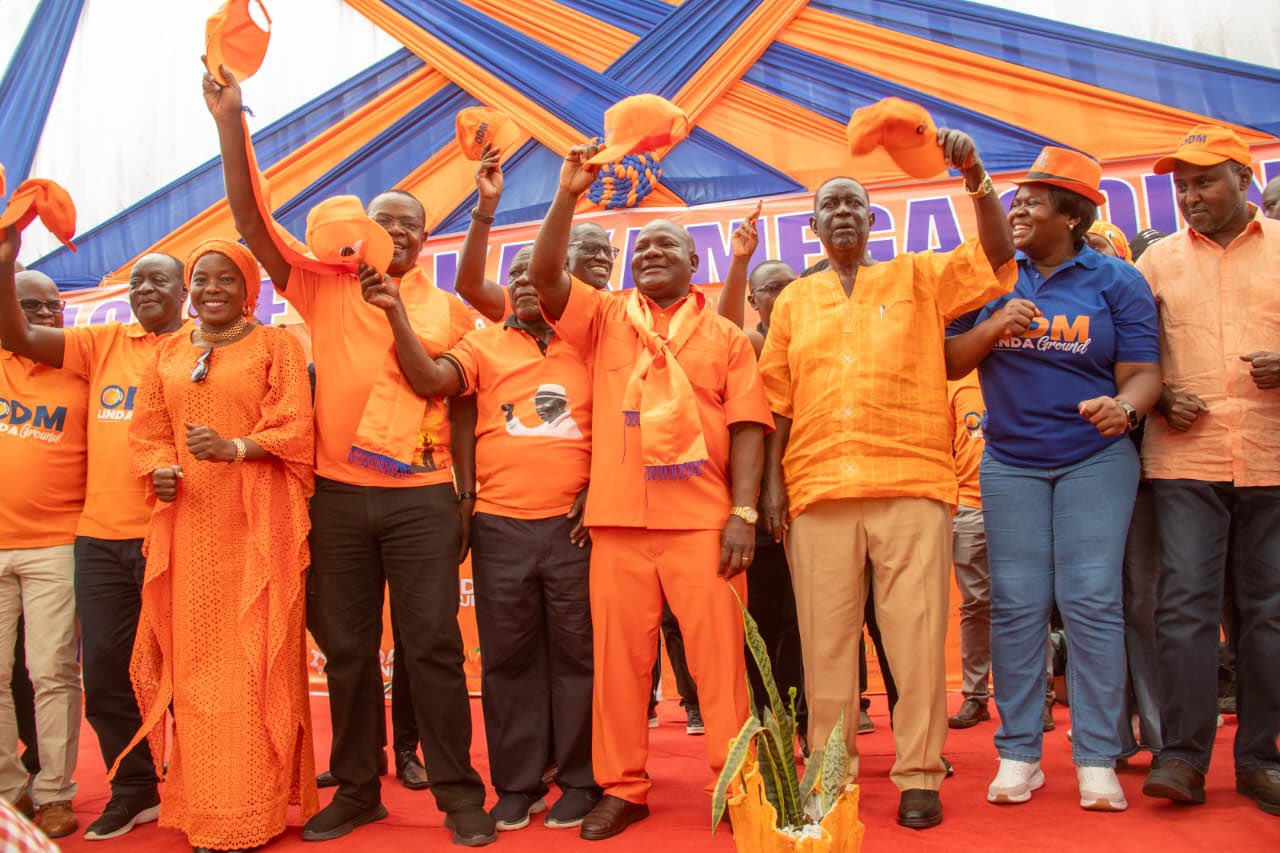
 ODM leaders in Kakamega on January 17, 2026Insistence by ODM on zoning arrangements within the broad-based government is shaping up as a potential headache for President William Ruto’s ahead of the 2027 General Election.
At the centre of the emerging political challenge is ODM’s proposal that coalition partners agree not to field candidates in each other’s traditional strongholds.
If adopted, the arrangement would effectively bar Ruto’s United Democratic Alliance (UDA) from presenting candidates in regions dominated by ODM, including Nyanza, Western Kenya and the Coast.
ODM leaders argue that zoning is necessary to safeguard the party’s political influence as it prepares to support Ruto’s re-election.
Party strategists say maintaining firm control of its traditional bases would give ODM leverage in a future administration, ensuring it remains a dominant force after 2027 polls.
However, the proposal has met resistance from sections of UDA, with critics warning that zoning undermines open political competition and could destabilise the emerging alliance.
The debate comes even as UDA has formally cleared Ruto, who is also the party leader, to enter structured negotiations with ODM to craft a coalition agreement ahead of 2027.
“We are establishing mechanisms for structured engagement with the ODM Party to deepen political cooperation, build consensus on shared priorities, and provide a clear framework for dialogue, coordination, and partnership,” Ruto said after UDA sanctioned the talks.
The developments followed ODM’s announcement, just days earlier, that it would open structured negotiations with other political formations, including UDA, as it positions itself for the next election cycle.
Despite the overtures, zoning remains a sensitive issue that could complicate Ruto’s re-election strategy, particularly in regions where UDA has been seeking to make inroads.
Already, former Gender Cabinet Secretary Aisha Jumwa has announced plans to defect from UDA to the Pamoja African Alliance (PAA).
Jumwa, who currently chairs the Kenya Roads Board, has declared her intention to vie for the Kilifi gubernatorial seat in 2027 against incumbent Governor Gideon Mung’aro of ODM.
Her move is widely viewed as a strategic calculation amid fears that UDA may opt not to field candidates in ODM strongholds if a zoning agreement is finalised.
Kilifi County, at the Coast, is considered an ODM bastion.
UDA has already tested such an arrangement. During the November 27, 2025, Magarini parliamentary by-election, the party did not field a candidate, choosing instead to back ODM’s Harrison Kombe in what it described as a gesture aimed at maintaining unity within the broad-based government.
ODM national chairperson Gladys Wanga has since maintained that any coalition agreement with UDA does not allow political encroachment into ODM zones of influence, reinforcing the party’s stance on zoning.
However, cracks are emerging within the broader coalition dynamics. Kakamega Deputy Governor Ayub Savula has announced that he is ditching the Democratic Action Party–Kenya (DAP-K) to join UDA.
Savula is among leaders spearheading the newly launched Broad-based Western for Ruto initiative, a platform aimed at mobilising support for the President in Western Kenya.
Should ODM’s zoning proposal prevail, UDA would be barred from fielding candidates in Western Kenya, a region long considered an ODM stronghold.
Savula has dismissed ODM’s demands, arguing that zoning would ultimately work against the party.
“Elections are about competition and not zoning,” Savula said. He added that restricting competition would only strengthen rival parties and alienate voters.
According to Savula, political parties should focus on internal reforms and strengthening grassroots support rather than negotiating exclusionary arrangements.
Tensions in Western Kenya have been further inflamed by claims from ODM deputy party leader Godfrey Osotsi, who has accused UDA of orchestrating a covert and illegal takeover of ODM’s grassroots networks in the region.
Osotsi alleged that some ODM legislators and officials in Vihiga and Kakamega counties have been attending UDA campaign and electoral strategy meetings under what he described as a “non-existent cooperation agreement” between the two parties.
Beyond the two major parties, smaller political outfits are also sensing opportunity. Parties such as David Ochieng’s Movement for Growth and Democracy are positioning themselves to attract disgruntled ODM members, many of whom have long criticised the party’s nomination processes as opaque and unfair.
Suba South MP Caroli Omondi expressed discomfort with ODM’s push for zoning arrangements, warning that such a move could lock out aspirants in areas deemed party strongholds. Omondi argues that zoning undermines democratic competition and denies voters meaningful choice.
“What about the other people who want to run in ODM strongholds? Where will they go? They will do zoning, and we know they will not do credible nominations. People must have choices,” Omondi said.
As negotiations between ODM and UDA gather pace, the zoning debate is likely to intensify, pitting coalition unity against political competition.