Africa possesses some of the world’s most extensive and diverse natural resource endowments, News.az reports.
These include hydrocarbons, strategic minerals, precious metals, rare earth elements, fertile agricultural land and vast renewable energy potential.
As global competition intensifies over energy security, food supply and critical minerals required for modern technologies, Africa has moved from the margins to the centre of global strategic planning.
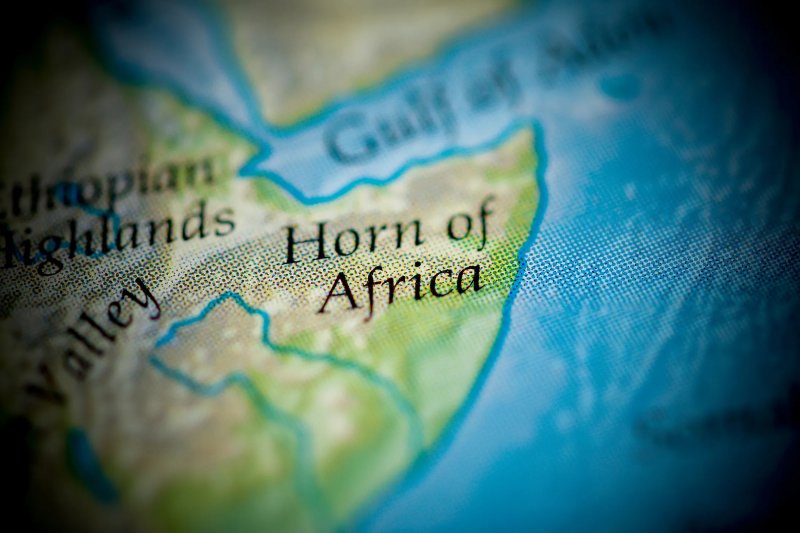
For external powers engaged in the Horn of Africa, natural resources are not an abstract continental issue but a practical driver of policy. Control over transport corridors, ports and political partnerships in the Horn often determines access to African resources located far beyond the region itself.
What kinds of natural resources does Africa hold?
Africa is estimated to possess a significant share of global reserves of gold, platinum group metals, cobalt, manganese, chromium and bauxite. It also holds large oil and natural gas reserves, particularly in North, West and East Africa, as well as major untapped offshore potential in the Red Sea and Indian Ocean basins. In addition, Africa contains some of the world’s most fertile agricultural zones, vast freshwater systems and critical biodiversity resources.
These assets make Africa indispensable to global supply chains, from energy and food to batteries, electronics and defence industries.
The Horn of Africa’s resource profile
Does the Horn of Africa itself have major natural resources?
While the Horn of Africa is not as resource rich as some other African regions, it holds strategically important assets. Ethiopia has significant hydropower potential and mineral resources. Somalia has offshore hydrocarbon prospects in the Indian Ocean. Eritrea has gold, copper and zinc deposits, while Djibouti’s primary value lies in its geographic position rather than underground resources.
Crucially, the Horn functions as a gateway rather than merely a resource zone. Ports, pipelines, railways and shipping lanes in the region connect landlocked and resource rich African states to global markets.
Why is geography as important as resources themselves?
For many external actors, controlling logistics is as valuable as controlling extraction. Minerals mined in Central or East Africa often transit through Red Sea and Indian Ocean routes. The Horn of Africa therefore becomes indispensable to the movement of African resources toward Europe, the Middle East and Asia.
How natural resources shape the interests of external powers
Türkiye and African resources
Türkiye’s engagement with Africa is partly driven by access to diversified markets and raw materials. Ankara views African resources not only as commodities but as a basis for long term industrial partnerships. Turkish firms are active in construction, mining services, energy infrastructure and agriculture. The Horn of Africa plays a role as a logistical and diplomatic bridge into the wider African resource landscape.
Türkiye’s emphasis on infrastructure development aligns with African states’ need to monetize their resources rather than merely export raw materials.
Pakistan and resource security
Pakistan’s interest in African resources is indirect but strategically relevant. Secure maritime routes through the Horn of Africa are essential for transporting energy and commodities from Africa and the Middle East to South Asia. Stability in the region supports Pakistan’s long term energy diversification and trade resilience, even if Islamabad is not a primary investor in African extraction.
Saudi Arabia, Arab states and resource diversification
For Saudi Arabia and other Arab countries, African natural resources are closely tied to food and energy security. Investments in African agriculture aim to ensure reliable food supplies, while interest in minerals and energy supports long term economic diversification strategies.
The Horn of Africa’s proximity allows Arab states to secure supply chains and reduce transport risks. Control over ports and logistics hubs enhances their ability to access African resources efficiently.
India and critical minerals
India’s industrial growth depends on stable access to energy and critical minerals. Africa offers alternatives to overreliance on limited suppliers elsewhere. The Horn of Africa’s shipping routes are vital for Indian imports of African resources, particularly oil, gas and strategic minerals used in manufacturing and renewable energy technologies.
India’s preference for development cooperation reflects an effort to build goodwill and secure resource partnerships without provoking geopolitical backlash.
Israel and strategic resource corridors
Israel’s interest in African resources is primarily strategic rather than extractive. Ensuring that resource transport routes through the Red Sea remain secure is essential for Israel’s trade and energy imports. Instability in the Horn could threaten these flows or enable hostile actors to disrupt them.
Access to African markets and technological cooperation in agriculture and water management also forms part of Israel’s long term engagement with the continent.
The UAE and Africa’s resource logistics
The UAE has positioned itself as a global hub for commodities, energy and trade. African natural resources flow through Emirati managed logistics networks, ports and financial systems. Investments in Horn of Africa ports directly support the UAE’s role in global resource distribution.
Rather than focusing on extraction alone, the UAE prioritizes control over value chains, from transport and storage to re export and financing.
Natural resources, competition and African agency
Do African states benefit from resource driven engagement?
Natural resources can be both an opportunity and a risk. External interest brings capital, technology and infrastructure, but it can also reinforce dependency if governance remains weak. Horn of Africa states increasingly seek to balance partners to avoid overreliance on any single power.
Is there a risk of resource driven conflict?
Competition over access, routes and influence can exacerbate existing tensions. However, resources can also incentivize cooperation when stability is required to ensure continued exports and investment.
How does climate and sustainability factor in?
Africa’s renewable energy potential, particularly solar, wind and hydropower, is becoming as strategically important as fossil fuels. The Horn of Africa’s wind corridors, solar exposure and hydropower capacity are attracting interest from external partners seeking long term sustainable energy solutions.
Why Africa’s resources keep the Horn of Africa at the centre of global attention
The Horn of Africa’s significance cannot be understood without considering Africa’s natural resources as a whole. The region may not hold the largest deposits, but it controls access to them. As global demand for energy, food and critical minerals grows, the Horn’s ports, sea lanes and political alignments will remain strategically decisive.
For Türkiye, Pakistan, Saudi Arabia and Arab states, India, Israel and the UAE, engagement in the Horn of Africa is ultimately about securing reliable access to Africa’s vast natural wealth while shaping the political and security environment that governs its flow to global markets.
In this sense, the Horn of Africa is not only a regional hotspot but a central node in the global resource economy, linking African abundance with global demand.