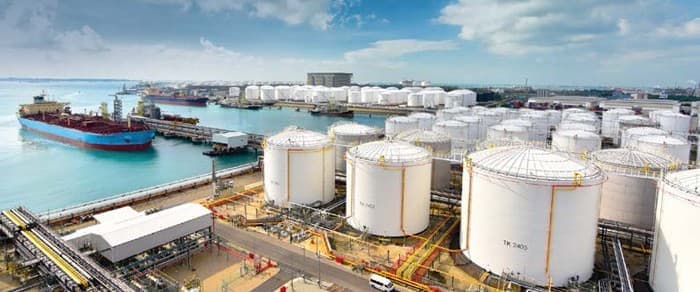
Kenya this week launched its biggest-ever initial public offering, the first share sale in 11 years, as it looks to list 65% of its state-owned pipeline company to raise funds for expanding energy infrastructure.
Kenya Pipeline Company (KPC) expects to raise $824 million (106.3 billion Kenyan shillings) by selling 11.81 billion shares to domestic and international investors and company employees in the IPO launched on January 19 and running until February 19.
Once listed, KPC is expected to be the fifth largest firm on the Nairobi Stock Exchange in terms of market capitalization.
The proceeds from the share sale will be used by the Kenyan government to fund infrastructure projects, including energy projects, while KPC will not keep any proceeds.
Kenya has been struggling with soaring debt in recent years and has resorted to programs and financing facilities from the International Monetary Fund (IMF). A previous $3.6 billion program with the IMF expired last year, and the country is in talks for additional IMF support that could help relieve its debt burden.
Against this backdrop, it is no surprise that the government is listing 65% of Kenya Pipeline Company, a key state-controlled asset that operates 1,342 kilometers, or 834 miles, of pipelines in the country, connecting the coastal city of Mombasa in the southeast to the interior. KPC also operates refineries, laboratory services, and fiber optic cables.
Related: U.S. Natural Gas Prices Surge 45% in Two Days Due to Arctic Cold
The company plans capital expenditure of $852 million (110 billion shillings) for the period to 2030, it said in its IPO prospectus. That’s triple the total investment between 2021 and 2025 as KPC looks to expand its pipeline network and build crude and LPG storage facilities.
The expansion will include a new eastbound pipeline from Mombasa to Nairobi, the Eldoret Malaba Kampala pipeline, the Nairobi LPG storage facility, and a crude oil storage facility in Mombasa, among others.
“The investments are expected to be funded through a combination of internally generated cash flows and innovative financing structures, including access to debt capital markets, SPV project financing, joint ventures and partnerships among others,” KPC said.
The Kenyan pipeline operator will focus on efficiency and seizing opportunities from the expected growth in fuel demand in the East African market.
KPC expects its gross profit margin to average about 61% through 2030 compared to 57% over the past five years.
Key risks to growth include rival regional projects, including Uganda’s new pipeline and plans to build a refinery by the end of the decade, the Kenyan company said in the IPO prospectus.
“Uganda is still keen on refining its own oil to satisfy its domestic market,” KPC said
The $5-billion East African Crude Oil Pipeline (EACOP), which is planned to export crude oil from Uganda via a port in Tanzania, is now nearly completed, moving landlocked Uganda a step closer to becoming an oil exporter.
With pipeline construction progressing, Uganda now aims to begin oil production from its oilfields in the Albertine rift basin in the west in the second half of 2026.
France’s oil and gas supermajor TotalEnergies and China’s state-controlled CNOOC have production-sharing agreements with Uganda and are expected to begin oil production later this year, after years of stalled development amid environmental controversies and delays in the construction of the major EACOP pipeline to a port in Tanzania for export.
Moreover, Uganda expects to build its own refinery to process domestic crude.
“A refinery is expected to be completed in 2029/30. If this materializes, it will pose a significant risk to KPC in terms of its regional expansion strategy,” the Kenyan company warned.
Still, KPC believes that “It will take a long time for the Eastern African regional market consumption levels to justify crude refining scale and margins at the best world oil markets level.”
“Landed refined oil will remain more competitive into the long term,” said KPC.
By Tsvetana Paraskova for Oilprice.com
More Top Reads From Oilprice.com